|
|
|
|
|
|
When healthcare doesn’t recognise Long Covid, is care really safe?
Recognition, safe care and being heard
This September, we’re focusing on recognition in healthcare systems and what it means for people living with Long COVID to feel heard, understood and safe when accessing healthcare.
|
For people living with Long Covid, being recognised and heard is more than a matter of patient experience. It can shape whether symptoms are taken seriously, whether people receive appropriate care and support, and ultimately, whether they feel safe within the healthcare system.
|
|
In this edition, we explore what safe care means through lived experience, new evidence about Long Covid among healthcare workers, and why recognition must be followed by meaningful action.
|
|
|
|
|
|
In this edition
World Patient Safety Day
Why recognition matters
|
What does safe care mean to me?
Dr Afroza Begum reflects on safe care
|
Research of the Month
Long Covid and healthcare workers: the evidence demands action
|
SHH-UK updates
Help shape our Healthcare Workers Position Statement
|
From recognition to action
Support the call for a National Long Covid Strategy
|
Guest spotlight
Meet Sheren Gaulbert
|
Peer support groups
September dates and ways to connect
|
|
|
|
|
|
World Patient Safety Day: why recognition matters
World Patient Safety Day takes place on 17 September. This year, the World Health Organization (WHO) is focusing on “Safe care for noncommunicable diseases (NCDs)”, under the slogan “Safe care for life!”
|
|

|
|
|
|
Although this year’s campaign focuses specifically on noncommunicable diseases, its wider patient-safety messages have clear relevance to the experiences of people living with Long Covid. WHO highlights the importance of continuity and coordination of care, meaningful engagement, strong health systems and learning from lived experience to make care safer.
|
|
For people living with Long Covid, these principles matter. Being listened to, having symptoms taken seriously and being involved in decisions about care can shape the whole healthcare experience.
|
Safe care begins with recognising the person in front of you and listening to what they are telling you.
|
|
|
|
|
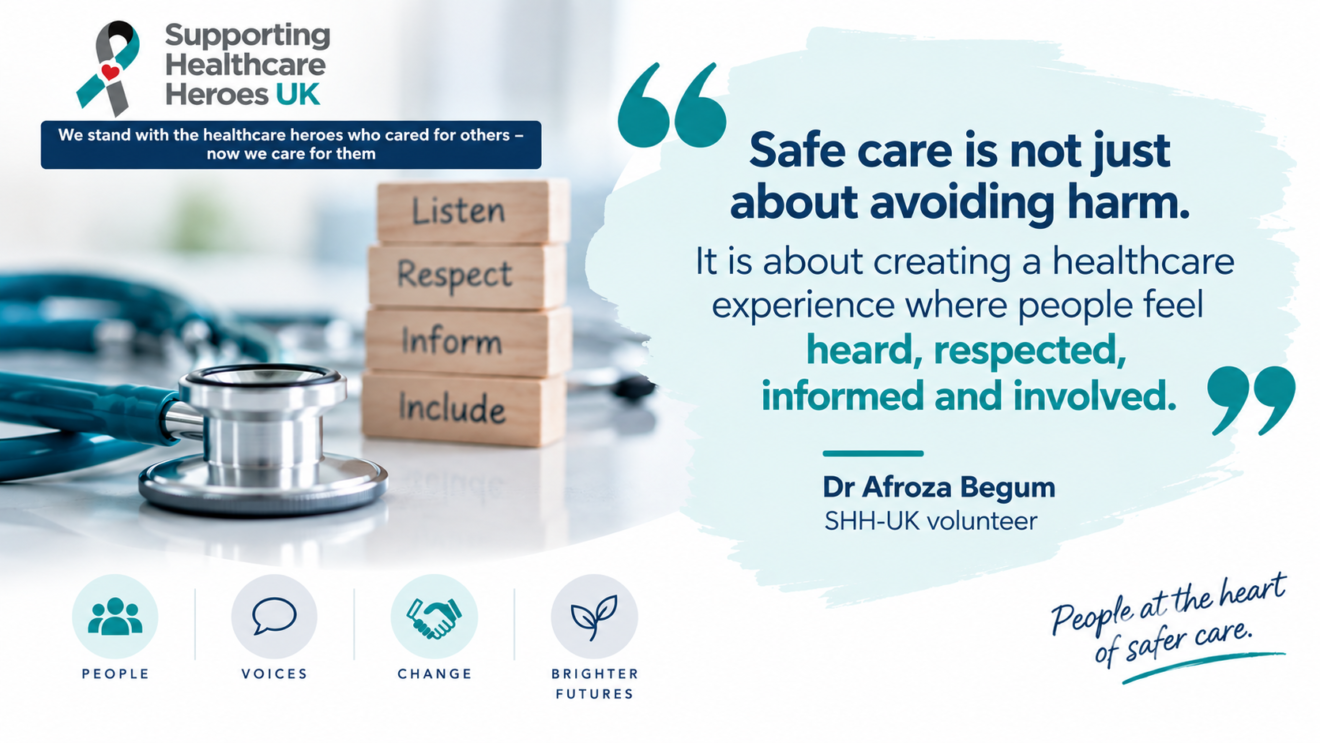
What does safe care mean to me?
SHH-UK volunteer Dr Afroza Begum shares what safe care means to her, reflecting on the importance of being heard, respected and involved in decisions about care.
|
Safe care to me means being listened to, taken seriously and given enough time to explain what I am experiencing.
|
One of the things that can make healthcare feel unsafe is feeling that your concerns are being rushed or dismissed. When you are already worried about your health, having to repeatedly explain yourself or feeling that nobody is really listening can make an already difficult situation much harder.
|
I feel safer when healthcare professionals communicate clearly, explain what is happening and involve me in decisions about my care. Even when there isn't an immediate answer or a straightforward treatment, being honest and keeping me informed makes a real difference.
|
For people living with ongoing health problems, safe care also means continuity. It can be difficult when you have to start again with every new healthcare professional and repeatedly tell your story. Having someone who understands your history and listens to what you have learned about your own health can make care feel much safer.
|
If I could make one change, it would be to give patients a stronger voice in their own care. Patients live with their conditions every day and their experiences can provide valuable information that may not always be captured in a consultation or medical record.
|
Safe care is not just about avoiding harm. It is about creating a healthcare experience where people feel heard, respected, informed and involved.
|
|
|
|
|
|
🔬 Research of the Month
Long Covid and healthcare workers: the evidence demands action
How common is Long Covid among healthcare workers, what does it mean for the workforce, and are current systems providing enough support?
|
The final REACH-OUT report, published in August 2026, brings together findings from a three-year mixed-methods research programme examining the prevalence, symptoms, risk factors and lived experience of Long Covid among healthcare workers, with particular attention to occupational factors and ethnicity.
|
The numbers are significant
A systematic review and meta-analysis found that among healthcare workers infected with SARS-CoV-2:
|
- 40% had Long Covid at an average follow-up of 22 weeks
- 26.5% still had Long Covid at 12 months
|
UK data included in the report also found substantial persistent symptoms: 23% of healthcare workers reported symptoms lasting at least five weeks in an early-pandemic survey, while 27% reported symptoms lasting at least 12 weeks in a later survey.
|
The most commonly reported symptoms included fatigue (35%), neurological symptoms including brain fog and headache (25%), loss of taste or smell (25%), muscle pain (22%) and breathlessness (19%).
|
The impact goes beyond symptoms
REACH-OUT describes consequences for both individuals and the healthcare workforce, including sickness absence, presenteeism (continuing to work while unwell) and reduced productivity. Healthcare workers reported unpredictable and relapsing symptoms, cognitive dysfunction and experiences of guilt, stigma and blame. NHS organisational support was described as “inconsistent and insufficient.”
|
What needs to change?
The report identifies practical measures including:
|
- flexible, individually tailored return-to-work arrangements, including reduced hours and hybrid working
- rapid access to multidisciplinary Long COVID services and psychological support
- standardised assessment and case management
- better collection of ethnicity and occupational data
- extended sickness-absence protections.
For SHH-UK, these findings reinforce a wider patient-safety and workforce issue: healthcare workers with Long COVID need to be recognised, appropriately supported and able to access equitable specialist care. Workplace adjustments and sickness-absence protection can help people remain in, or return to, work where this is possible.
|
Prevention must also remain part of the conversation. The report highlights reducing workplace SARS-CoV-2 exposure through evidence-based infection prevention, cleaner indoor air and appropriate respiratory protection.
|
|
|
|
|
Key takeaway: Long COVID among healthcare workers is not only an individual health issue. The REACH-OUT findings highlight important implications for healthcare workers and the wider workforce. Recognition needs to be matched by access to appropriate care, workplace support and measures that reduce the risk of further infection.
|
|
|
|
|
|
SHH-UK updates
Help shape our Healthcare Workers Position Statement
SHH-UK is finalising its Position Statement on the Support Needs of Healthcare Workers with Long COVID.
|
We want the statement to reflect the experiences and priorities of healthcare workers themselves. If you are a healthcare worker living with Long COVID, we would welcome your feedback.
|
Your experiences can help us understand what support is needed and strengthen our work to advocate for meaningful change.
|
|
|
|
From recognition to action
Long COVID needs more than recognition. A new petition is calling on the UK Government to develop and fund a comprehensive National Long COVID Strategy.
The petition calls for coordinated national action, including:
|
- equitable and accessible healthcare
- sustained biomedical research and evidence-based treatments
- better education for healthcare professionals
- cleaner indoor air and stronger infection prevention
- appropriate long-term care and support
- meaningful partnership with people living with Long COVID, carers, clinicians, researchers and Long COVID organisations
These calls reflect many of the issues explored in this edition: recognition, access to appropriate care, prevention, research and ensuring that lived experience helps shape the response to Long COVID.
|
|
If you support the call for a properly funded National Long Covid Strategy, add your voice by signing and sharing the petition.
|
|

|
|
AI-generated illustration.
|
|
|
|
|
|
|

|
|
Guest Spotlight: Sheren Gaulbert
Sheren Gaulbert is a specialist chronic pain and trauma therapist and clinical educator, with 15 years' experience. She is also a Trustee of the Vulval Pain Society.
|
Sheren developed debilitating multi-system Long COVID symptoms in early 2020. Drawing on her professional knowledge of pain biology, nervous-system sensitisation and ME/CFS, she began exploring emerging approaches to Long COVID with colleagues. In 2021, she was invited to present COVID-19 Pain Morbidities and Their Management to healthcare professionals as part of the global IASP COVID-19 and Pain Virtual Program.
|
Sheren now sees increasing numbers of people with Long COVID in her clinic, including healthcare workers, and coaches multidisciplinary clinicians in pain science, trauma-informed and evidence-based collaborative care.
|
Sheren will be joining our Healthcare Workers Support Group on Thursday 1 October, where she will share short nervous-system regulating practices that can be incorporated into a busy working day. There will also be an opportunity to ask questions and explore practical strategies that may be helpful.
|
|

|
|
|
Peer support groups
You Don’t Have to Navigate Long Covid Alone
Living with Long Covid can feel isolating. Our free online support groups offer healthcare workers a welcoming space to connect with others who understand.
|
There’s no pressure to speak you’re welcome to simply listen, and you can attend as often or as little as you wish.
|
Coming Up in September
Tuesday 8 September at 11am – Coffee & Chat
An informal social group. Grab a drink and join us for a relaxed conversation.
|
Tuesday 15 September at 11am – Cognitive Dysfunction Support Group
For healthcare workers experiencing cognitive difficulties or ‘brain fog’. Share experiences, coping strategies and support in an understanding environment.
|
Tuesday 22 September at 11am – General Support Group
Open to all healthcare workers living with Long Covid, whatever stage of your journey.
|
All of our support groups are free and take place online via Microsoft Teams.
|
|
If you have any questions, or would like us to send you a reminder the day before each meeting, please email supportgroup@shh-uk.org.
|
|
|
Help us reach more people
Every interaction helps increase SHH-UK’s reach and ensures our message reaches healthcare workers, supporters and others who may benefit from the information and support we share.
|
|
Your engagement can make a difference. Thank you for helping us amplify the voices of healthcare heroes.
|
|
|
|
|
|
|
|
Recognition is where safer care begins
Long Covid continues to affect lives, careers and people's experiences of healthcare. Listening to lived experience matters, but recognition must be followed by appropriate care, practical support and meaningful action.
|
From everyone at SHH-UK, thank you for reading, supporting our work and helping us ensure that people living with Long Covid are not forgotten.
|
|
|
|
|
|
|
|
|
|
|