
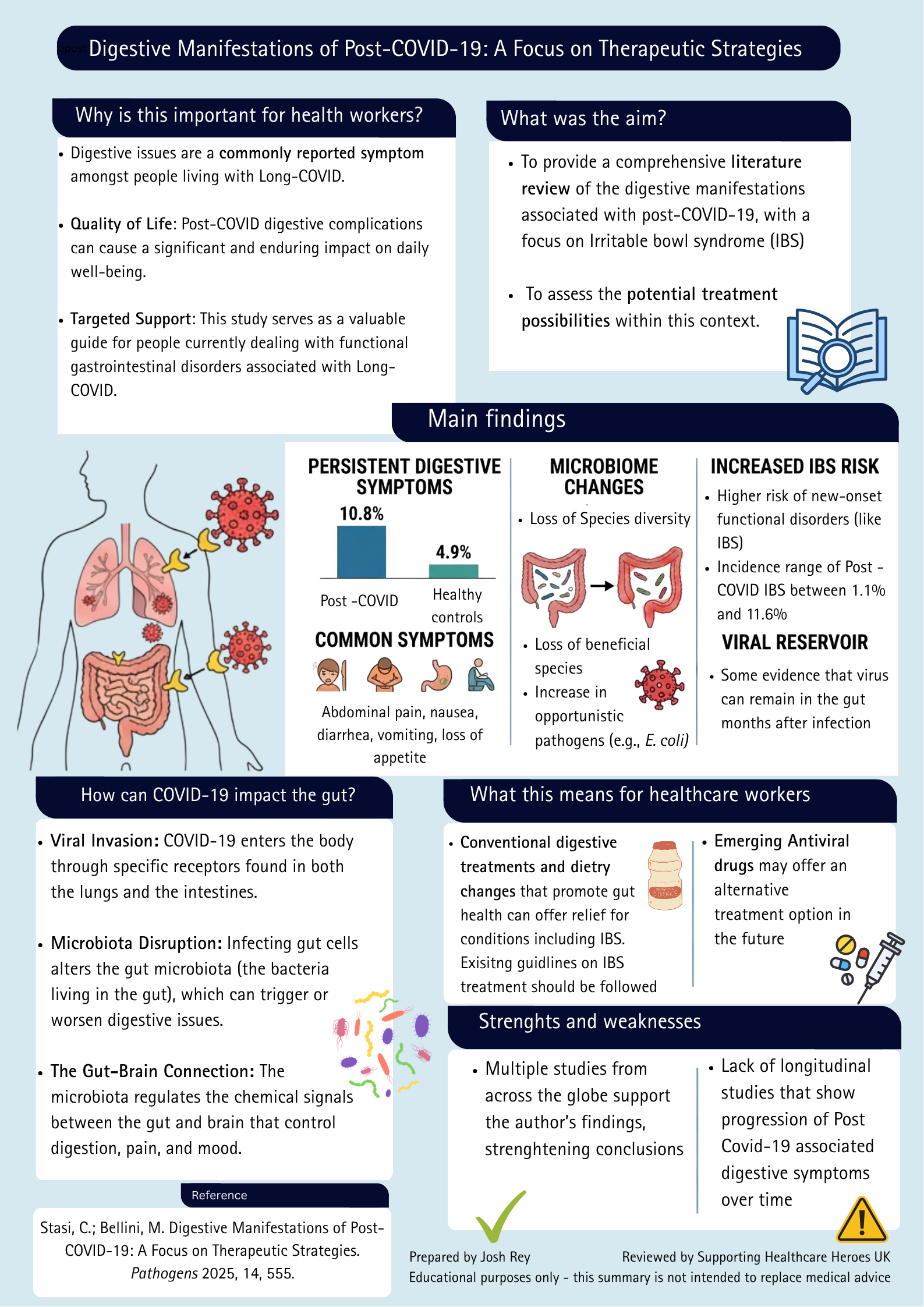
Long COVID and Digestive Symptoms: What the Research Tells Us
Research summary exploring digestive manifestations of Long COVID, including gut microbiome changes, IBS risk and potential treatment approaches.
Read more

Vernon, S. D. PhD et al. (2025) summarised by Nikky Yusifova
Introduction
Myalgic encephalomyelitis/chronic fatigue syndrome (ME/CFS) can be triggered by acute infections, including viruses. Individuals who experience COVID-19 symptoms for at least six months, commonly referred to as Long Covid patients, may develop symptoms consistent with ME/CFS. These include malaise, brain fog, dizziness, unrefreshing sleep and cognitive impairment. Such symptoms can be triggered by ordinary daily activities like driving, cleaning, cooking, reading, showering, or conversing, significantly reducing their quality of life. This study investigated the incidence and prevalence rates of ME/CFS among individuals with Long Covid.
Summary
The U.S. national RECOVER (Researching COVID to Enhance Recovery) study investigates post-COVID-19 conditions. They examined ME/CFS symptoms in Long Covid patients using data from the RECOVER-Adult study, which included 11,785 infected participants and 1,439 uninfected control participants.
Symptom assessments were conducted using a global information system, participant responses were analysed using robust statistical methods. The incidence rate of ME/CFS in the infected group was approximately 2.86 times higher than in the uninfected group. The most commonly reported symptom among Long Covid patients with ME/CFS was malaise (29.1%), followed by orthostatic intolerance which is the development of symptoms when standing up (25%), cognitive impairment (23.7%), fatigue (20.7%), and unrefreshing sleep (19.8%).
Participants in the infected group who reported ME/CFS symptoms were predominantly white women aged 46–65, living in rural areas, with lower levels of education. They were also less likely to have been vaccinated at the time of enrolment. These individuals reported a higher prevalence of other medical and psychiatric conditions, such as neuromuscular diseases, chronic obstructive pulmonary disease (COPD), dementia or cognitive impairment, and various mental health disorders. Similar incidence rates of ME/CFS following both viral and non-viral infections have been observed in studies of Epstein-Barr virus, giardiasis digestive disorder and other diseases. Although the mechanisms underlying ME/CFS symptoms remain unclear, some research points to inflammatory abnormalities in the brains of affected patients.
Conclusion
This study revealed a significantly higher incidence and prevalence of ME/CFS symptoms among individuals with post-COVID-19 conditions compared to uninfected controls. The most frequently reported symptom was malaise, followed by orthostatic intolerance, cognitive impairment, fatigue and unrefreshing sleep. ME/CFS symptoms were more likely to affect unvaccinated individuals, particularly middle-aged, less-educated women from disadvantaged areas.
Read the research here
Research summary exploring digestive manifestations of Long COVID, including gut microbiome changes, IBS risk and potential treatment approaches.
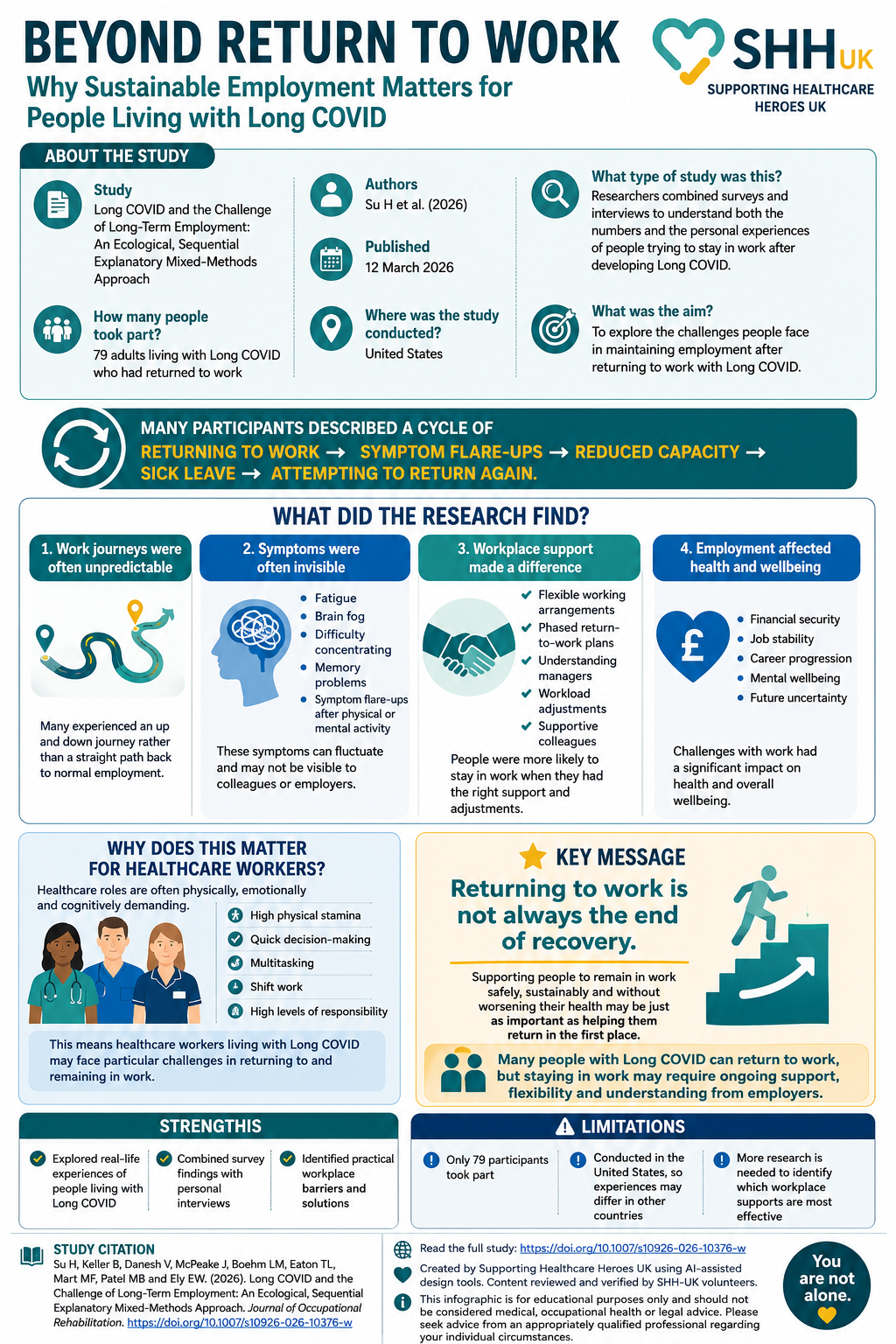
Returning to work is often viewed as a major milestone in recovery. However, for many people living with Long COVID, returning to work does not necessarily mean returning to their previous level of health. This study by Su and colleagues explored the experiences of 79 adults living with Long COVID who had returned to employment. […]

Learn why the precautionary principle is fundamental to infection prevention and how its application protects healthcare workers and patients.