

Covid is Airborne: You’re breathing it in
A powerful short video explaining how COVID spreads through the air like smoke, highlighting why ventilation, clean air and respiratory protection matter.
Read more

Woodrow, M. et al (2025) summarised by Rachael McGill
Introduction
The research aimed to explore associations between patient sociodemographic groups (social and cultural factors) plus health characteristics and two outcomes: having Long Covid and expressing uncertainty about having Long Covid. The likelihood of having Long Covid was found to be increased for some sociodemographic groups who already experience disadvantage, with some other groups not knowing if they had Long Covid or not.
Summary
The data came from the 2023 GP Patient Survey in England. This is a random sample of 759,149 patients aged 16 or over where patients self-reported about their health. 4.8% of respondents reported having Long Covid at the time of completing the survey, and 9.1% were unsure whether they had it.
Sociodemographic features associated with a higher risk of Long Covid included:
There was particularly high prevalence of Long Covid amongst people who were deaf and using sign language, those who had Alzheimer’s/dementia, autism, a breathing condition or a mental health condition. Living in the most deprived areas was associated with 47% higher odds compared to the least deprived areas.
Those who responded that they were person whether they had Long Covid was more likely to be associated with: being under 25; male; non‐binary; heterosexual; not a parent or carer; from Other White, Indian, Bangladeshi, Chinese, Black or Arab backgrounds; in former and current smokers; and those without long term health conditions. Differing levels of uncertainty may relate to lack of awareness of or confusion about Long Covid symptoms. People may be waiting for a Long Covid diagnosis or be unsure if they had COVID‐19. Lack of certainty in particular groups may suggest that some groups are less likely to be successfully diagnosed. Stigma and self‐doubt can shape self‐identification with Long Covid, which could be discouraging people from seeking diagnosis. Some individuals experiences may be viewed as unreliable, the degree by which a person is not believed may depend on their social identity.
Conclusion
There is an unequal distribution of Long Covid in England, with the condition being more prevalent in minoritised and disadvantaged groups, including those who have another long term health condition. There are high levels of uncertainty about having Long Covid, with more people who are unsure whether they have it than those who are sure they have it. Improved awareness is needed, including amongst health care workers, to ensure that the most people vulnerable in society are identified and provided with care and support. Learning from and comparisons with other similar long term health conditions, such as Chronic Fatigue Syndrome, may be helpful in adding to the body of knowledge.
Read the research here
A powerful short video explaining how COVID spreads through the air like smoke, highlighting why ventilation, clean air and respiratory protection matter.
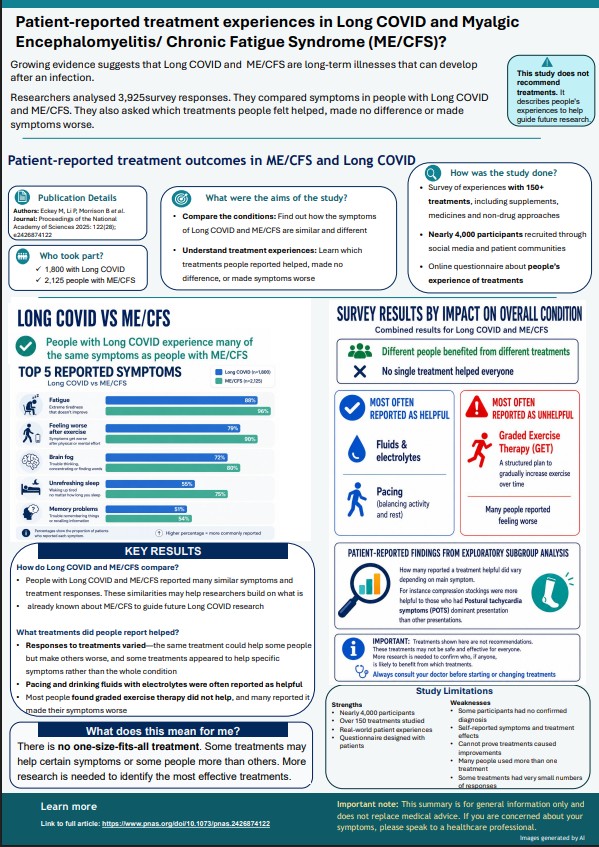
Explore this SHH-UK Research Summary of a study examining patient-reported symptoms and treatment experiences among nearly 4,000 people with Long COVID and ME/CFS.

N95 and KN95 respirators may look similar, but they are certified to different national standards. Both are designed to provide a high level of filtration, with each rated to filter at least 95% of specified test particles. (Smart Air)