
Covid is Airborne: You’re breathing it in
A powerful short video explaining how COVID spreads through the air like smoke, highlighting why ventilation, clean air and respiratory protection matter.
Read more
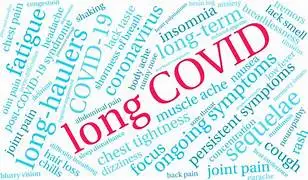
While many people recover from COVID-19 within a few weeks, others experience persistent symptoms that significantly affect their daily lives. Long Covid refers to a set of symptoms that persist for weeks or months after the acute phase of a COVID-19 infection.
Long Covid is also referred to as:
The Long Covid community, first coined the term Long Covid in May 2020, and they prefer that this terminology is used.
Several definitions of Long Covid exist.
The U.S. National Academies of Science, Engineering and Medicine published a definition in 2024. One of the key changes is they use the term Long Covid in preference to any other; it is intentionally broad and like previous definitions does not require a positive covid test:
Long Covid (LC) is an infection-associated chronic condition (IACC) that occurs after SARS-CoV-2 infection and is present for at least 3 months as a continuous, relapsing and remitting, or progressive disease state that affects one or more organ systems.
More information about this definition can be seen below.
The World Health Organization states that:
Long Covid is defined as the continuation or development of new symptoms 3 months after the initial SARS-CoV-2 infection, with these symptoms lasting for at least 2 months with no other explanation.
The NICE definition states that Long Covid:
Long Covid is a multi-system disease and has many different symptoms. Some of the more common symptoms are listed below. However, this list is not exhaustive and over 200 symptoms have been reported including (Davies et al. 2021).
| Fatigue: Persistent and overwhelming exhaustion that can interfere with daily activities. |
| Shortness of breath: Difficulty breathing or a feeling of breathlessness, even with mild exertion. |
| Cognitive problems: Problems with memory, concentration and general cognitive function, often referred to as “brain fog” |
| Persistent pain: Headache, joint and muscle pain that persists beyond the acute phase of the infection. |
| Heart and lung problems: palpitations, chest pain and persistent breathing problems. |
| Digestive problems: Nausea, diarrhoea and other gastrointestinal symptoms |
| Sleep disorders: Insomnia or disturbed sleep patterns. |
These symptoms can affect various organs and systems in the body, leading to a range of problems. A pictorial representation of what Long Covid produced by World Physiotherapy can be seen below.
A powerful short video explaining how COVID spreads through the air like smoke, highlighting why ventilation, clean air and respiratory protection matter.
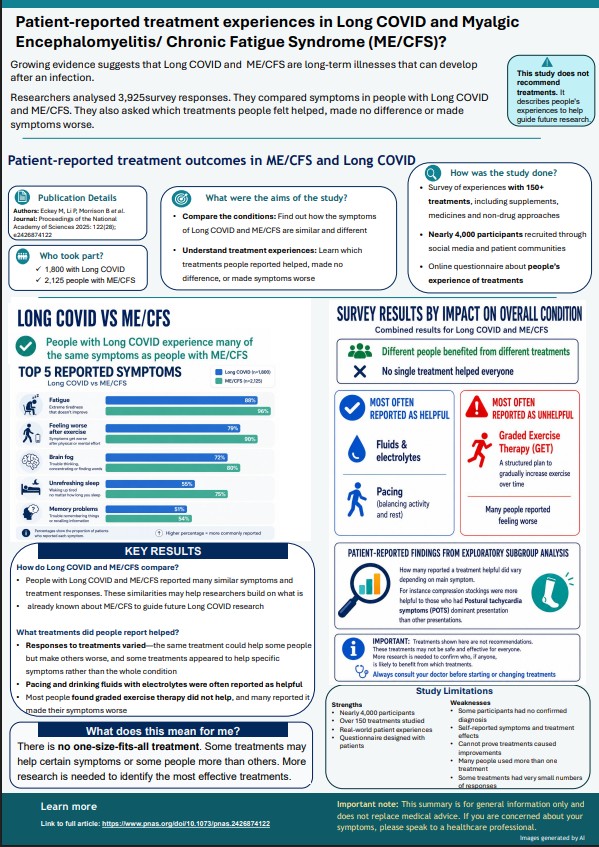
Explore this SHH-UK Research Summary of a study examining patient-reported symptoms and treatment experiences among nearly 4,000 people with Long COVID and ME/CFS.

N95 and KN95 respirators may look similar, but they are certified to different national standards. Both are designed to provide a high level of filtration, with each rated to filter at least 95% of specified test particles. (Smart Air)