POTS, ME/CFS and Long Covid as Neuroimmune Disorders
Category
New to and living with Long Covid
Share
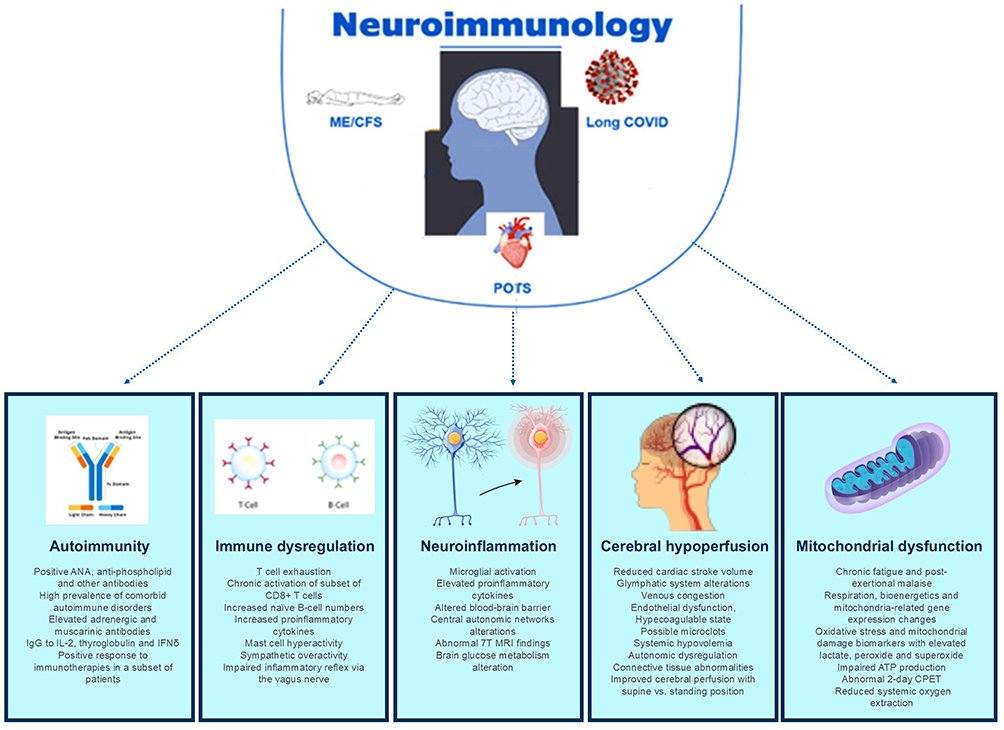
This narrative review shows that POTS, ME/CFS and Long COVID are closely related conditions that share common biological mechanisms. The authors explain that problems with the autonomic nervous system, immune dysregulation and autoimmunity, mitochondrial dysfunction, reduced blood flow to the brain, and neuroinflammation all play a role. POTS and ME/CFS are identified as the most common forms of Long COVID, with many people experiencing significant disability. Brain imaging and immune studies suggest these symptoms are driven by physical changes in the brain and immune system, not psychological causes.
The authors argue that these conditions should be recognised as neuroimmune disorders and treated within the field of neuroimmunology. They highlight how patients have often been misdiagnosed or dismissed, delaying effective care. Reframing these illnesses as neuroimmune conditions would improve diagnosis, training, research, and access to appropriate treatments, including immunomodulatory therapies. The paper calls for a clear shift in thinking to better support people living with these long-term, disabling conditions.
Figure downloaded from the paper which can be downloaded by clicking here.