
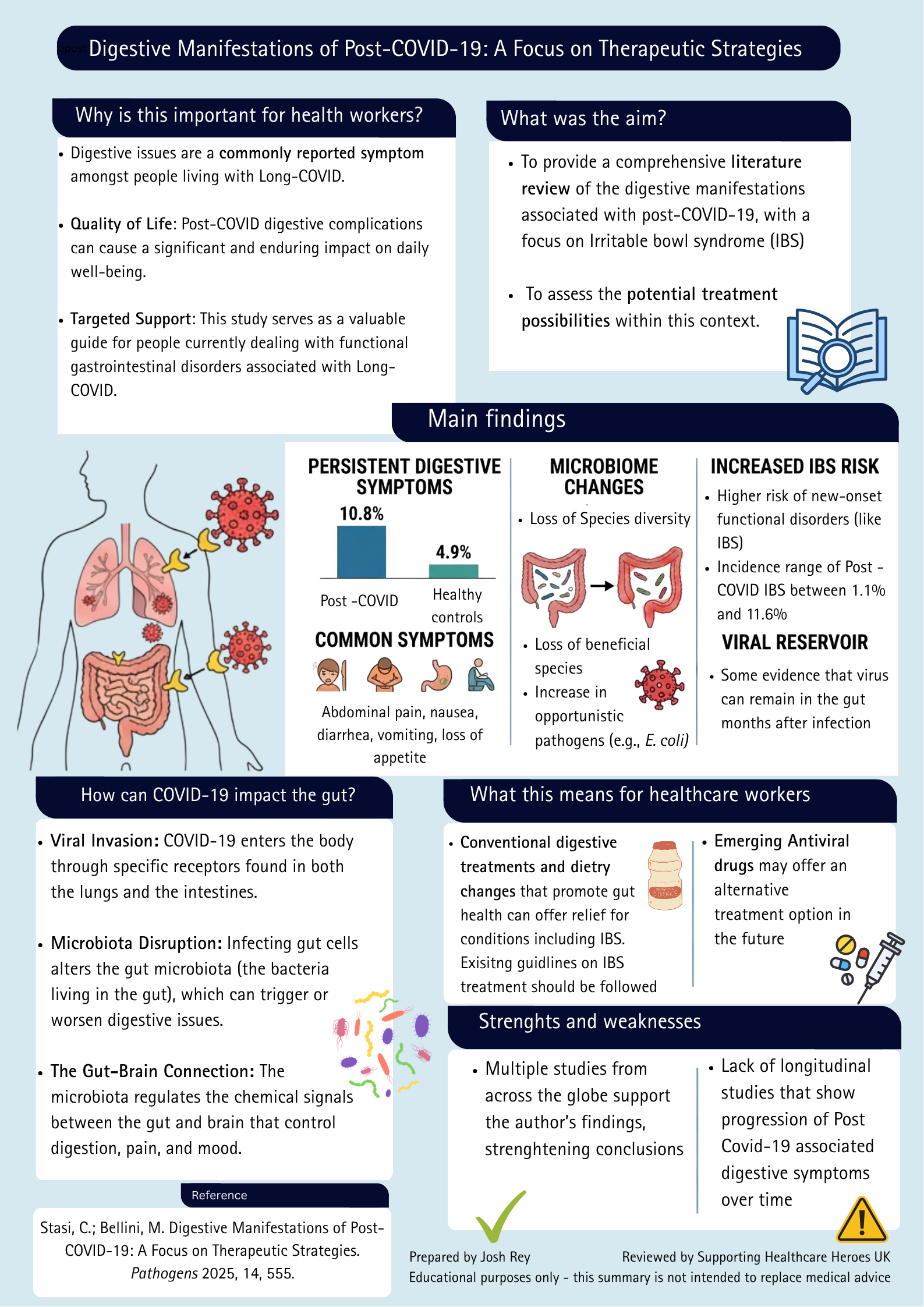
Long COVID and Digestive Symptoms: What the Research Tells Us
Research summary exploring digestive manifestations of Long COVID, including gut microbiome changes, IBS risk and potential treatment approaches.
Read more

Dr Frances Ryan writes in the Observer today (8/10/23) that healthcare charities and patient groups are calling for the reintroduction of COVID-19 precautions in NHS England, amid fears that vulnerable patients and staff will be put at risk this winter. Precautions like masks and testing were dropped earlier this year.
With COVID cases and hospitalizations rising again, charities want patients to have the right to request staff wear masks. They also want symptomatic testing reinstated for staff in all cases. Some groups are requesting asymptomatic testing for staff near high-risk patients.
Clinically vulnerable patients report missing vital care due to lack of protections. Others have been seen by symptomatic, unmasked staff despite their vulnerability. Healthcare settings pose high transmission risks with many vulnerable patients and staff interactions.
Surveys show many vulnerable patients are cancelling appointments and even vaccine boosters over COVID precaution concerns. Some chronically ill patients are postponing essential surgeries due to fears of exposure in healthcare facilities with minimal precautions.
Advocates argue simple, cost-effective measures like masking and testing could reduce risks and inequality in healthcare access. They say no patient should fear going to hospitals or clinics. More protections are urgently needed to safeguard vulnerable patients and staff this winter.
You can read the full article here.
Research summary exploring digestive manifestations of Long COVID, including gut microbiome changes, IBS risk and potential treatment approaches.
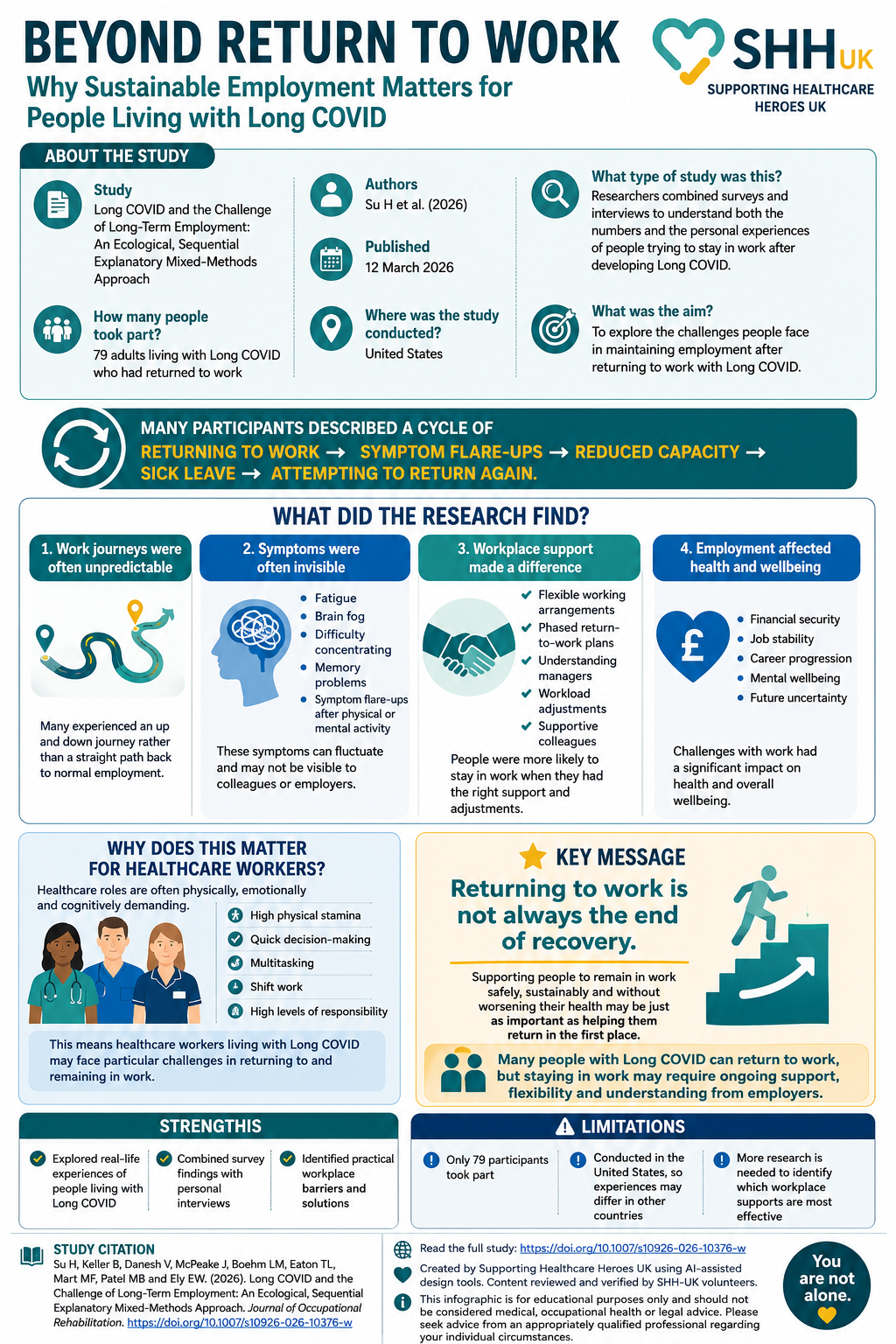
Returning to work is often viewed as a major milestone in recovery. However, for many people living with Long COVID, returning to work does not necessarily mean returning to their previous level of health. This study by Su and colleagues explored the experiences of 79 adults living with Long COVID who had returned to employment. […]

Learn why the precautionary principle is fundamental to infection prevention and how its application protects healthcare workers and patients.