
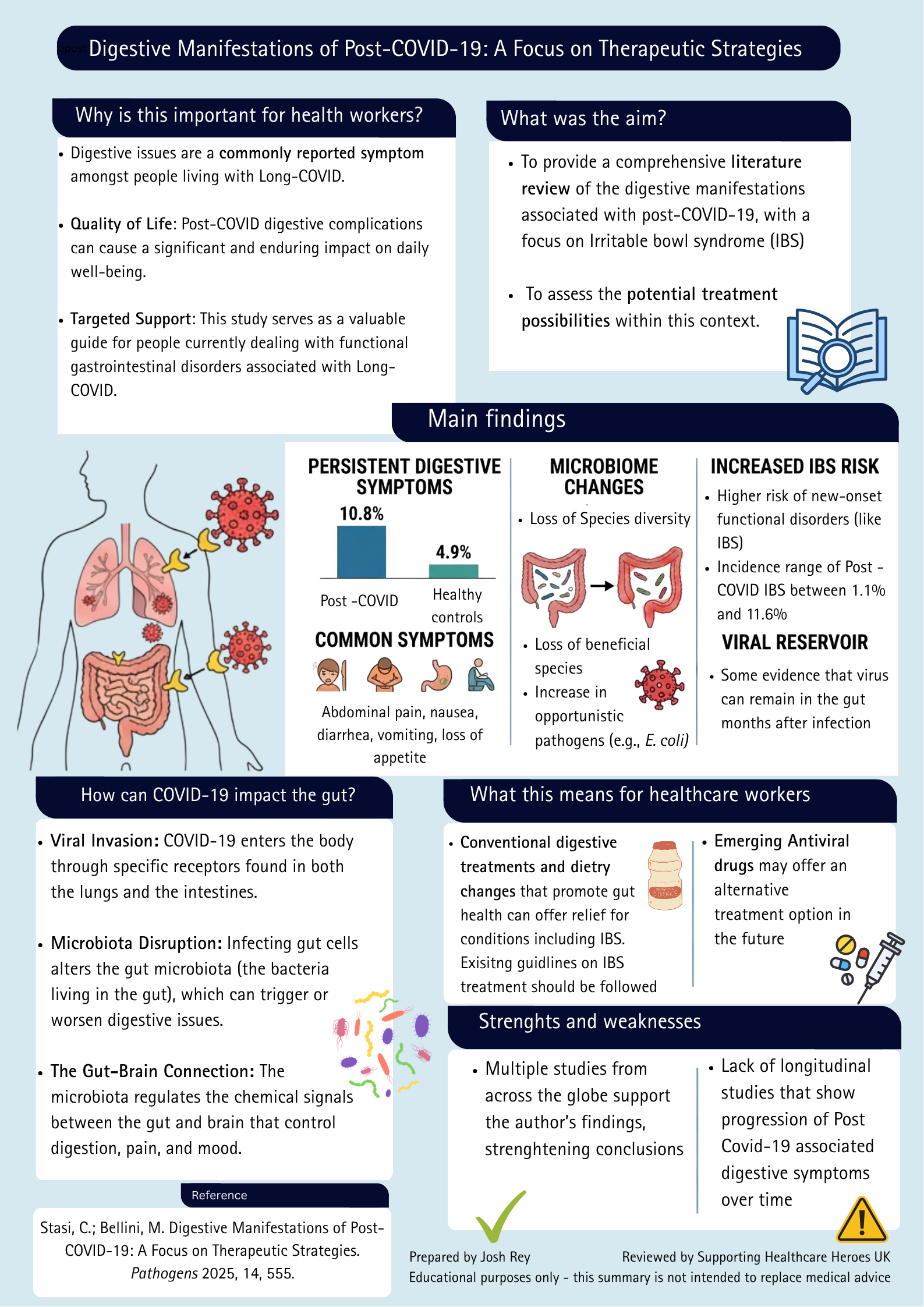
Long COVID and Digestive Symptoms: What the Research Tells Us
Research summary exploring digestive manifestations of Long COVID, including gut microbiome changes, IBS risk and potential treatment approaches.
Read more

Chemaitelly, H., (2025) summarised by Graciela Maitland.
Introduction
This study examines the impact of the COVID-19 virus evolution, especially during the shift from the pre-Omicron to the Omicron variant era, and how this affects natural immunity. The results showed that natural infection offers different levels of protection against reinfection based on these two periods. Before the Omicron variant, natural infection provided strong and lasting protection. However, during the Omicron era, this immunity mainly worked for recently infected people, with its effectiveness dropping quickly within a year. This change may indicate that the virus is evolving to escape the immune response instead of just becoming more transmissible.
The study analysed Qatar’s population, mainly young males, with 89% expatriates from over 150 countries. It examined data before and after the Omicron variant appeared in December 2021. The first part assessed previous infections’ effectiveness in preventing reinfections until December 2021. The second part looked at Omicron reinfections until February 2024. Researchers used national COVID-19 databases that included information on testing, vaccination, hospitalisations and deaths. One limitation noted was incorrectly labelling some cases as reinfections when they were actually Long Covid cases. The initial infection lasted over 40 days in these cases, or residual viral fragments remained detectable.
Summary
The COVID-19 virus has changed over time, producing more contagious variants. Since their outbreak, there have been several variants such as Alpha and Delta; however, the emergence of the Omicron variant marked a significant change in the virus’s characteristics. Before the Omicron variant, a natural infection gave about 80% protection against getting reinfected. This protection changed very little over time. However, during the Omicron era, recent infections provided strong protection, but this dropped quickly within a year. This suggests that the virus adapted in response to the immunity in the population.
Besides that, evidence was found that both pre-Omicron and Omicron infections provide strong protection against severe COVID-19. Humoral immunity mainly protects against mild cases but is challenged by ongoing viral mutations. In contrast, cell-mediated immunity, driven by memory T-cells, is more stable and offers better protection against severe cases. Generally, reinfections are less severe, but the virus’s changes and declining immunity make it hard to achieve long-term population immunity. As a result, new variants may cause periodic waves of infection, similar to those from common cold viruses and flu.
Conclusion
Read the research here
Research summary exploring digestive manifestations of Long COVID, including gut microbiome changes, IBS risk and potential treatment approaches.
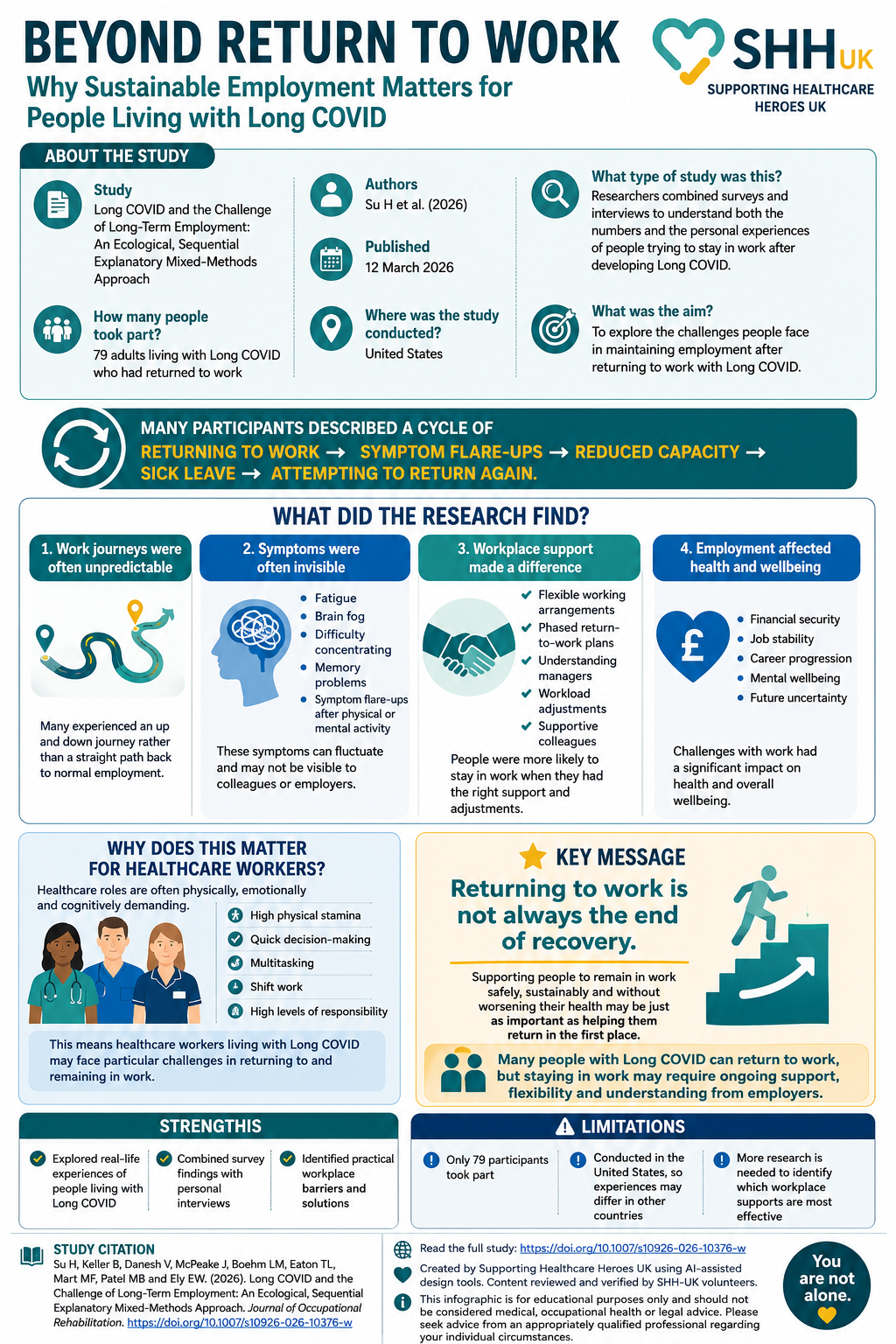
Returning to work is often viewed as a major milestone in recovery. However, for many people living with Long COVID, returning to work does not necessarily mean returning to their previous level of health. This study by Su and colleagues explored the experiences of 79 adults living with Long COVID who had returned to employment. […]
Learn why the precautionary principle is fundamental to infection prevention and how its application protects healthcare workers and patients.