
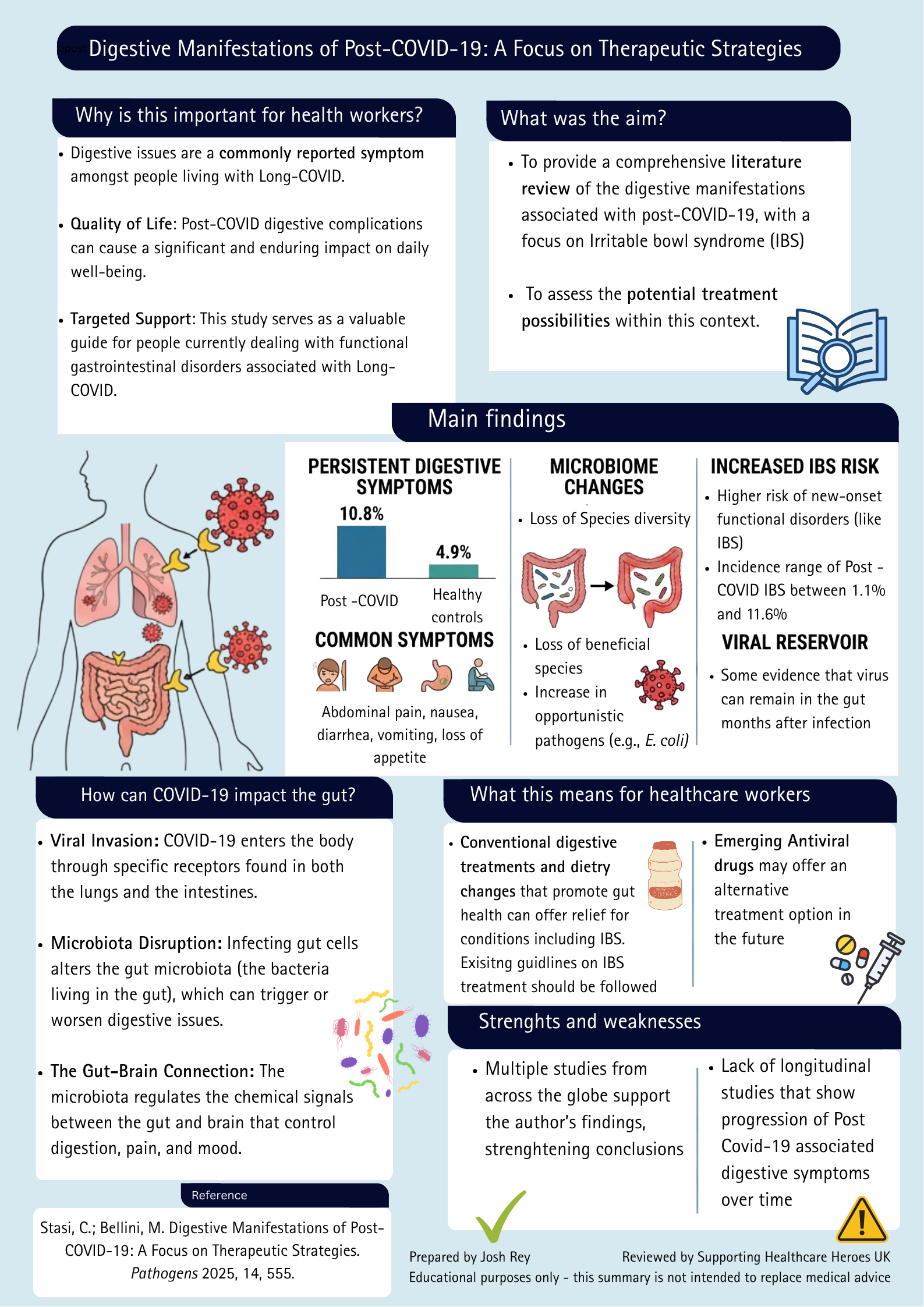
Long COVID and Digestive Symptoms: What the Research Tells Us
Research summary exploring digestive manifestations of Long COVID, including gut microbiome changes, IBS risk and potential treatment approaches.
Read more

Summary: This study compares Long Covid symptoms with the same patients, following a two-year gap.
Wahlgren, C. et. al., (2023) summarised by Rachael McGill
Introduction
The study was of patients hospitalised due to COVID-19 in the Swedish region of Linköping during the first pandemic wave who were still experiencing symptoms after four months. They were asked the same interview questions about their symptoms after 24 months and the results were compared.
Summary
The majority of the patients (84%) reported problems still affecting their everyday lives at 24 months. Cognitive (brain), sensorimotor (nerves affecting physical movement) and fatigue symptoms were the most commonly reported.
The reporting of symptoms with at least a moderate impact on daily life had decreased significantly at the 24-month assessment, when compared to the 4-month assessment for the following symptoms:
· weakness or tiredness in arms or legs
· difficulty walking at least 1 km
· difficulty being physically active
· difficulty managing work or studies
· increased need for sleep
· headache
· mental fatigue
· anxiety.
Thirty-one individuals (18.8%) reported additional symptoms not included in the 37 specific questions of the interview, such as:
· palpitations
· chronic fever
· reduced appetite
· sweating
· hair loss.
No clear difference was evident between individuals treated in the intensive care unit (ICU) and non-ICU-treated individuals. Approximately half of those who were on sick leave because of their Long Covid at four months were on sick leave at 24 months. The number of individuals who were employed or studying was significantly lower at 24 months compared with before their COVID-19 infection.
Additionally the study compared unvaccinated individuals with those who were fully vaccinated (had received three or more doses at the time of the 2-year follow-up). It revealed a significant difference between the groups: the fully-vaccinated group rated their health as having improved while the unvaccinated group rated their health as having deteriorated between the 4- and 24-month assessments. Surprisingly this study showed a tendency towards lower levels of persisting symptoms among the ICU-treated subgroup, compared with the non-ICU-treated subgroup. The greater predominance of males in the ICU subgroup may have influenced this, as female sex has been proposed as a risk factor for symptoms of Long Covid at least 12 months after infection.
Conclusion
This is one of the first studies to report two year outcomes in patients with Long Covid. Though a reduced symptom load was found, the majority of Long Covid patients who were initially interviewed still reported problems affecting their daily lives two years later. The authors identify a need for long-term follow-up and rehabilitation following COVID-19 infection, suggesting there is potential for significant improvement of many symptoms. They also recommend further studies to investigate larger groups of patients and conduct in-depth tests of cognitive, emotional and respiratory issues 24 months after infection and beyond.
Read the research here
Research summary exploring digestive manifestations of Long COVID, including gut microbiome changes, IBS risk and potential treatment approaches.
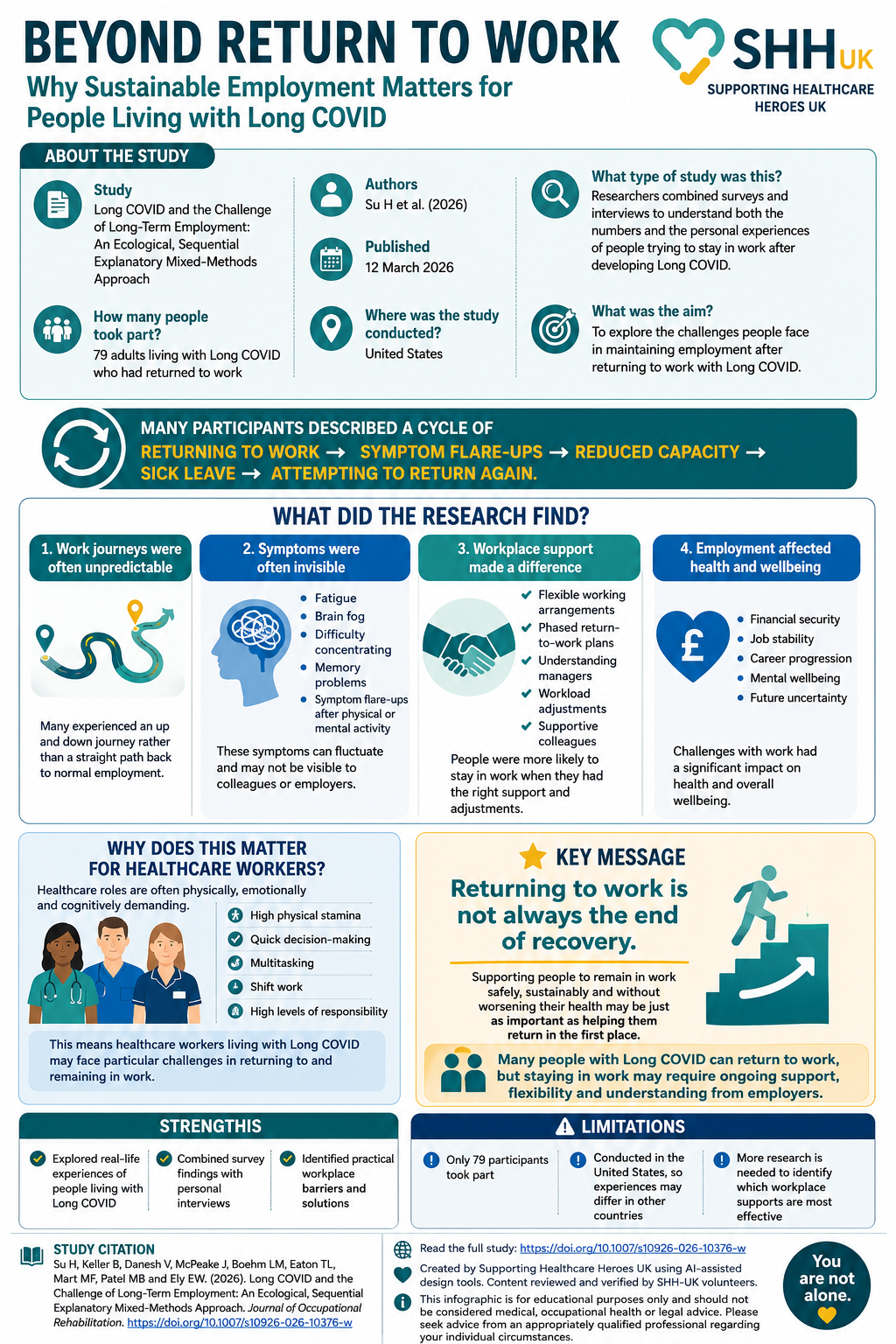
Returning to work is often viewed as a major milestone in recovery. However, for many people living with Long COVID, returning to work does not necessarily mean returning to their previous level of health. This study by Su and colleagues explored the experiences of 79 adults living with Long COVID who had returned to employment. […]

Learn why the precautionary principle is fundamental to infection prevention and how its application protects healthcare workers and patients.