|
|
|
|
|

|
World Health Day: Stand with Science.
This year’s World Health Day theme – 'Stand with Science' – could not be more relevant.
|
Stand with Science: Protect Healthcare Workers
World Health Day marks a moment to reflect on the role of science in protecting health and shaping policy.
|
For healthcare workers living with Long Covid, this message is not abstract. The science is clear: COVID-19 spreads through the air, and repeated exposure increases the risk of long-term harm. Yet many continue to work in environments where this evidence is not fully acted upon.
|
At SHH-UK, standing with science means more than recognising the evidence — it means applying it. Clean indoor air, effective infection prevention measures, and safer workplaces are essential to protect both staff and patients.
|
|
As we mark this day, we stand with science — and with healthcare workers.
|
|
|

|
Clean air is a basic safety measure
Healthcare workers continue to be exposed to airborne infections in their workplaces. Reinfections remain common, and each infection carries a risk of Long Covid or deteriorating health.
Improving indoor air quality is one of the most effective ways to reduce this risk.
This includes:
|
- Monitoring ventilation using CO₂ as a proxy for air quality
- Improving airflow and ventilation systems
- Using HEPA filtration where necessary
- Ensuring access to appropriate respiratory protective equipment.
|
Clean air should not be optional. It is as fundamental to healthcare safety as hand hygiene, safe water, and sterile equipment.
|
|
|

|
World Health Day: When the Workforce Becomes the Patient
This World Health Day, many healthcare workers are experiencing healthcare from the other side. Long Covid has affected healthcare workers across all roles and settings, clinical and non-clinical — many now navigating a condition that is still being understood.
What’s becoming clearer from research is that Long Covid is not a single issue, but a combination of ongoing biological processes.
Studies show:
|
- Persistent viral material and immune activation months after infection
(Stein et al., Nature, 2022: https://www.nature.com/articles/s41586-022-05542-y; Peluso et al., JAMA Network Open, 2023: https://jamanetwork.com/journals/jamanetworkopen/fullarticle/2807306)
- Effects across multiple systems, including brain, heart, and autonomic function
(Dani et al., Nature Reviews Cardiology, 2021: https://www.nature.com/articles/s41569-021-00592-4)
- Measurable changes in how the body produces and uses energy
(Singh et al., JCI Insight, 2022: https://insight.jci.org/articles/view/159386)
- Increased risk with repeat infections
(Al-Aly et al., Nature Medicine, 2022: https://www.nature.com/articles/s41591-022-02051-3)
Together, this helps explain why symptoms like fatigue, cognitive dysfunction, and post-exertional worsening are so common (and so limiting). For healthcare workers, this lands differently. Clinical knowledge doesn’t override physiology. And repeated exposure has, for many, come at a cost.
This brings a shift in focus.
|
|
Each COVID-19 infection increases risk. Preventing infection reduces the risk of long-term illness.
|
|
Prevention is no longer just about acute infection.
It’s about reducing the risk of long-term illness.
|
|
Airborne transmission of COVID-19 is well established:
|
Cleaner air protects both patients and staff.
|
Prevention reduces the long-term burden on individuals and the workforce
(WHO). Long Covid has made visible what was easier to overlook before — that the air we share is part of clinical risk. This World Health Day, it’s a reminder that protecting healthcare workers doesn’t start at treatment. It starts with prevention.
Including the air.
If you’d like to explore more research, practical resources, and the Safe Air for All / SHH campaign, you can read more on our website.
|
|
|
Would you like to learn more about the ongoing issues with the UK IPC guidelines?
|
An editorial in Evidence-Based Nursing in 2023 questioned whether current infection prevention and control (IPC) guidelines are truly evidence-based, highlighting gaps between emerging science and practice. It raises important questions about whether guidance has kept pace with evidence on transmission — an issue brought into sharp focus by the findings of the UK Covid-19 Inquiry.
|
The SHH-UK position statement, published in April 2025, sets out the urgent changes needed to UK-wide IPC guidelines. Read it by clicking here.
|
|
The March 2026 report from the COVID-19 Airborne Transmission Alliance (CATA) highlights how early scientific evidence on airborne transmission was not adequately reflected in infection prevention guidance. It underscores how delays and inconsistencies in applying this evidence contributed to avoidable exposure and reinforces the need to align IPC policy with current science.
|
|
|
|
Stand with science: protecting healthcare workers from preventable harm
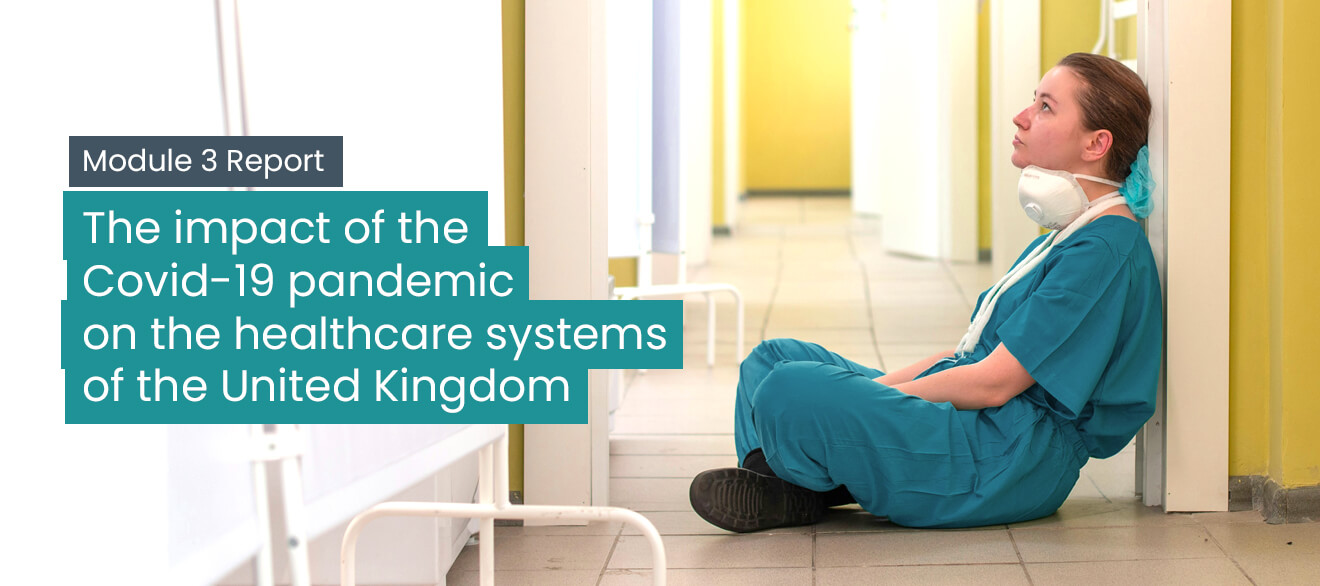
The publication of the UK Covid-19 Inquiry Module 3 report is a stark reminder of what healthcare workers experienced during the pandemic — and what must now change.
|
The report describes an NHS pushed close to collapse, sustained only by the extraordinary efforts of its workforce. It also confirms something healthcare workers have been saying for years: they were not adequately protected.
|
Failures in infection prevention and control (IPC), particularly delays in recognising airborne transmission and providing appropriate respiratory protection, left staff exposed to avoidable infection. Many are now living with the long-term consequences, including Long Covid.
|
This matters not only as a reflection on the past, but as a warning for the future. UK IPC guidelines still do not acknowledge that Covid-19 is airborne thus continuing to put healthcare workers, patients and visitors at risk.
|
SHH-UK has released a press release following the publication of the Module 3 report — this can be viewed by clicking here. We are currently preparing a new policy briefing for decision-makers and politicians – please check our website and social media accounts for updates.
|
|
Healthcare workers weren’t consistently protected, and preventing exposure now is key to avoiding further harm.
|
|
|

|
From evidence to action
At Supporting Healthcare Heroes UK (SHH-UK), our position is clear.
|
- IPC guidance that fully reflects airborne transmission
- Access to FFP2/FFP3 respirators for healthcare staff
- Enforceable indoor air quality standards across healthcare settings
- Recognition of Long Covid as an occupational condition
These are not aspirational goals – they are evidence-based protections.
|
|
Clean air and appropriate protection are practical, evidence-based ways to reduce risk.
|
|
|

|
Standing with healthcare workers
Healthcare workers were on the front line in the early days of the pandemic. Many are still paying the price, while others remain at risk due to the ongoing pandemic and inadequate, non-evidence based IPC guidelines.
Following the science now means ensuring they are not put at risk again.
It means recognising that Long Covid is not inevitable – in many cases, it is preventable.
|
|
How you can support change
- Share SHH resources with colleagues in your workplace
- Ask about ventilation and air quality where you work
- Challenge guidance that does not reflect current evidence
- Support the #SafeAir4All campaign
|
Together, we can help ensure that the lessons of the pandemic lead to safer healthcare environments for everyone.
|
|
|

|
Research of the Month
Reinfection and Long Covid Risk
|
A large study published in Nature Medicine (Al-Aly et al., 2022) found that each COVID-19 infection increases the risk of Long Covid and other long-term health outcomes.
|
People with reinfections were more likely to experience:
|
- Ongoing symptoms
- Cardiovascular complications
- Neurological effects
Importantly, risk increased with each infection — not just the first.
|
Why this matters
For healthcare workers, repeated exposure has often been unavoidable.
|
This research reinforces that:
|
- Reinfection is not benign (not harmless)
- Prevention strategies (including safer air) remain important
- Reducing exposure reduces cumulative risk
Important: This content is for informational purposes and should not replace medical advice. Healthcare workers should seek professional guidance for personal health concerns.
|
|
|

|
|
|
Peer support groups
SHH-UK peer support groups provide a safe, confidential space for healthcare workers living with long covid to connect, share experiences, and support one another. These groups are peer support and do not replace medical or occupational health advice.
All our peer support groups are online and welcome new members. They are all facilitated by at least 2 SHH-UK volunteers. There's no need to book a place, just come along.
|
Please email supportgroup@shh-uk.org if you have any questions, or you would like us to send you a reminder, the day before each peer support group meeting.
|
|
Tuesday 14th April at 11am
|
Tuesday morning peer support group: Coffee and chat
You can join by clicking here.
This peer support group meeting doesn't have a formal agenda. It's a space for all types of healthcare workers, living with long covid (whether you are able to work or not), to meet, connect and chat.
|
Tuesday 28th April at 11am
|
Tuesday morning peer support group: Being creative
You can join by clicking here.
This peer support group meeting is a space for all types of healthcare workers, living with long covid (whether you are able to work or not). Please bring examples of the crafts you are working on and share your experiences of being creative. If you've not explored arts and crafts yet, come along and join the conversation.
|
Cognitive Dysfunction peer support group
You can join by clicking here.
This peer support group meeting is a space for all types of healthcare workers, living with long covid (whether you are able to work or not). If you're affected by cognitive challenges, come along to connect, share and feel understood.
|
Evening peer support group
You can join by clicking here.
This is a new peer support group for healthcare workers, who live with long covid, and are working, or planning a return to work (whether it's the same job, something similar or a completely different job). This will be the first meeting so come along and tell us what you want from this peer support group.
|
Tuesday morning peer support group: Coffee and chat
You can join by clicking here.
This peer support group meeting doesn't have a formal agenda. It's a space for all types of healthcare workers, living with long covid (whether you are able to work or not), to meet, connect and chat.
|
|
|
Meet the volunteer
|
|
|
Emily
|
I am a former Accident and Emergency Sister who worked on the frontline during the Covid-19 Pandemic. Before contracting Covid-19 and being retired on ill health at the age of 35 I completed a Postgraduate Certificate in Emergency Care at Masters level.
|
|
|
|
I was the lead nurse for students in the A+E department prior to retirement as I enjoyed teaching and educating the next generation of Nurses.
|
When the opportunity to volunteer with Supporting Healthcare Heros UK (SHH-UK) in an educational role arose, I jumped at the chance as I feel that I can put my skills and knowledge to good use. My lived experience of Covid-19 and encounters with navigating work-related challenges and the benefits systems for what support is available allows me to pass this knowledge forward within the educational resources provided by SHH-UK.
|
|
I am passionate about supporting those with Long Covid so they can get the much-needed help and support they require through education.
|
|
|
     
|
|
|
|
|