
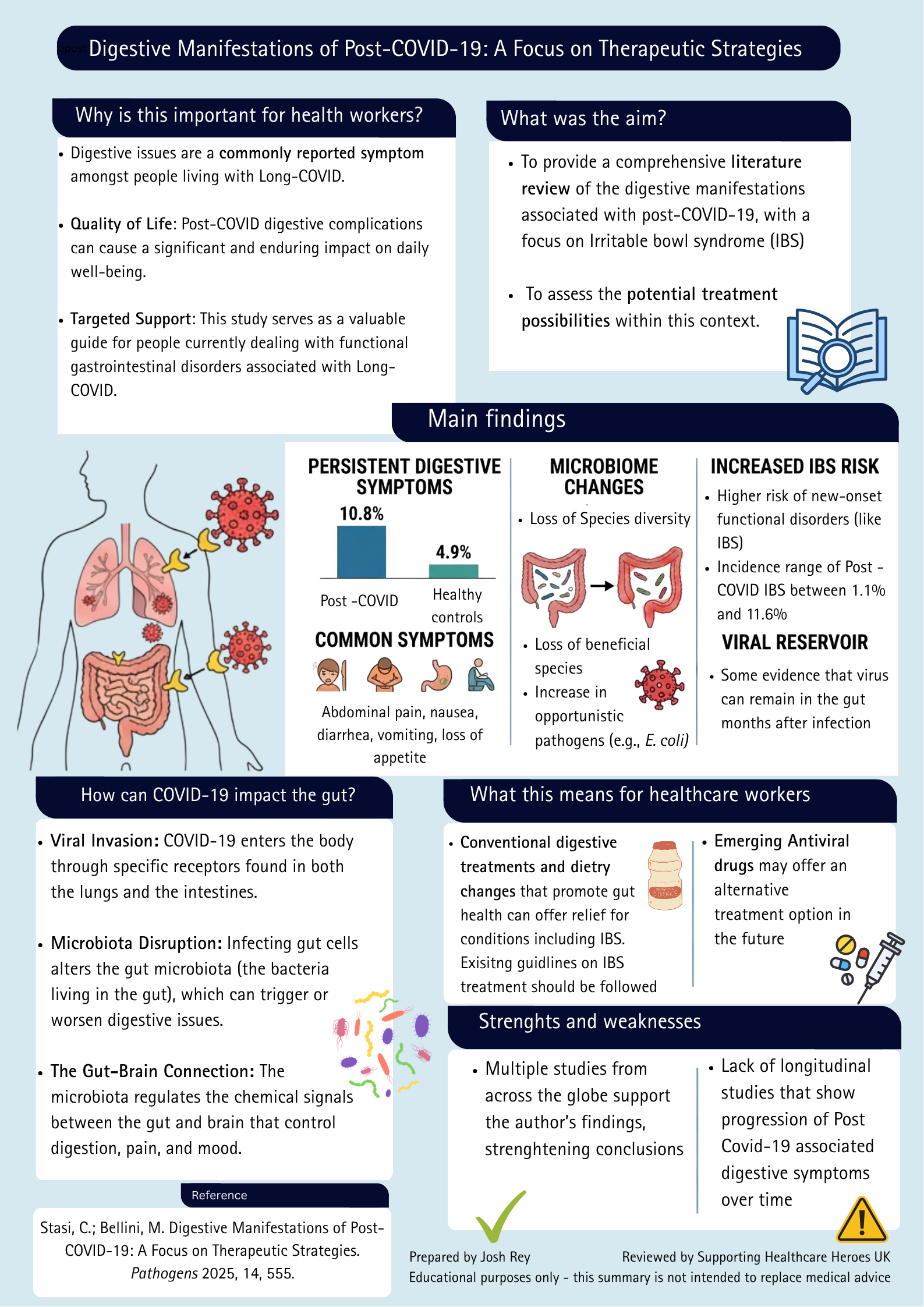
Long COVID and Digestive Symptoms: What the Research Tells Us
Research summary exploring digestive manifestations of Long COVID, including gut microbiome changes, IBS risk and potential treatment approaches.
Read more

Analysis from England’s large-scale REACT study published by Nature Communications (24/10/23) estimates tens of thousands may have long-lasting COVID symptoms over a year post-infection. 7.5% reported symptoms persisting 12+ weeks (Long Covid) and 5% had symptoms over a year.
Most common Long Covid symptoms were mild fatigue, difficulty concentrating, and joint pain. But other issues like breathing problems, chest pain, poor memory, and sensory loss persisted over a year for some.
Those with severe initial illness, pre-existing conditions, earlier pandemic infection, and female gender had higher Long Covid risks. But many still fully recovered eventually even after prolonged symptoms.
People infected in the Omicron wave were 88% less likely to have symptoms past 4 weeks versus earlier waves, likely reflecting increased immunity. But a significant proportion still develop lasting illness.
The study highlights SARS-CoV-2 can cause persistent symptoms well over a year for a subset of patients. But it shows recovery often just takes longer for some, providing hope. Further follow-up is planned.
The analysis offers key insights into Long Covid prevalence and risk factors. But big variation in individual experiences warrants more research to understand impacts on people’s lives.
The full paper can be seen here.
Research summary exploring digestive manifestations of Long COVID, including gut microbiome changes, IBS risk and potential treatment approaches.
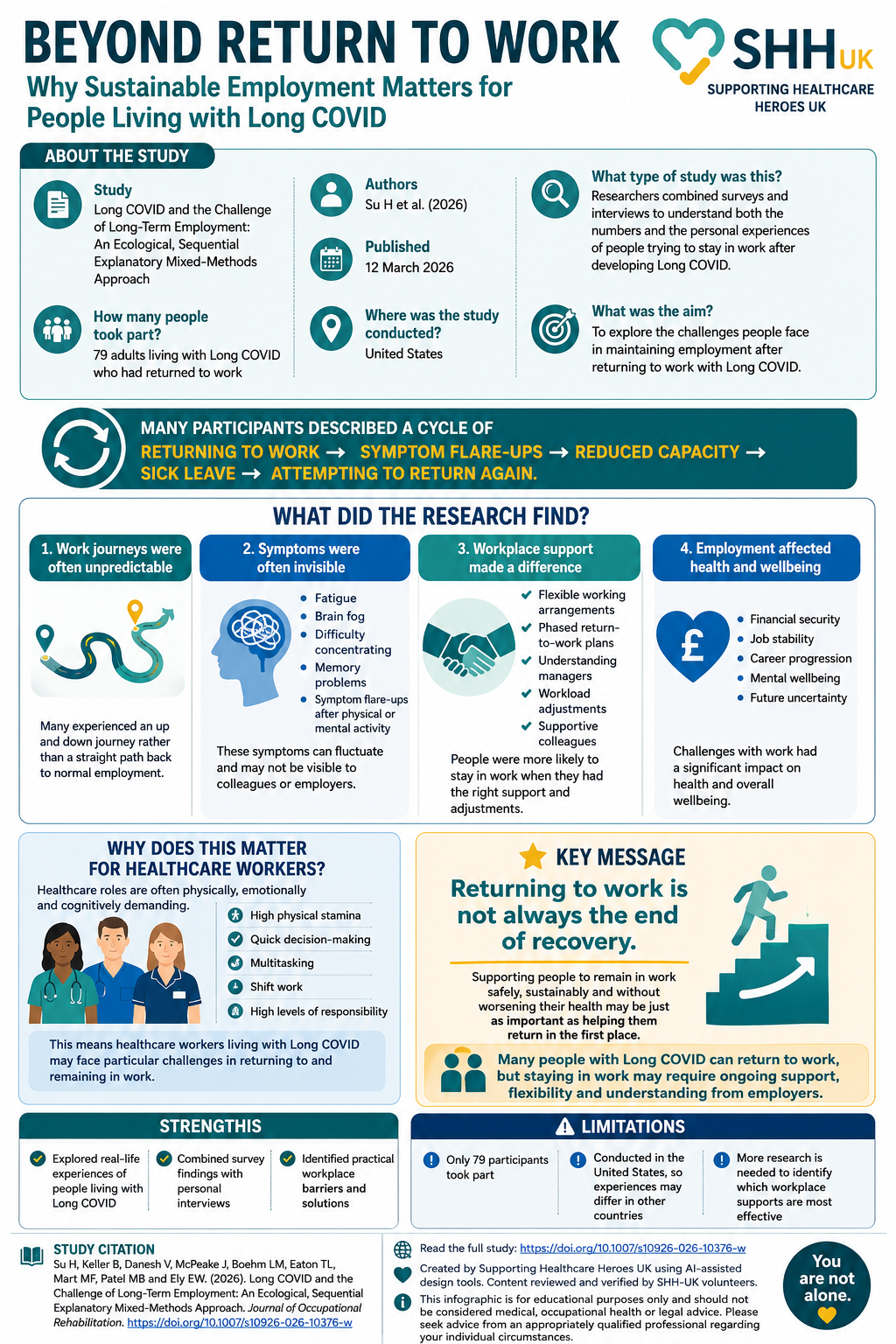
Returning to work is often viewed as a major milestone in recovery. However, for many people living with Long COVID, returning to work does not necessarily mean returning to their previous level of health. This study by Su and colleagues explored the experiences of 79 adults living with Long COVID who had returned to employment. […]

Learn why the precautionary principle is fundamental to infection prevention and how its application protects healthcare workers and patients.