
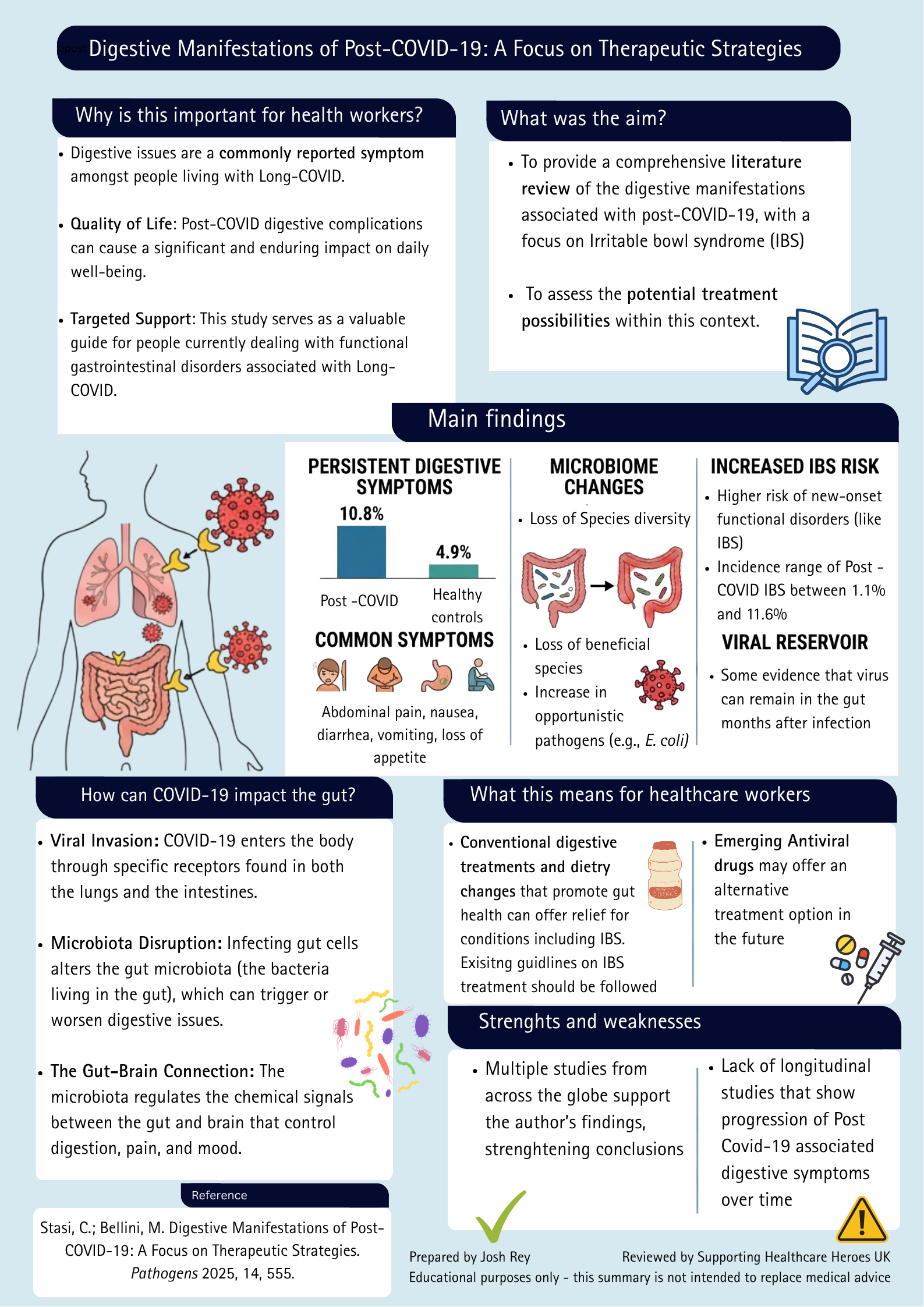
Long COVID and Digestive Symptoms: What the Research Tells Us
Research summary exploring digestive manifestations of Long COVID, including gut microbiome changes, IBS risk and potential treatment approaches.
Read more

Nature published a study (19/01/24) looking at the effects on the brain of mild Covid-19 infections. Multiple studies have reported neurological manifestations of COVID-19, including cognitive dysfunction, fatigue, anxiety and depression. However, there is limited understanding of the nature and duration of these post-infectious symptoms, especially in people who were not hospitalised.
The mechanisms underlying neurological symptoms remain unclear. Neuro-imaging studies have found conflicting results regarding structural and functional brain changes after COVID-19. Most studies focused on hospitalised patients or did not use standard Long Covid definitions.
This study evaluated non-hospitalised patients with confirmed COVID-19 after recovery, using CDC criteria for Long Covid. Individuals with anxiety/depression were excluded. Clinical symptoms, cognition, fatigue, white matter integrity, and default mode network connectivity were examined.
The goal was to provide insights into neurological and cognitive sequalae of mild COVID-19 using consistent Long Covid definitions in outpatients without confounding psychiatric conditions.
Understanding the impact of mild SARS-CoV-2 infection on brain structure and function will provide a foundation for uncovering mechanisms underlying diverse neuropsychiatric manifestations of Long Covid.
You can read the full article here.
Research summary exploring digestive manifestations of Long COVID, including gut microbiome changes, IBS risk and potential treatment approaches.
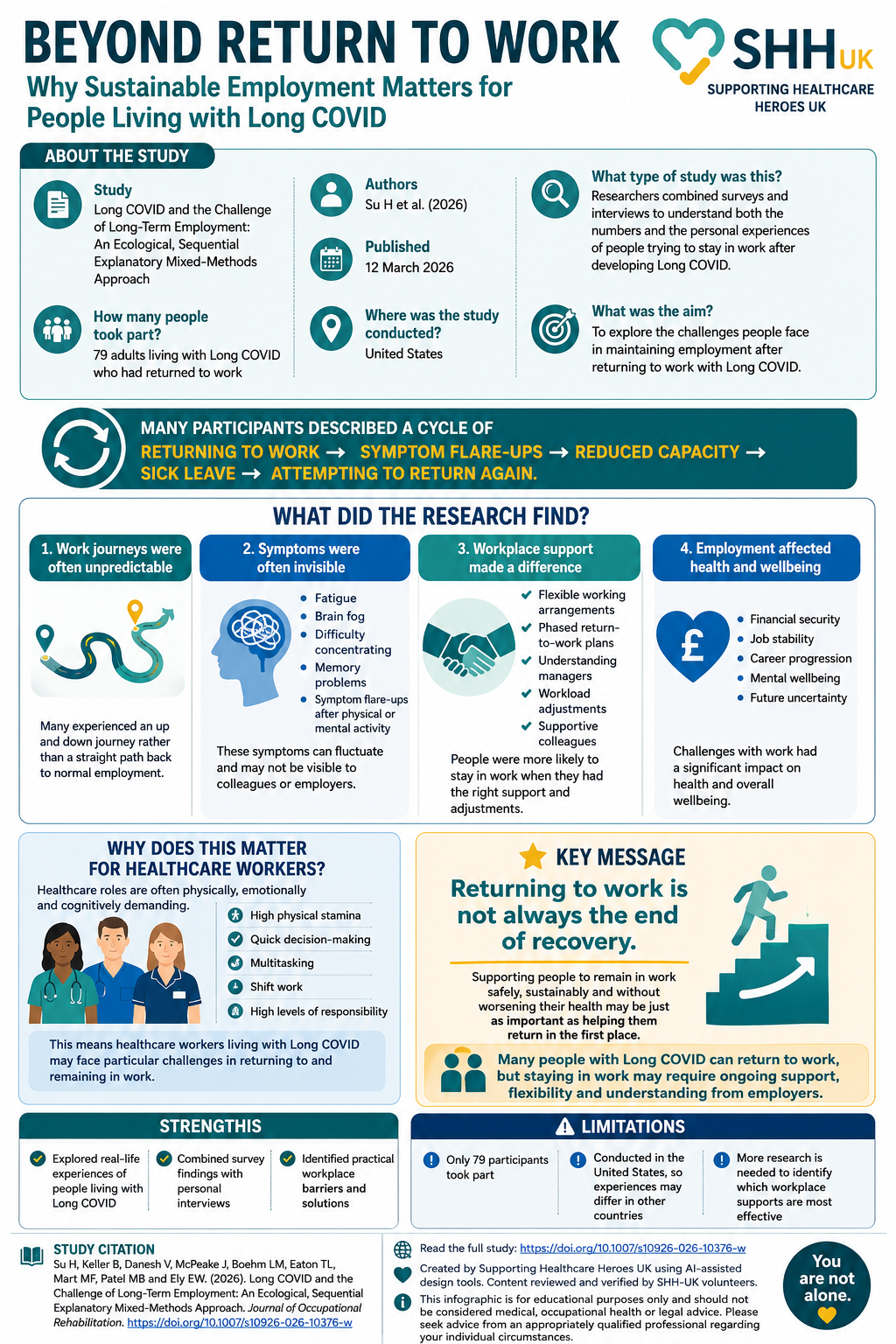
Returning to work is often viewed as a major milestone in recovery. However, for many people living with Long COVID, returning to work does not necessarily mean returning to their previous level of health. This study by Su and colleagues explored the experiences of 79 adults living with Long COVID who had returned to employment. […]

Learn why the precautionary principle is fundamental to infection prevention and how its application protects healthcare workers and patients.