
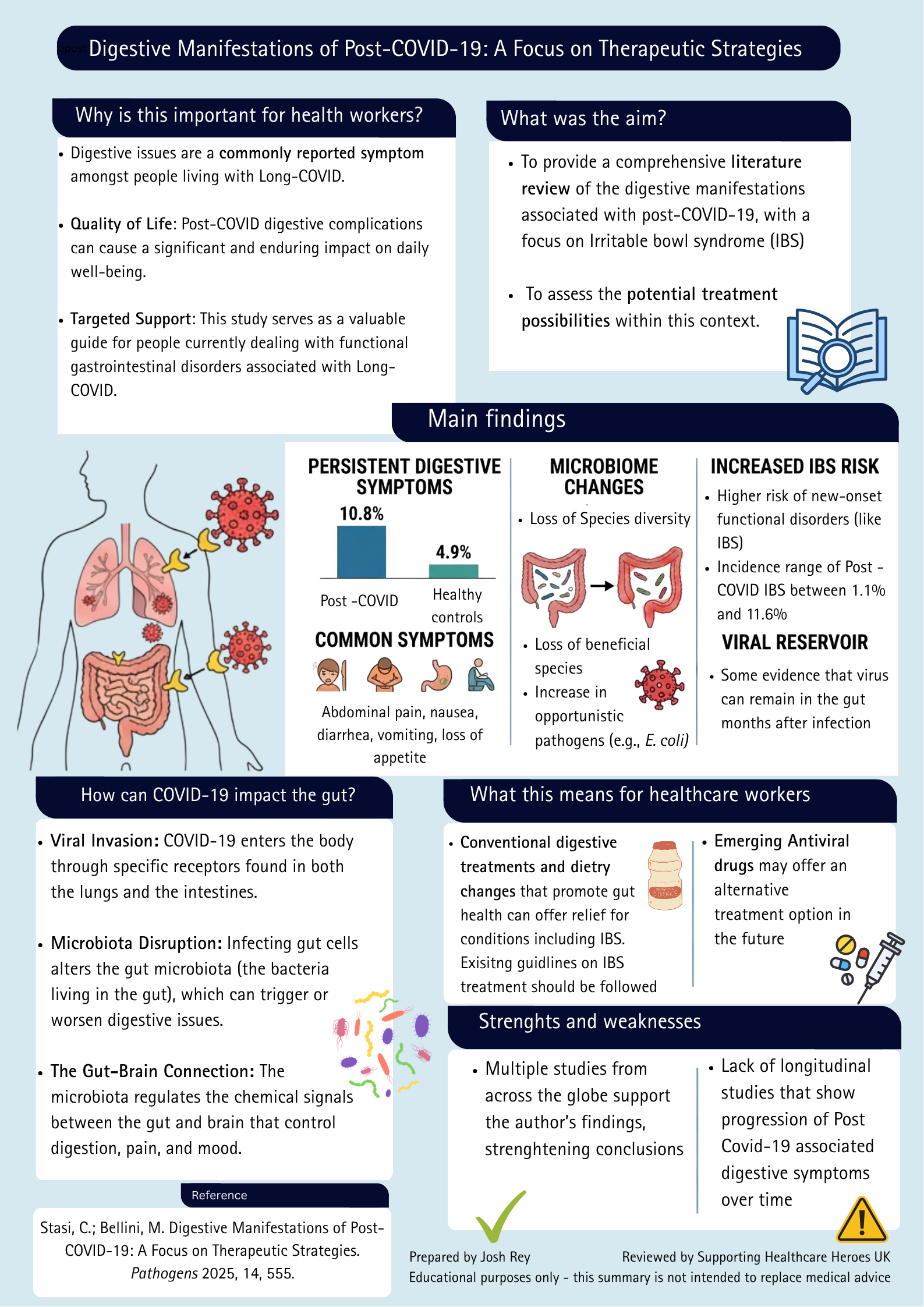
Long COVID and Digestive Symptoms: What the Research Tells Us
Research summary exploring digestive manifestations of Long COVID, including gut microbiome changes, IBS risk and potential treatment approaches.
Read more

A study in the Journal of Clinical Rheumatology (08/01/23) investigated the association between COVID-19 and subsequent autoimmune disease development in Japan. It looked at both short and long-term risks, as well as differences between COVID-19 variants. Electronic health records were analyzed for over 90,000 COVID-19 patients and 450,000 non-COVID-19 patients.
The study found COVID-19 is associated with a significantly higher relative risk of developing various autoimmune diseases including rheumatoid arthritis, systemic sclerosis, and immunoglobulin G4-related disease. The risk was elevated both in the short-term and long-term after COVID-19 infection.
For some autoimmune diseases like systemic sclerosis and immunoglobulin G4-related disease, the long-term risks after COVID-19 were especially substantial. The variant-specific risks varied across the different autoimmune disease outcomes examined.
he authors conclude that COVID-19 is associated with increased autoimmune disease development in the Japanese population and this risk persists long-term. The results provide insights into the link between viral infections and autoimmunity.
In summary, this well-conducted study using a large dataset demonstrates COVID-19 significantly raises the risk of developing certain autoimmune diseases, both acutely and over the long term. Further research is warranted on the mechanisms driving this association.
The full study can be read here.
Research summary exploring digestive manifestations of Long COVID, including gut microbiome changes, IBS risk and potential treatment approaches.
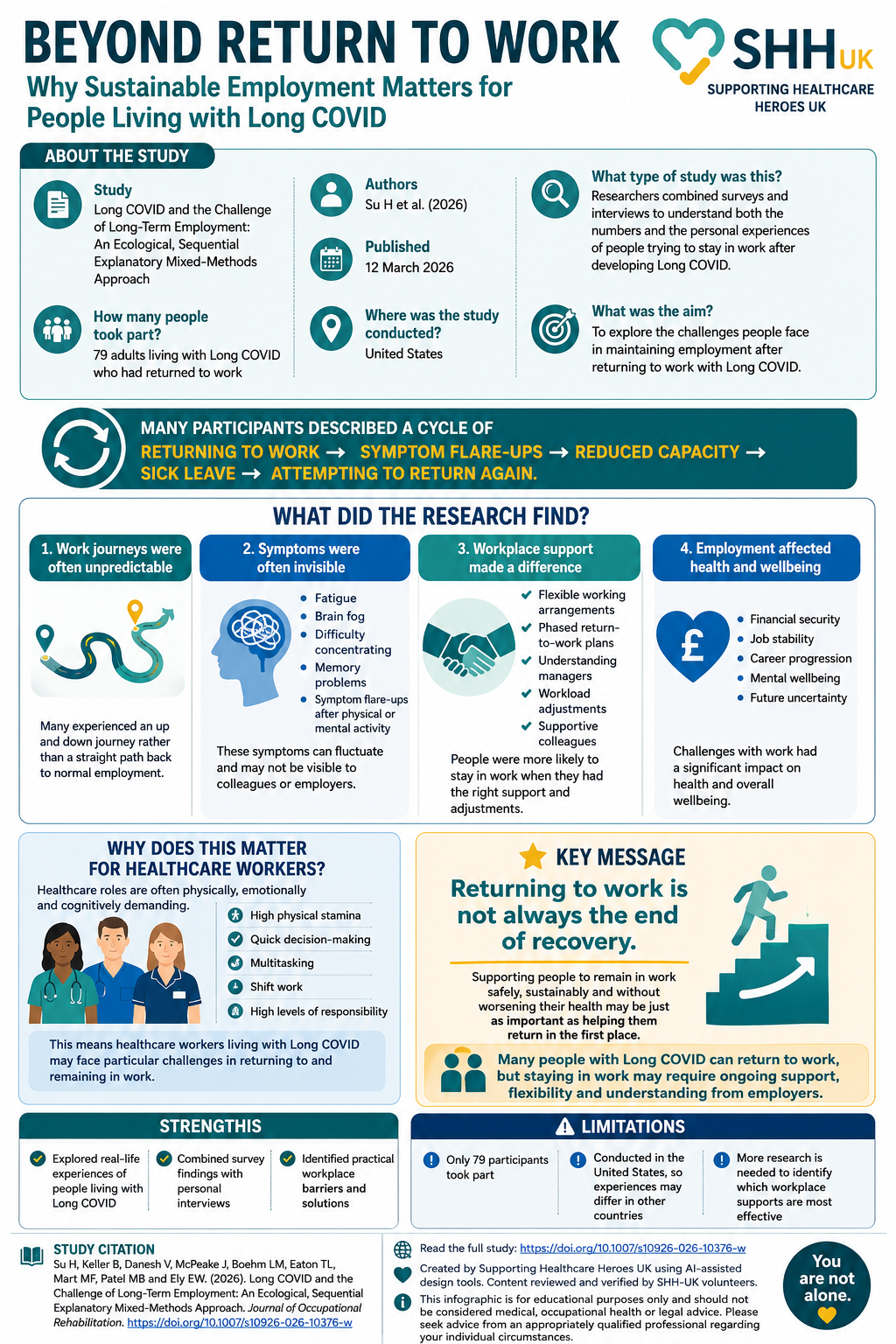
Returning to work is often viewed as a major milestone in recovery. However, for many people living with Long COVID, returning to work does not necessarily mean returning to their previous level of health. This study by Su and colleagues explored the experiences of 79 adults living with Long COVID who had returned to employment. […]

Learn why the precautionary principle is fundamental to infection prevention and how its application protects healthcare workers and patients.