Summary:
Evidence shows that air filters reduce infections however public health messages have been inconsistent and confusing.
Li, T. et al., (2025) summarised by Hannah Bissell
Introduction
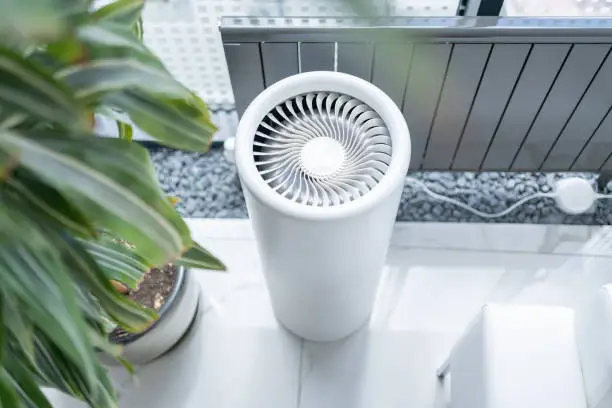
In the COVID-19 pandemic, advice regarding portable air filters has been inconsistent and often confusing. This leaves healthcare professionals and the public unsure whether air filters really reduce the spread of airborne diseases. To address this, experts in infectious diseases, public health, engineering, and aerosol science reviewed the evidence on how portable air filters can help control infections like COVID-19.
COVID-19 spreads through respiratory particles. The more virus in the air, the greater the risk of infection. Measures that can reduce risk include portable air filters, respirator-grade masks, ventilation (bringing fresh air in and removing stale air), high-efficiency air conditioning (HVAC) systems, and germicidal ultraviolet light.
Summary
The review, conducted in Canada, looked at whether portable air filters are effective, despite claims of being too expensive or difficult to use. Existing literature and guidelines were assessed to provide clear evidence on the effectiveness of filters.
Evidence shows that portable air filters do lower the amount of virus in the air. For example, one study found that in rooms with portable air filters, COVID-19 was detected in 25% of samples, compared to 44% in rooms without filters. The filters were running at their lowest setting and reduced positive detections by almost 20%. This supports findings from bodies such as the U.S. Centers for Disease Control and the Ontario Society for Professional Engineers. Portable filters use high-efficiency filtering (such as HEPA or MERV-13) to capture particles of many sizes, including those carrying viruses and bacteria. They work best when correctly sized, well-maintained, and properly placed in a room. Filters are not a complete solution with crowded indoor spaces carrying higher transmission risks. However, filters lower airborne virus levels and reduce how many people become infected and how quickly disease spreads.
Conclusion
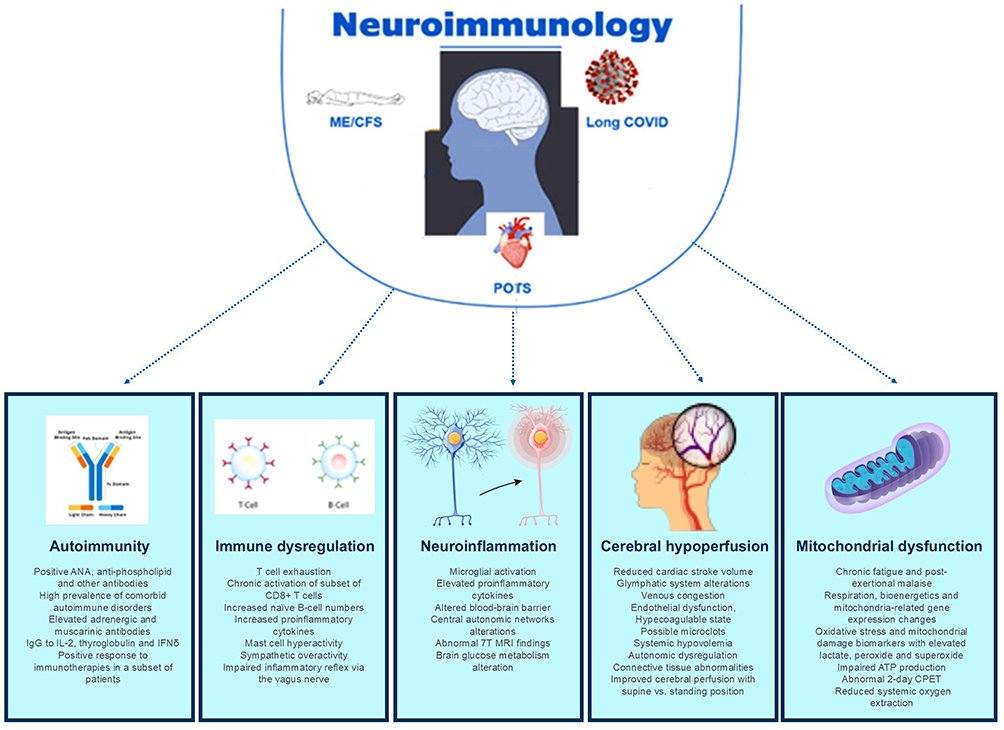
Portable air filters with HEPA or MERV-13 filters are simple to use, relatively low-cost, and safe. The absence of specific evidence does not mean lack of benefit; in fact, long-standing research supports their role in reducing airborne disease. There is a call to action for more clinical trials that test how well filters reduce COVID-19 particles in the air. Portable filters can help save lives, reduce long-term impacts such as Long Covid, and should be part of public health guidance.
Read the full article here