Summary:
Too intense or frequent exercise can make Long Covid symptoms worse due to muscular changes caused by COVID-19.
Appelman, B. et al (2025) summarised by Yesenia J M Camacho.
Introduction
One of the main problems in Long Covid is a symptom called post exertional malaise. This means that after physical or mental effort, patients feel much worse sometimes for days. Unlike normal tiredness after exercise, post exertional malaise is unique, unpredictable, and often prevents recovery. Because of this, exercise that is too intense or too frequent may not help people with Long Covid and can even make their symptoms worse.
Summary
This study focused on the role of skeletal muscle and how it changes in patients with Long Covid who experience post exertional malaise. The researchers wanted to understand:
- Are the muscle problems simply caused by being inactive
- Is there something specific about Long Covid that affects the muscles differently?
The study did not test whether exercise is good or bad as a treatment it only studied what happens in the muscles during post exertional malaise:
- The muscle changes in Long Covid patients are not the same as those caused by simple inactivity or bed rest
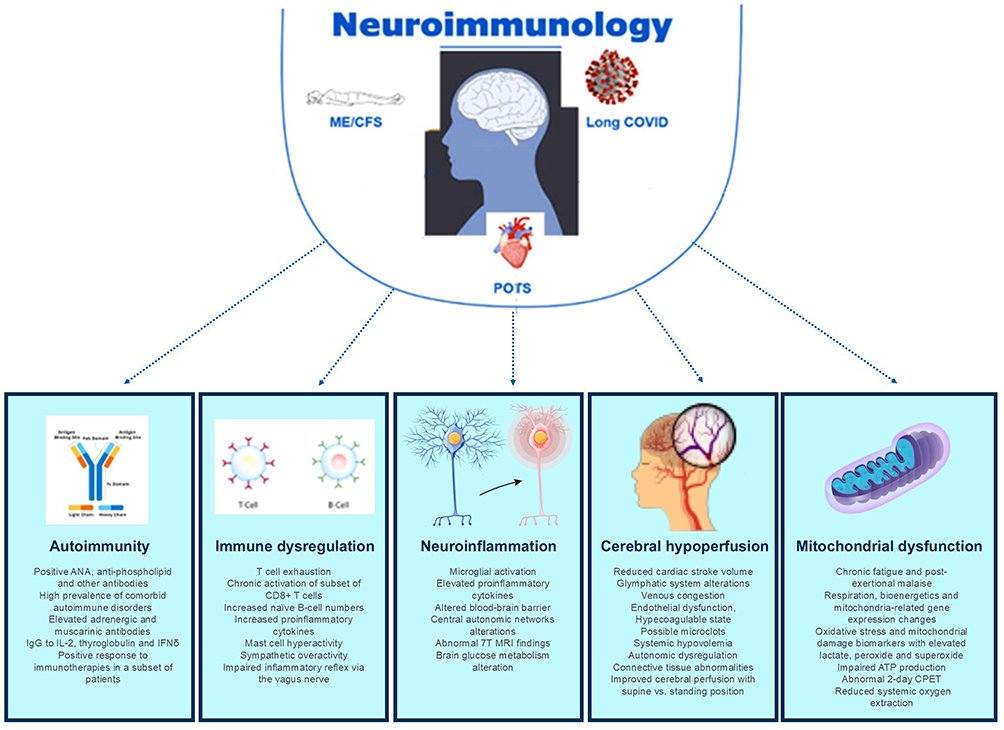
- Inactivity usually causes muscle loss and fewer blood vessels, but Long Covid patients showed different patterns: their muscles looked more “glycolytic” (using energy less efficiently) and had mitochondrial dysfunction (problems in the energy-producing parts of the cells)
- Patients with Long Covid showed more signs of muscle damage, including weakened fibres, inflammation, and abnormal mitochondria
- All the Long Covid patients studied experienced post exertional malaise, but their fitness levels varied as some were relatively fit, others less so. This shows that post exertional malaise is not simply linked to being unfit
- Control groups without Long Covid, even with similar activity levels, did not experience post exertional malaise.
Some researchers (Saris et al. 2025) suggested that exercise training could still be helpful in Long Covid, based on experiences with other diseases. However, the authors of this study emphasize that post exertional malaise is specific to Long Covid and other post-viral conditions like Chronic Fatigue Syndrome, and it cannot be treated in the same way as muscle weakness from inactivity. They caution against generalizing findings from other conditions.
Conclusion
This research shows that Long Covid patients with post exertional malaise have unique muscle abnormalities that cannot be explained by deconditioning alone (due to being inactive). The exact causes are not fully understood, for instance factors such as immune system changes, viral persistence, or autoimmunity may play a role. Because of post exertional malaise, intense exercise above a certain threshold is unlikely to be a safe or effective treatment for these patients. Instead, patients and clinicians should follow established guidelines: avoid activities that trigger post exertional malaise, and focus on conserving energy. More research is needed to understand the mechanisms behind post exertional malaise and to develop better therapies for Long Covid.
Read the study here