
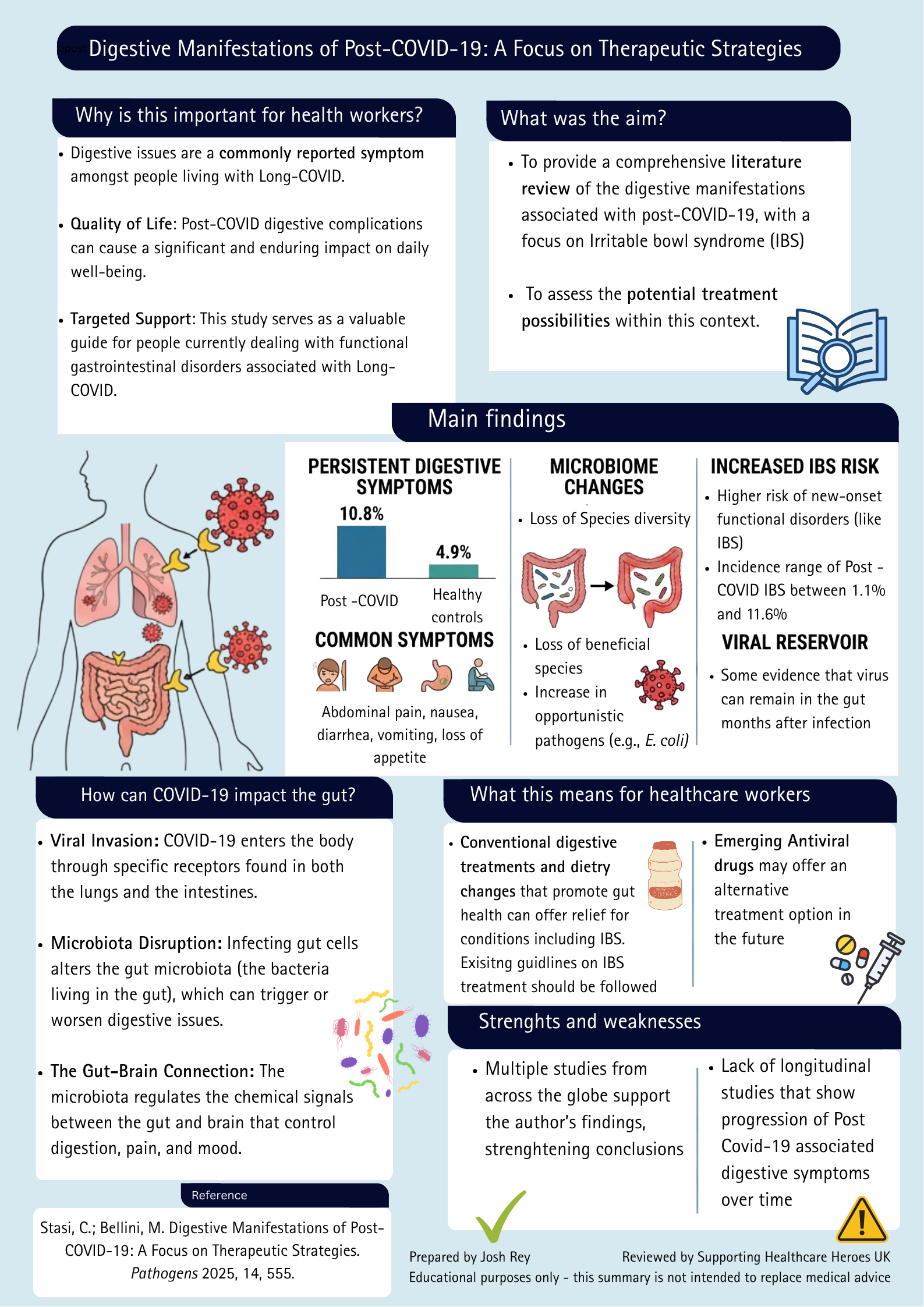
Long COVID and Digestive Symptoms: What the Research Tells Us
Research summary exploring digestive manifestations of Long COVID, including gut microbiome changes, IBS risk and potential treatment approaches.
Read more
Summary: Studying maternal COVID-19 infection while delivering babies, testing air samples and virus shedding.
Thuresson, S. et. al., (2024), summarised by Hannah Bissell
Introduction
Very few studies have looked at the risk of contracting COVID-19 in hospital delivery rooms, even though many studies have examined infection risk in general hospital wards. Childbirth is a situation where heavy breathing and physical effort make wearing a mask difficult, which may increase the amount of virus someone infected with COVID-19 releases into the air. Previous research has included only a small number of air samples taken during labour, meaning the understanding of the risk of COVID-19 infection to healthcare staff has been limited. This study set out to measure COVID-19 virus in the air during vaginal deliveries when women were not wearing face masks.
Summary
The study was carried out in two hospitals in Southern Sweden between November 2020 and January 2022. Whenever a pregnant woman who had recently tested positive for COVID-19 went into labour, the research team was alerted and collected air samples from the delivery room. Air samples were taken before, during, and after the birth, over periods lasting between 1 and 6 hours. The air samplers were placed 1 metre above the ground and positioned 0.5–2.5 metres from the mother’s head.
The researchers collected 43 air samples across six deliveries:
All positive air samples were found within 1–2 metres of the mother. Samples taken from the anterooms, corridors, and other areas, were negative.
Conclusion
Overall, 21% of the samples showed the presence of COVID-19, higher than in previous studies, which reported positivity rates of around 10%. However, most of the positive results came from a single patient, suggesting that some individuals release much more virus than others. The findings show that healthcare staff attending births face a higher infection risk because they work in very close proximity to unmasked mothers for long periods of time. This highlights the need for measures such as appropriate protective equipment for staff, effective ventilation, infection prevention and control measures. This study suggests that while most patients may not release large amounts of virus during childbirth, a small number may shed significantly more, however it is difficult to predict these individuals.
Read the full article here
Research summary exploring digestive manifestations of Long COVID, including gut microbiome changes, IBS risk and potential treatment approaches.
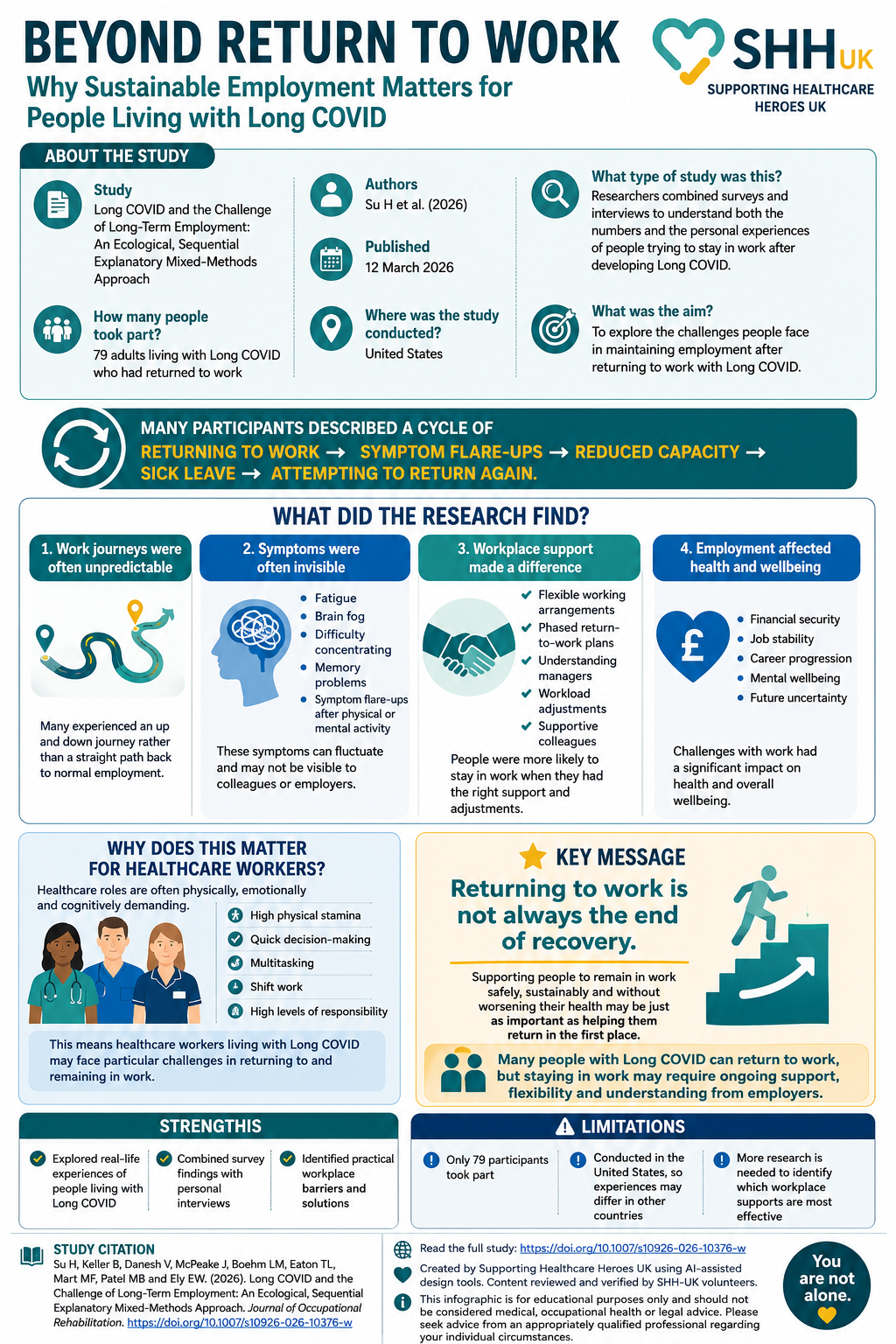
Returning to work is often viewed as a major milestone in recovery. However, for many people living with Long COVID, returning to work does not necessarily mean returning to their previous level of health. This study by Su and colleagues explored the experiences of 79 adults living with Long COVID who had returned to employment. […]
Learn why the precautionary principle is fundamental to infection prevention and how its application protects healthcare workers and patients.