
Long COVID and Digestive Symptoms: What the Research Tells Us
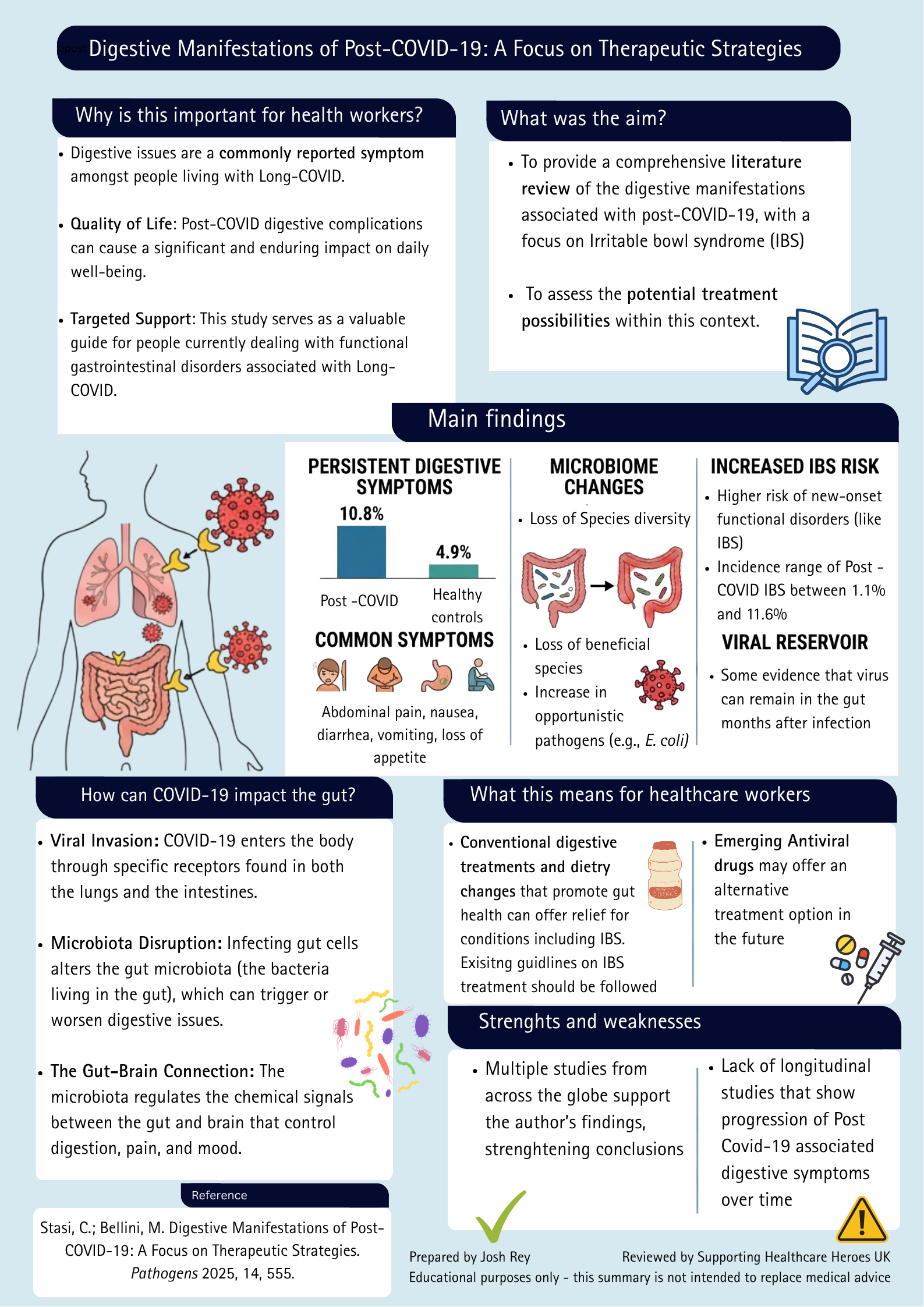
Research summary exploring digestive manifestations of Long COVID, including gut microbiome changes, IBS risk and potential treatment approaches.
Read more

Summary: This details autonomic Long Covid symptoms, following up on patients from a 2022 study.
Eastin, E. F. et al., (2025) summarised by Katy Rushbrook
Introduction
This study investigated the long-term autonomic symptoms of Long Covid. This means the symptoms that relate to the automatic part of the nervous system, such as heart rate, digestion and blood pressure. Previously, there has been limited data showing the progression over time of autonomic symptoms in Long Covid. This aims to understand how Long Covid may progress and which factors predict severity, persistence and frequency of symptoms, quality of life and degree of disability.
Summary
The study followed up from the authors’ 2022 paper which looked at autonomic symptoms shortly after COVID-19 infection, and it recruited participants from the original cohort. 526 participants were included in the final analysis and 86 participants provided results from the orthostatic stand test.
· Orthostatic stand test is to measure orthostatic intolerance (symptoms like dizziness, light-headedness and fainting when standing up, which are relieved when sitting or lying down)
· POTS (postural orthostatic tachycardia syndrome) is a specific type of orthostatic intolerance where the heart rate increases excessively when standing
· Orthostatic hypotension is when blood pressure drops when standing
The participants were 20-65 years old, 88% female at birth, 84% white, other ethnicities included Latino/Hispanic, Asian, black and biracial/multiracial. Most participants were from California. All participants completed surveys, some completed an orthostatic stand test, where blood pressure and heart rate were tested when the participant was lying down and when standing.
Results showed that 85.6% of participants still experienced Long Covid symptoms and 71.9% of these had moderate-to-severe autonomic dysfunction. The most common and persistent Long Covid symptoms were fatigue, brain fog, difficulty sleeping, light-headedness, heart palpitations and tachycardia (fast heart rate). The median symptom duration was 36 months after infection. Predictors of autonomic dysfunction in Long Covid were being female and having hypermobile joints. Joint hypermobility was associated with a twofold increased risk of developing POTS and a 68% increased risk of moderate-to-severe autonomic dysfunction following COVID-19.
The study also showed that reinfection was associated with increased autonomic severity. 37.5% of participants could not work or attend school because of Long Covid and 44% of participants reported a new autonomic diagnosis following COVID-19, with POTS being the most common. Only 13.6% of participants had recovered from their post-infection autonomic diagnosis. Participants said that beta-blockers were the most effective for reducing Long Covid symptoms (15.9%), but most participants needed a combination of treatments to reduce symptoms.
Conclusion
Chronic autonomic dysfunction is common in Long Covid and is linked to quality of life and functional disability, referring to long-term limitations on ability to perform everyday tasks such as dressing and working. The study highlighted the need for more effective therapies and clinical trials for Long Covid and further research on the interplay between joint hypermobility, female sex and autonomic dysfunction in infection-associated chronic conditions. Future clinical trials on autonomic symptoms in Long Covid should also consider separating participants with generalised joint hypermobility or diagnoses of connective tissue disorders such as EDS (Ehler’s Danlos Syndrome) from participants without those conditions.
Read the full article here
Research summary exploring digestive manifestations of Long COVID, including gut microbiome changes, IBS risk and potential treatment approaches.
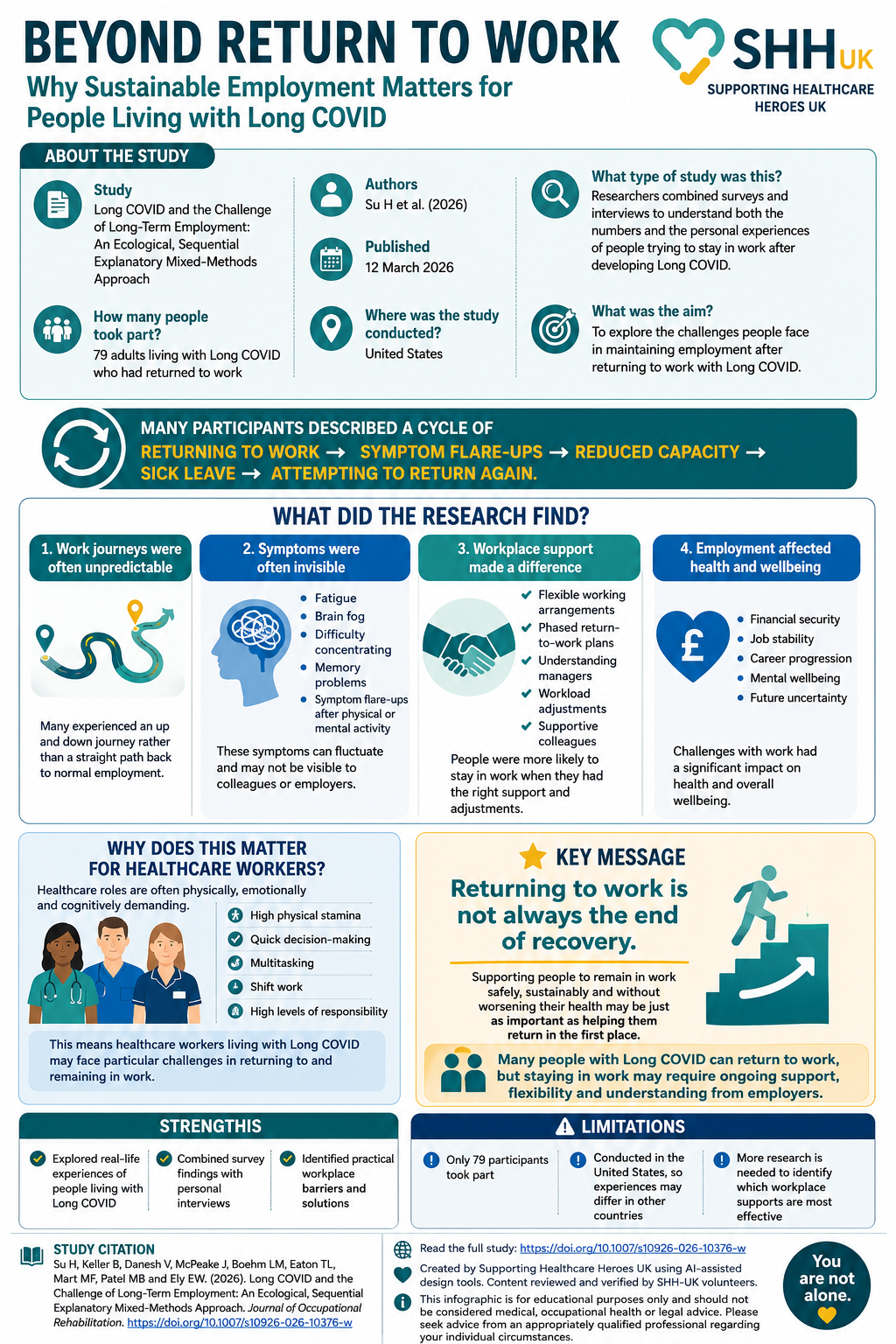
Returning to work is often viewed as a major milestone in recovery. However, for many people living with Long COVID, returning to work does not necessarily mean returning to their previous level of health. This study by Su and colleagues explored the experiences of 79 adults living with Long COVID who had returned to employment. […]

Learn why the precautionary principle is fundamental to infection prevention and how its application protects healthcare workers and patients.