
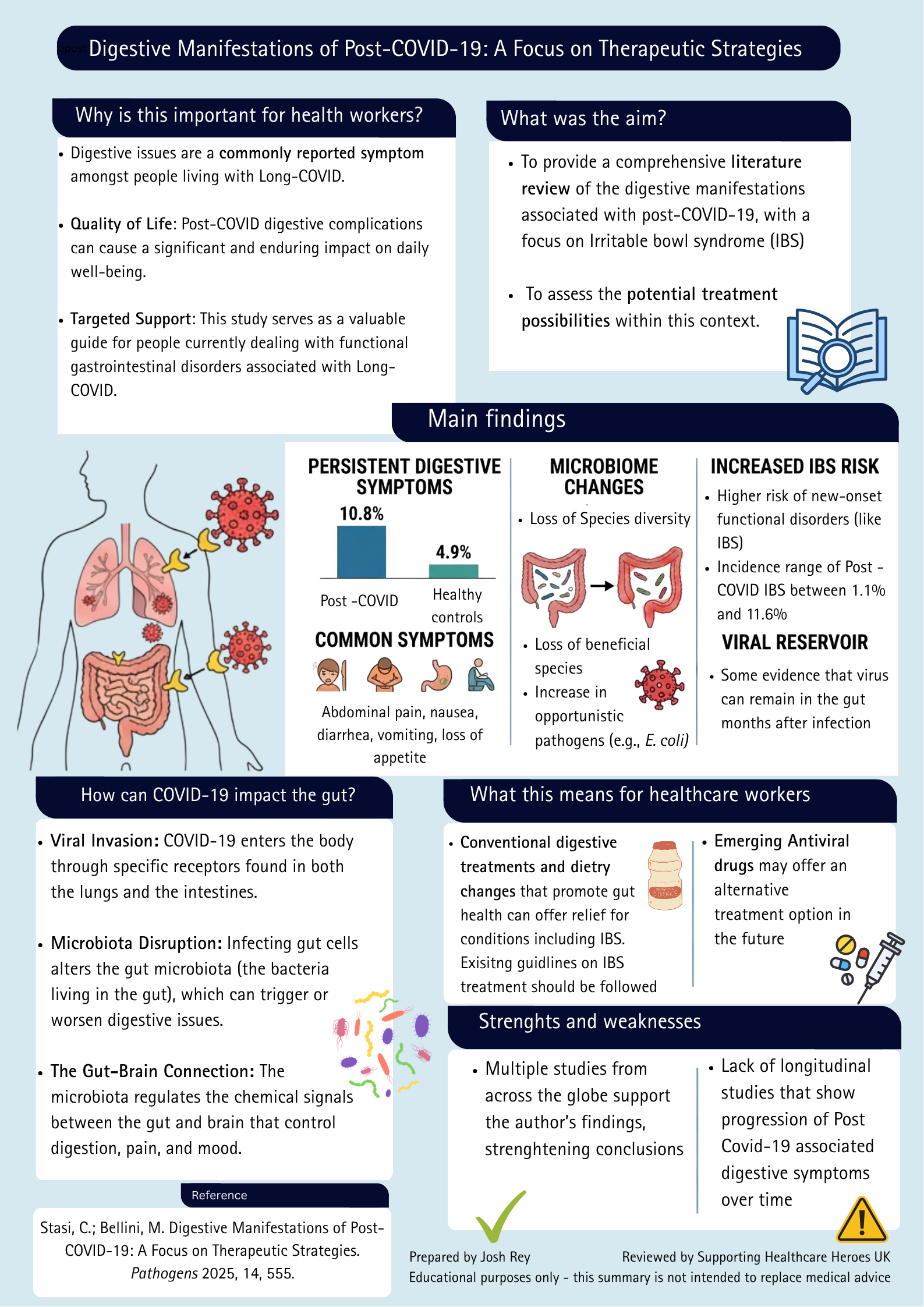
Long COVID and Digestive Symptoms: What the Research Tells Us
Research summary exploring digestive manifestations of Long COVID, including gut microbiome changes, IBS risk and potential treatment approaches.
Read more

Summary:
POTS is a disabling condition, often having co-existing conditions. Exercise is a commonly recommended treatment but this can be unhelpful for POTS patients.
Cortez, M. M. et. al., (2025) summarised by Yesenia J.M. Camacho
Note: Exercise can be counterproductive for people with Long Covid and PoTs if they experience post-exertional malaise (PEM) or post-exertional symptom exacerbation (PESE). Some people with Long Covid are exercise intolerant.
Introduction
Postural Orthostatic Tachycardia Syndrome (POTS) is a complex and often disabling condition characterised by symptoms of autonomic dysfunction, most notably excessive heart rate increase upon standing. Exercise is commonly recommended as part of treatment, yet current research shows significant variability in how exercise interventions are studied, designed, and applied. Furthermore, many POTS patients have coexisting conditions that complicate exercise participation and outcomes, but these are often underrepresented or excluded in studies. Understanding how comorbidities and variability in exercise programs impact outcomes is essential to develop evidence-based, inclusive recommendations. POTS can occur after a COVID-19 infection leading to Long Covid.
Summary
This review analysed seven studies on the effects of exercise in people with POTS. Most programs focused on aerobic training and sometimes included strength training, usually over about 3 months. Exercises often started in laying or seated positions and gradually progressed. Some programs also encouraged increased salt and fluid intake. Most studies found that exercise helped lower standing heart rate, improved heart function and made participants feel better overall. In some cases, people no longer met the diagnostic criteria for POTS after completing the program. However, the results were hard to compare due to different methods, small sample sizes and unclear reporting in several cases. Importantly, most studies excluded participants with other common POTS-related conditions like Long Covid, migraines, hypermobility, MCAS, or ME/CFS and these are conditions that can affect how people tolerate or respond to exercise. This limits how relevant the findings are to real-world patients. In addition, most studies only tracked short-term outcomes and didn’t account for flare ups, symptom setbacks or long-term adherence.
Conclusion
Current research supports a potential role for aerobic exercise in managing POTS, mainly by expanding blood volume and improving heart function. However, most studies overlook common coexisting conditions such as Long Covid, they vary widely in exercise methods thereby limiting any real relevance. The lack of long-term data, standardised protocols, and attention to symptom flares or patient experience highlights the need for better-designed studies. Future research should include diverse participants, detailed and adaptive exercise plans, and track both benefits and adverse effects over time to guide more effective, personalised care, using more inclusive study groups, consistent protocols, and longer follow-up periods to create safe, effective, and individual exercise treatments for people living with POTS.
Read the study here
Research summary exploring digestive manifestations of Long COVID, including gut microbiome changes, IBS risk and potential treatment approaches.
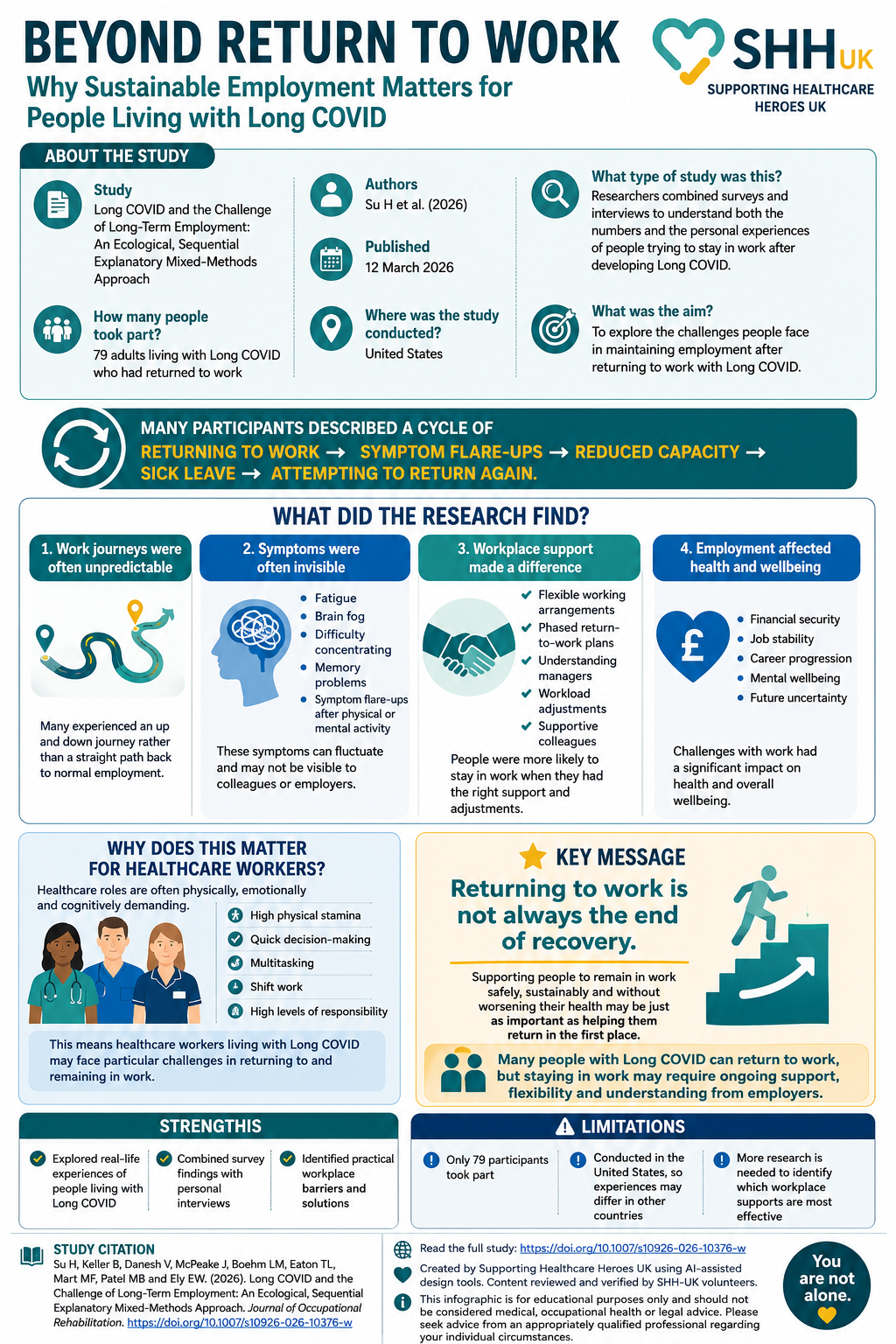
Returning to work is often viewed as a major milestone in recovery. However, for many people living with Long COVID, returning to work does not necessarily mean returning to their previous level of health. This study by Su and colleagues explored the experiences of 79 adults living with Long COVID who had returned to employment. […]
Learn why the precautionary principle is fundamental to infection prevention and how its application protects healthcare workers and patients.