
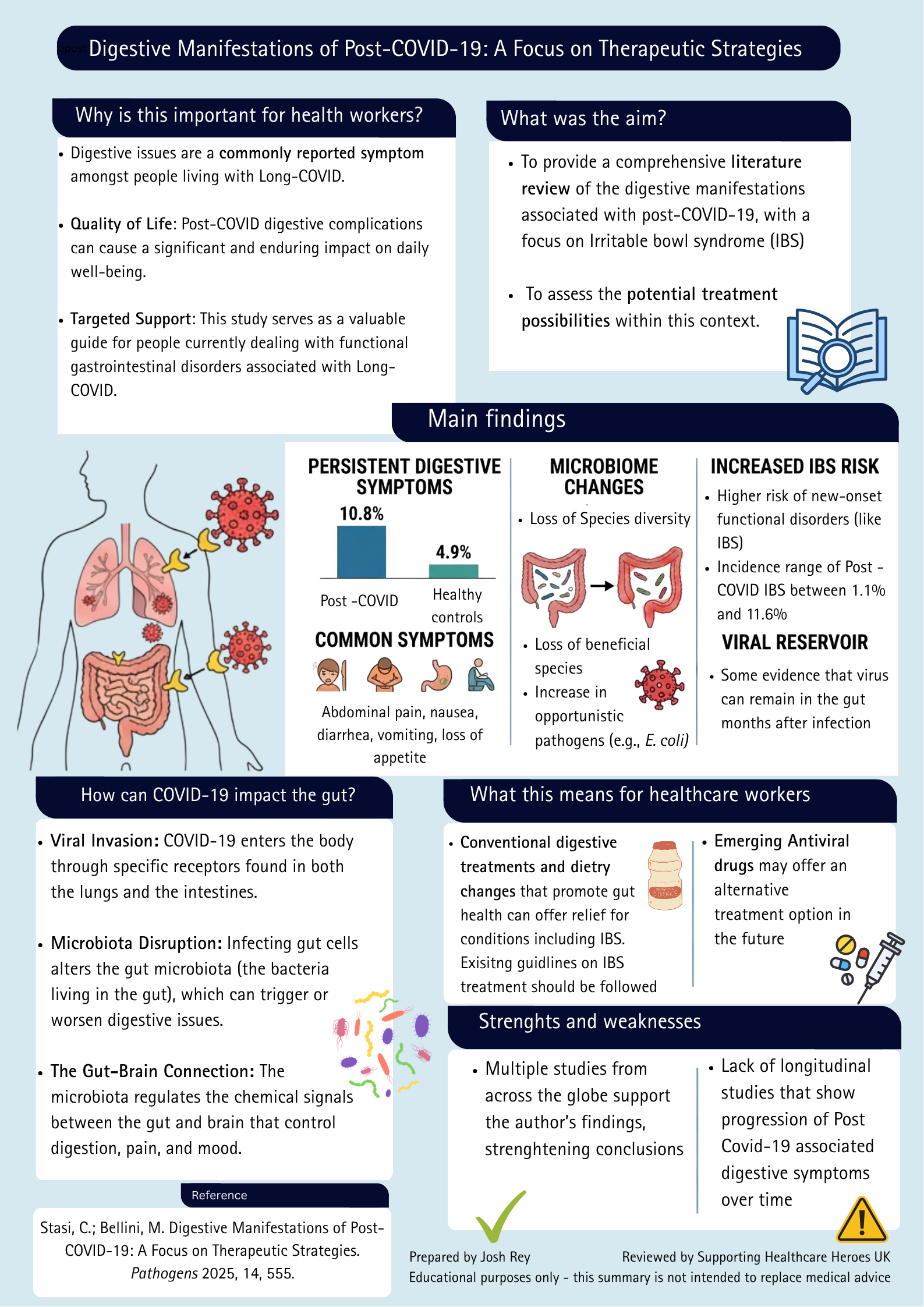
Long COVID and Digestive Symptoms: What the Research Tells Us
Research summary exploring digestive manifestations of Long COVID, including gut microbiome changes, IBS risk and potential treatment approaches.
Read more
Summary: This study explored whether having endometriosis increased the likelihood of developing Long Covid.
Vallée, A. et al ., (2025) summarised by Hannah Bissell
Introduction
Long Covid is estimated to affect between 10% and 30% of people who have had COVID-19. Endometriosis is a chronic inflammatory condition that affects around 10% of women of childbearing age. Common symptoms include chronic pelvic pain, infertility, painful periods, and pain during intercourse. This study aimed to explore whether having endometriosis increases the likelihood of developing Long Covid. To date, very few studies have examined how these two conditions may interact.
Summary
This study was a systematic review and meta-analysis, meaning the authors carefully searched and combined results from previous studies. They reviewed three major databases up to August 2023. Of 624 studies initially identified, only two met the eligibility criteria and were included. These studies compared women with endometriosis to women without the condition. Together, the two studies included 216,095 women. The prevalence of Long Covid among those with endometriosis was 16.2%, compared with 10% among those without endometriosis. When age was taken into account, the effect appeared stronger in women under 50 years old.
The researchers suggest that endometriosis may increase the risk of Long Covid because both conditions share immune and inflammatory processes. This means women with more severe endometriosis might experience longer-lasting or more intense Long Covid symptoms. The study must be interpreted with caution. This is due to the study having a large sample size and due to endometriosis being a prevalent condition, it is more common to achieve significant results. That being said, the high prevalence of Long Covid and endometriosis indicates that a modest increase in risk may still have meaningful public health implications.
Conclusion
There is a need for more integrated approaches to women’s health research that consider the roles of hormones, the immune system, and inflammation. Larger, long-term studies are needed to confirm these findings and to understand the biological links between endometriosis and Long Covid. While early evidence suggests that women with endometriosis may be slightly more likely to experience Long Covid, more research is needed to confirm this link and guide care for affected women.
Read the study here
Research summary exploring digestive manifestations of Long COVID, including gut microbiome changes, IBS risk and potential treatment approaches.
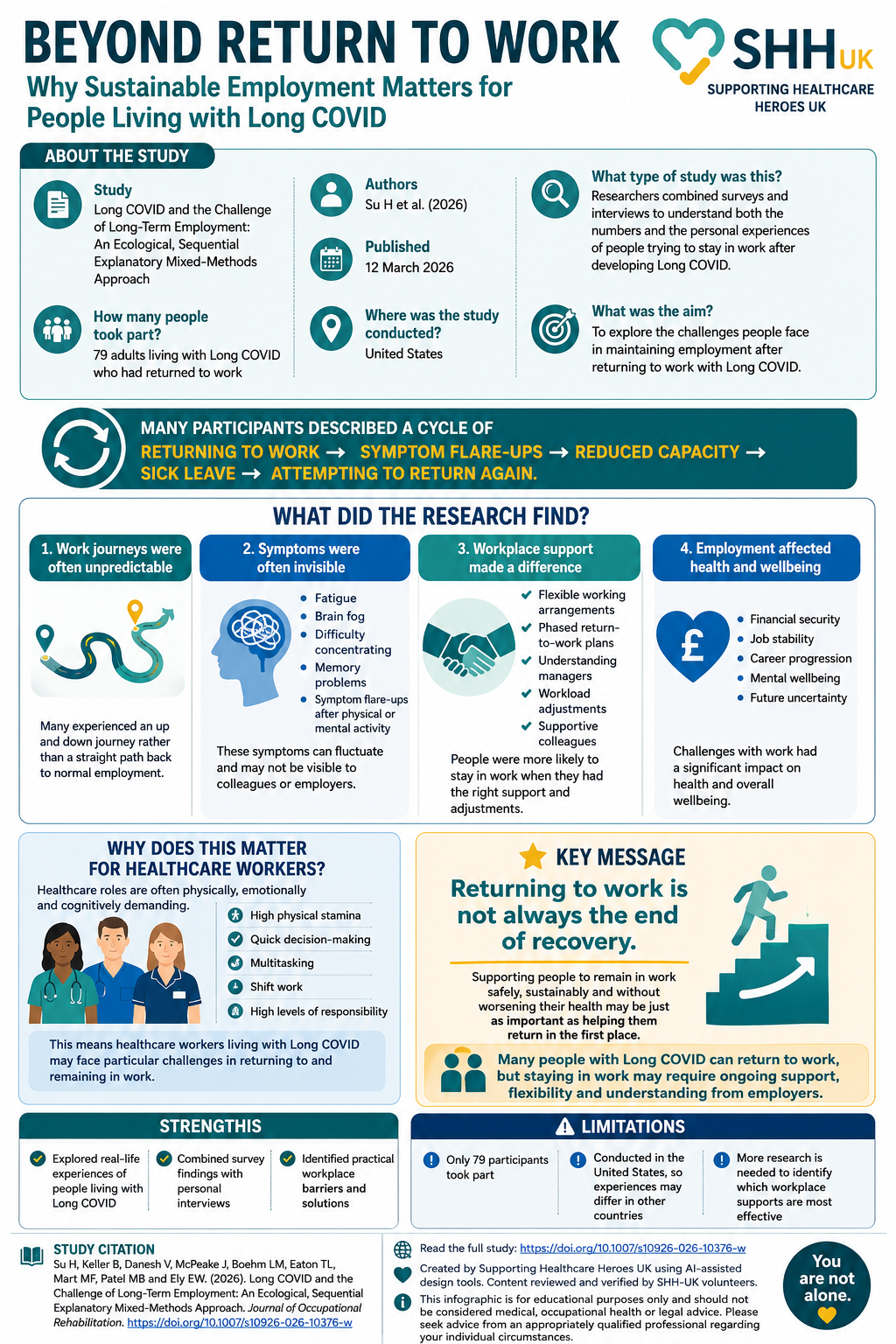
Returning to work is often viewed as a major milestone in recovery. However, for many people living with Long COVID, returning to work does not necessarily mean returning to their previous level of health. This study by Su and colleagues explored the experiences of 79 adults living with Long COVID who had returned to employment. […]
Learn why the precautionary principle is fundamental to infection prevention and how its application protects healthcare workers and patients.