
Long COVID and Digestive Symptoms: What the Research Tells Us
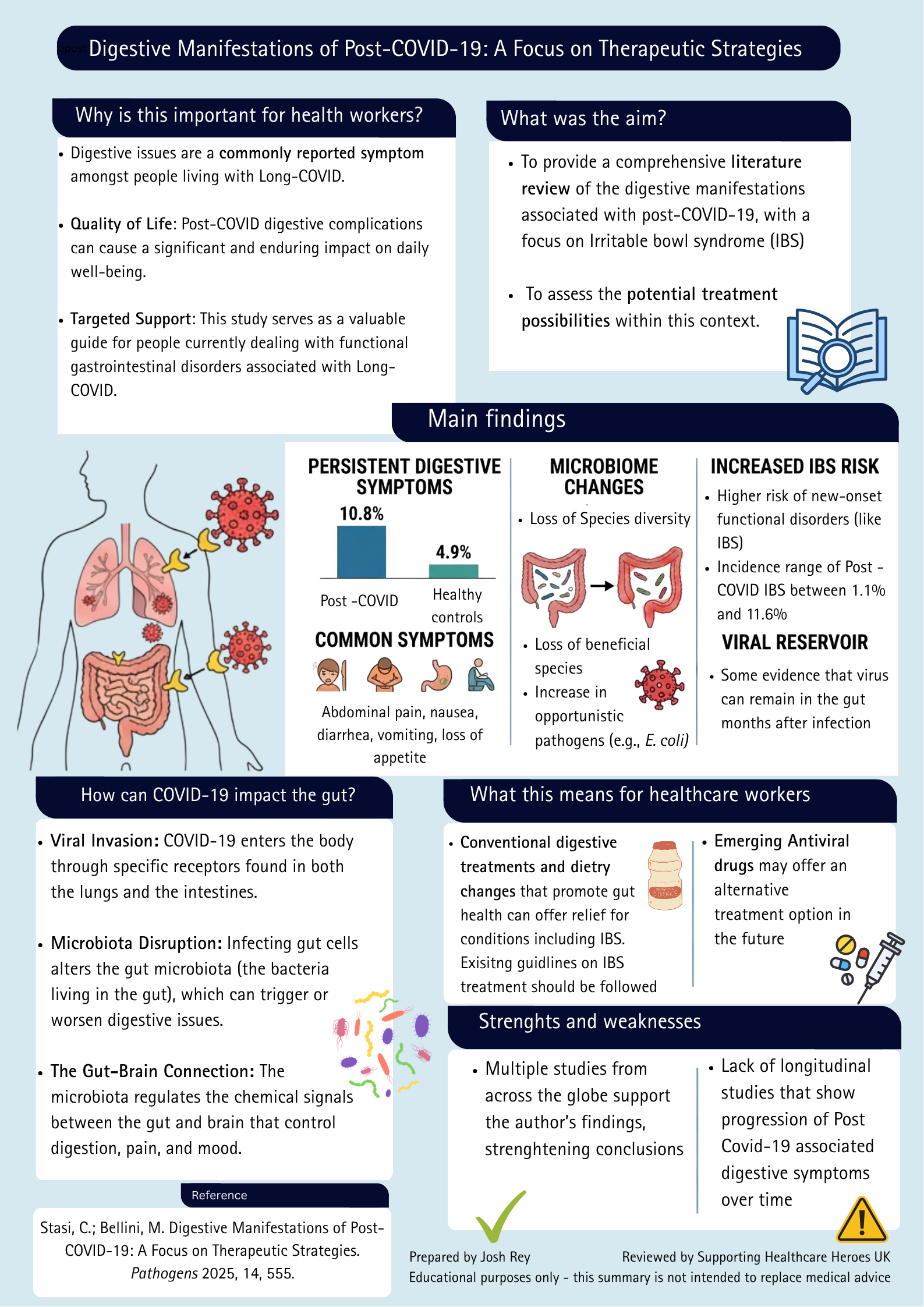
Research summary exploring digestive manifestations of Long COVID, including gut microbiome changes, IBS risk and potential treatment approaches.
Read more

Waters E. (2023) summarised by Graciela Maitland
Introduction
The British Medical Association (BMA) and Long Covid Doctors for Action (LCD4A) conducted a study between December 2022 and January 2023 to explore the impact of Long Covid on healthcare professionals, with 603 participants involved. Long Covid is an umbrella term for a diverse range of more than 200 symptoms. Recognising that Long Covid has a significant impact in the health, daily life, economy and career of front line doctors, they have outlined several demands: to recognise post-acute COVID (Long Covid) as a job-related illness for healthcare workers; offer financial support for doctors and healthcare staff with Long Covid; acknowledge severe symptoms; improve access to health services; strengthen workplace protections; offer support for safe, flexible workplace adjustments.
Summary
In March 2023, it was estimated that around 1.9 million people in the UK, or 2.9% of the population, had Long Covid. Globally, the prevalence was estimated at 10%. The Office for National Statistics suggested that up to 4.41% of healthcare workers may also have Long Covid, but specific figures for doctors and healthcare workers were not precise. The key findings showed that 18% of doctors could no longer work, and the proportion working full-time dropped from 57% to 31%. Nearly 49% experienced lost income due to Long Covid. The report highlighted inadequate workplace protections, with only 11% of doctors having access to FFP2 respirators and 16% to FFP3 respirators during their COVID-19 infections. GP surgeries were initially excluded from the NHS supply chain, forcing them to find equipment independently.
Doctors stated they are having trouble getting COVID-19 and Long Covid recognised as workplace illnesses. Many doctors added that they do not receive proper medical assessments and care for Long Covid. Others have not been sent to specialised clinics, making them feel unsupported. Some doctors mentioned that being declared unfit for work significantly reduced their income, relying on Universal Credit (UC) and Personal Independence Payment (PIP). After experiencing severe COVID-19, a consultant described their life as “absolutely miserable” adding that “every day is a struggle”. One doctor remarked that “their cognitive functions are low average to impaired, which falls within the learning disability range” having a significant impact on her family life.
Conclusion
Many doctors caught COVID-19 while working. Since then, they have faced the effects of Long Covid, which has badly affected their health and daily lives. Many had to stop work and are struggling financially, which impacts not just them but also their families. Some receive UC or PIP, which are much lower than their previous incomes. Additionally, many doctors have seen their careers stall and their life plans disrupted. Unable to work or to play with their children, forced to sell their homes or facing insolvency—doctors with Long Covid deserve more support from the government and the NHS.
Read the study here
Research summary exploring digestive manifestations of Long COVID, including gut microbiome changes, IBS risk and potential treatment approaches.
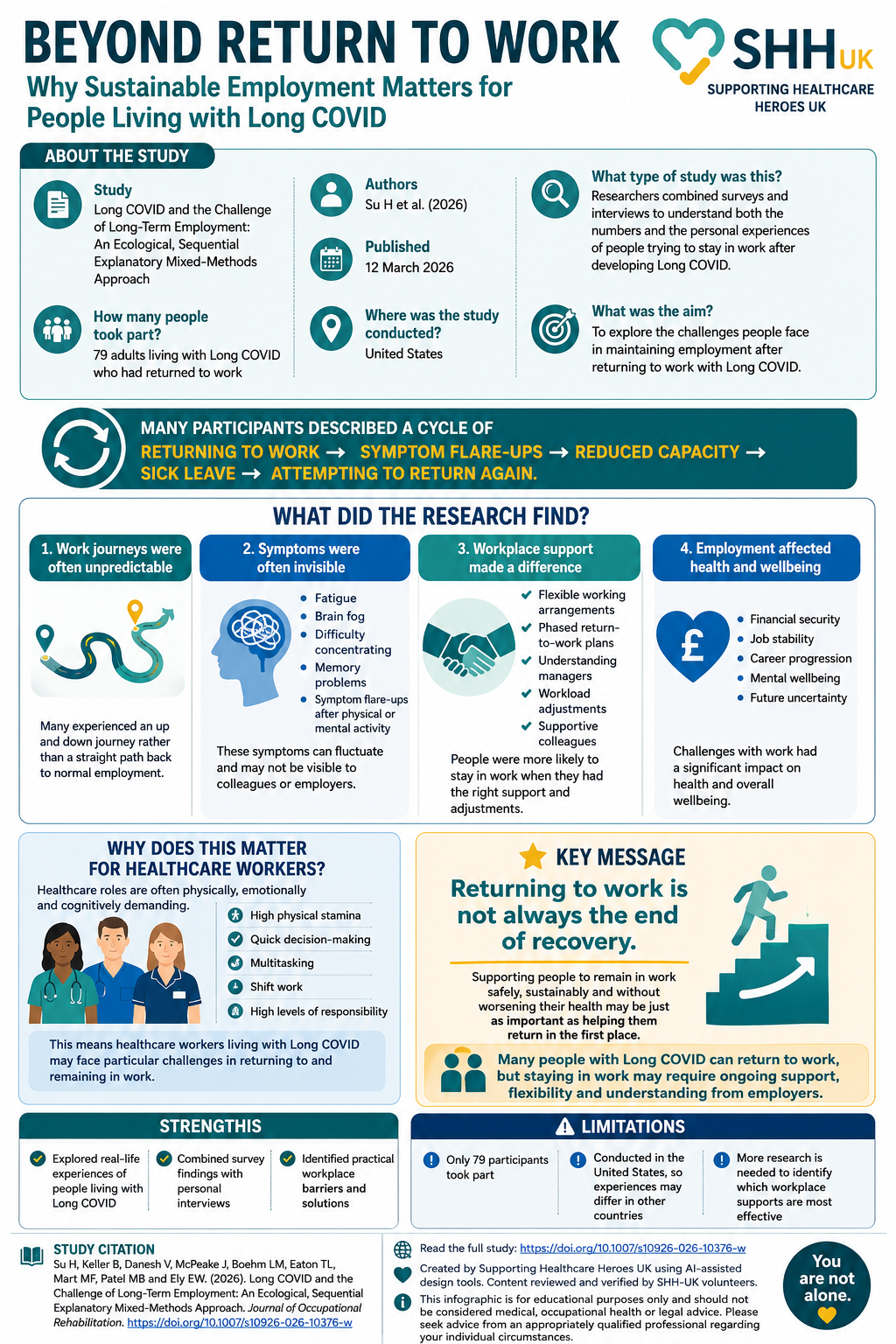
Returning to work is often viewed as a major milestone in recovery. However, for many people living with Long COVID, returning to work does not necessarily mean returning to their previous level of health. This study by Su and colleagues explored the experiences of 79 adults living with Long COVID who had returned to employment. […]

Learn why the precautionary principle is fundamental to infection prevention and how its application protects healthcare workers and patients.