
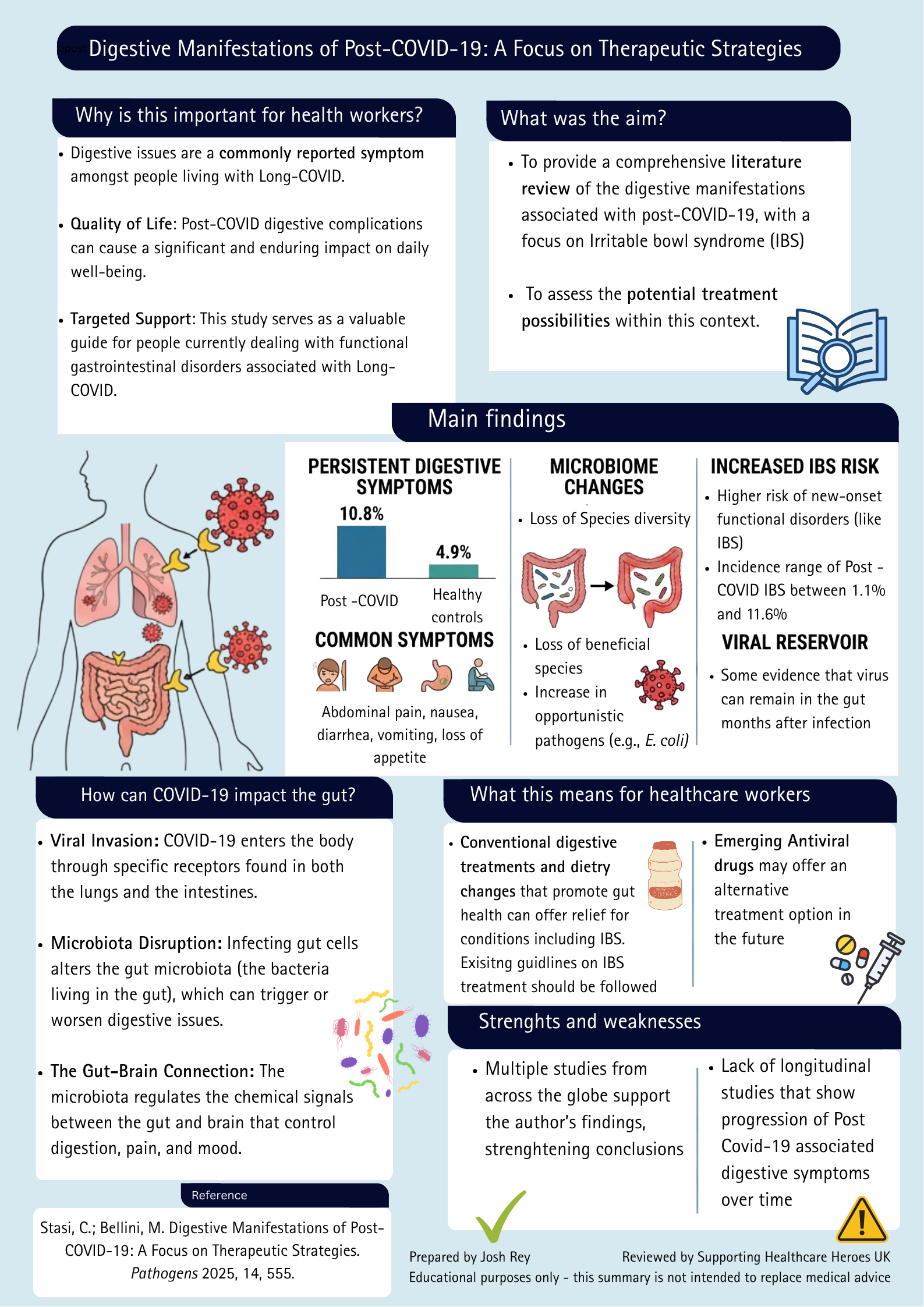
Long COVID and Digestive Symptoms: What the Research Tells Us
Research summary exploring digestive manifestations of Long COVID, including gut microbiome changes, IBS risk and potential treatment approaches.
Read more

Faghy, M. et al (2025) summarised by Yesenia J. M. Camacho
Please note that this is news about research rather than a research summary, on this occasion, however the topic felt worth publishing.
Introduction
As the world marks five years since the start of the COVID-19 pandemic, a new research project is underway to tackle Long Covid, a condition affecting millions of people who continue to suffer from symptoms long after a COVID-19 infection.
The University of Derby is leading a £1.25 million clinical trial. It is managed by the University of Plymouth’s Peninsula Clinical Trials Unit in collaboration with University Hospitals of Derby and Burton NHS Foundation Trust, plus the University of Exeter and Aston University. It is the first of its kind in the UK, to explore whether anti-viral medication could provide relief for people struggling with Long Covid.
Summary
Long Covid is a serious condition that can cause extreme fatigue, difficulty breathing, heart palpitations, plus problems with memory and concentration which are often referred to as brain fog. In the UK, over two million people are estimated to have Long Covid, and about a quarter of these have faced symptoms for more than two years. Study lead Mark Faghy, Professor in Clinical Exercise Science at the University of Derby explained that Long Covid has a massive impact on patients, “For many, it can be debilitating, interfering with work, family life, and socialising, and millions are suffering across the world. Yet, at present, there are no confirmed treatments for the condition. Five years on from the start of the pandemic, long Covid remains a significant health and societal challenge, which is why this project is so important.”
The trial, which began in September 2024, involves 72 patients testing an antiviral drug to treat Long Covid symptoms. They undergo assessments at the University of Derby and receive the medication via a drip for five days, with some participants in Exeter having body scans to check for reduced inflammation. One participant, 37 year old Ryan Cawley, experienced severe fatigue and other symptoms after catching COVID-19 in March 2020, leading him to quit his job. After joining the trial, Ryan reported significant improvements, stating, “Since taking the medication, I feel like I have been given a new pair of lungs.”
Conclusion
As a final point, although still in its early stages, this research represents a crucial step towards improving the lives of people affected by Long Covid. Researchers are optimistic that their work could lead to effective treatments and better quality of life for millions of Long Covid patients in the future.
Read the details here
Research summary exploring digestive manifestations of Long COVID, including gut microbiome changes, IBS risk and potential treatment approaches.
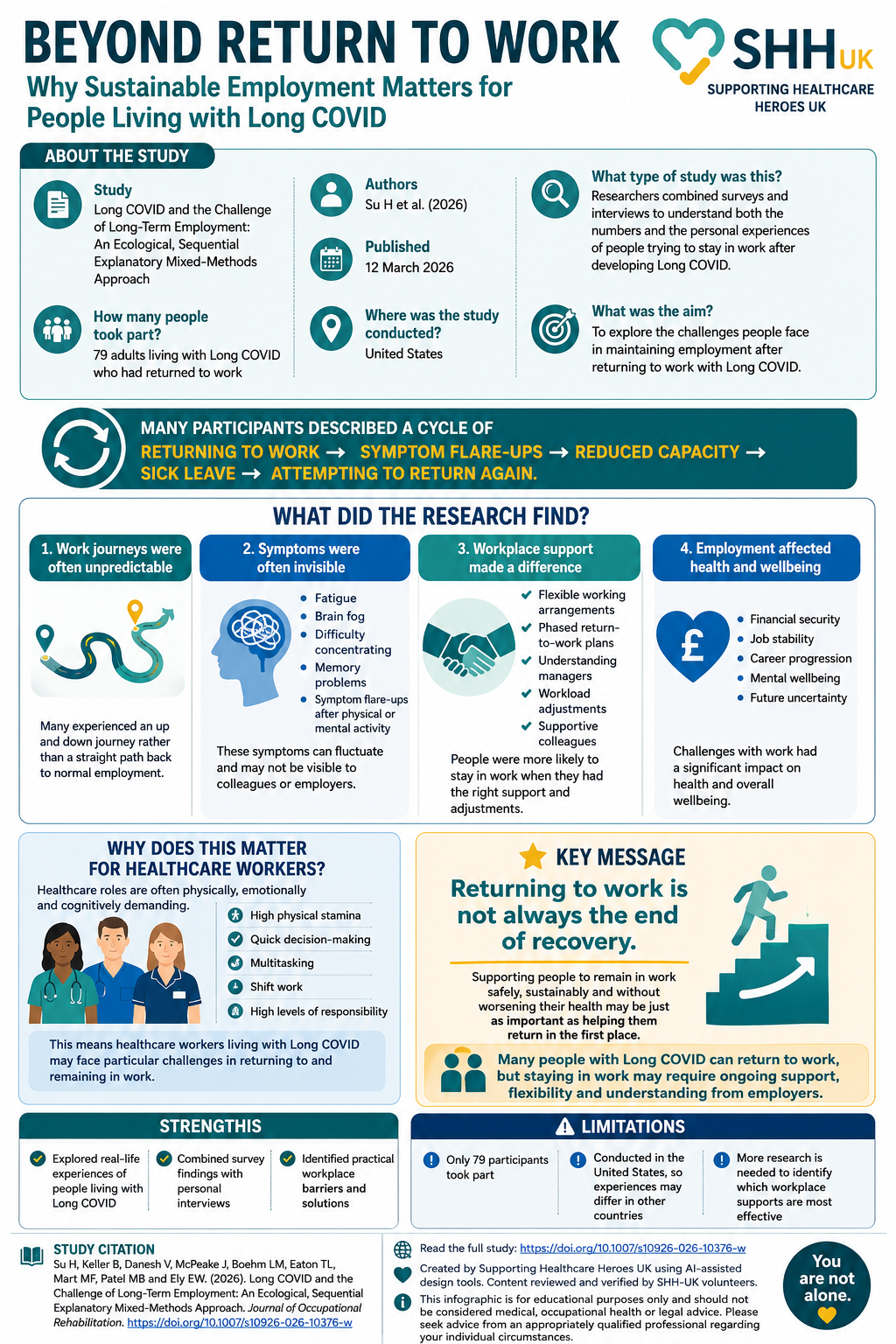
Returning to work is often viewed as a major milestone in recovery. However, for many people living with Long COVID, returning to work does not necessarily mean returning to their previous level of health. This study by Su and colleagues explored the experiences of 79 adults living with Long COVID who had returned to employment. […]

Learn why the precautionary principle is fundamental to infection prevention and how its application protects healthcare workers and patients.