
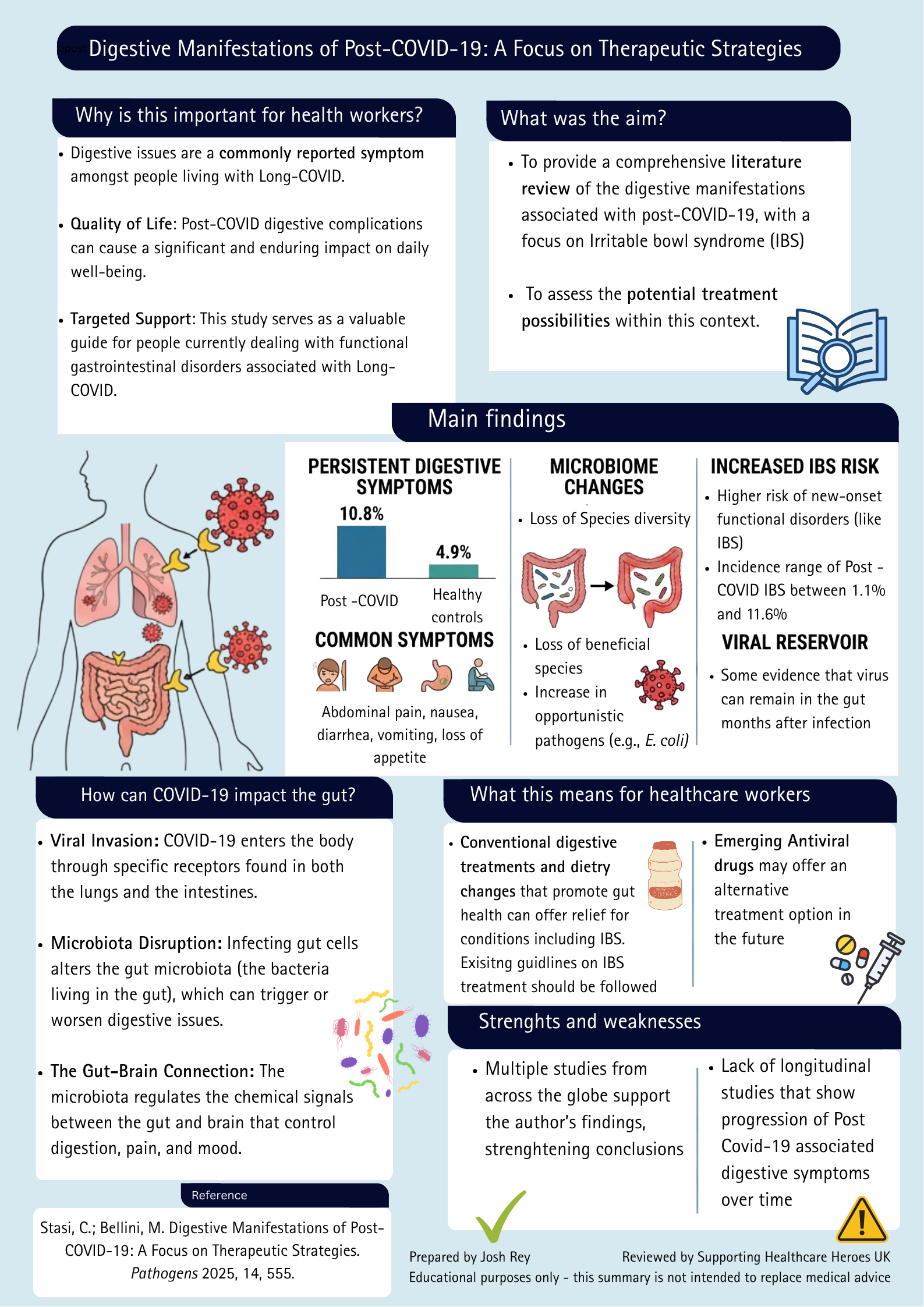
Long COVID and Digestive Symptoms: What the Research Tells Us
Research summary exploring digestive manifestations of Long COVID, including gut microbiome changes, IBS risk and potential treatment approaches.
Read more

Summary:
This study clarifies the main Long Covid impact, 3 years after infection. It calls for action by detailing the need for specialised support.
Rahmati et al., (2025) summarised by Gayathri Sai Geethanjali Kottada
Introduction
COVID-19 can lead to persistent or novel symptoms resulting from infection, commonly called Long Covid. Survivors of the 2003 SARS outbreak, experienced lasting physical and mental health issues even years later. While research has monitored symptoms for 1–2 years, it is unknown how long these problems lasted beyond 3 years and remain largely unexplored beyond this period. This study aims to fill that gap by estimating how common these symptoms are up to 3 years after infection and identify key risk factors. The findings will help guide long-term healthcare planning and policy.
Summary
From 223 studies, only 11 high-quality studies across six countries with data from over 142,000 COVID-19 survivors (mostly hospitalized in 2020) were analysed, synthesising evidence, indicates that approximately 20% of survivors continue experiencing at least one unresolved symptom, mainly fatigue, breathlessness and insomnia being the most common issues, each affecting around 11-12% of the population studied, along with symptoms such as smell and taste disorders, anxiety, cough and muscle pain. The study also found major lung problems, with 42% having reduced lung capacity. Older age, severe initial infection, female sex, smoking, and pre-existing conditions like diabetes, hypertension and chronic kidney diseases, were identified as major risk factors.
Despite progress over time, persistent neurological (brain and nerve), lung, and cardiovascular (heart and blood vessel) complications still impact daily life, while facing higher risk of mortality, readmission and disability adjusted life years even after three years.
Furthermore, people with Long Covid reported a recurring cycle of psychological distress, reduced work capacity and limitations in physical activity. These findings highlight the need for long-term care, and monitoring with rehabilitation for affected individuals.
This study underscores the need for future research on mechanisms like autoimmunity, persistent viral activity, and symptom patterns after three years, including its association to cognitive decline, neurodegenerative disorders, and the effects of reinfections. It also demands that the socio-economic effects of Long Covid be investigated.
Conclusion:
In conclusion, the study provides firm evidence that Long Covid poses a significant health concern even after three years since infection. Although symptoms improved for some, there are inadequate treatment protocols and fragmented healthcare systems that are hindered by limited clinical guidance,. Misdiagnosis and delayed recognition further impact patient outcomes. There needs to be evidence-based recommendations, specialised medical training and integrating multidisciplinary care into routine services for Long Covid patients. Public health campaigns to raise awareness and reduce stigma are also essential. While recognizing Long Covid as a public health priority and ensuring coordinated worldwide effort is vital for improving recovery and long-term health and well-being of the population.
Read the study here
Research summary exploring digestive manifestations of Long COVID, including gut microbiome changes, IBS risk and potential treatment approaches.
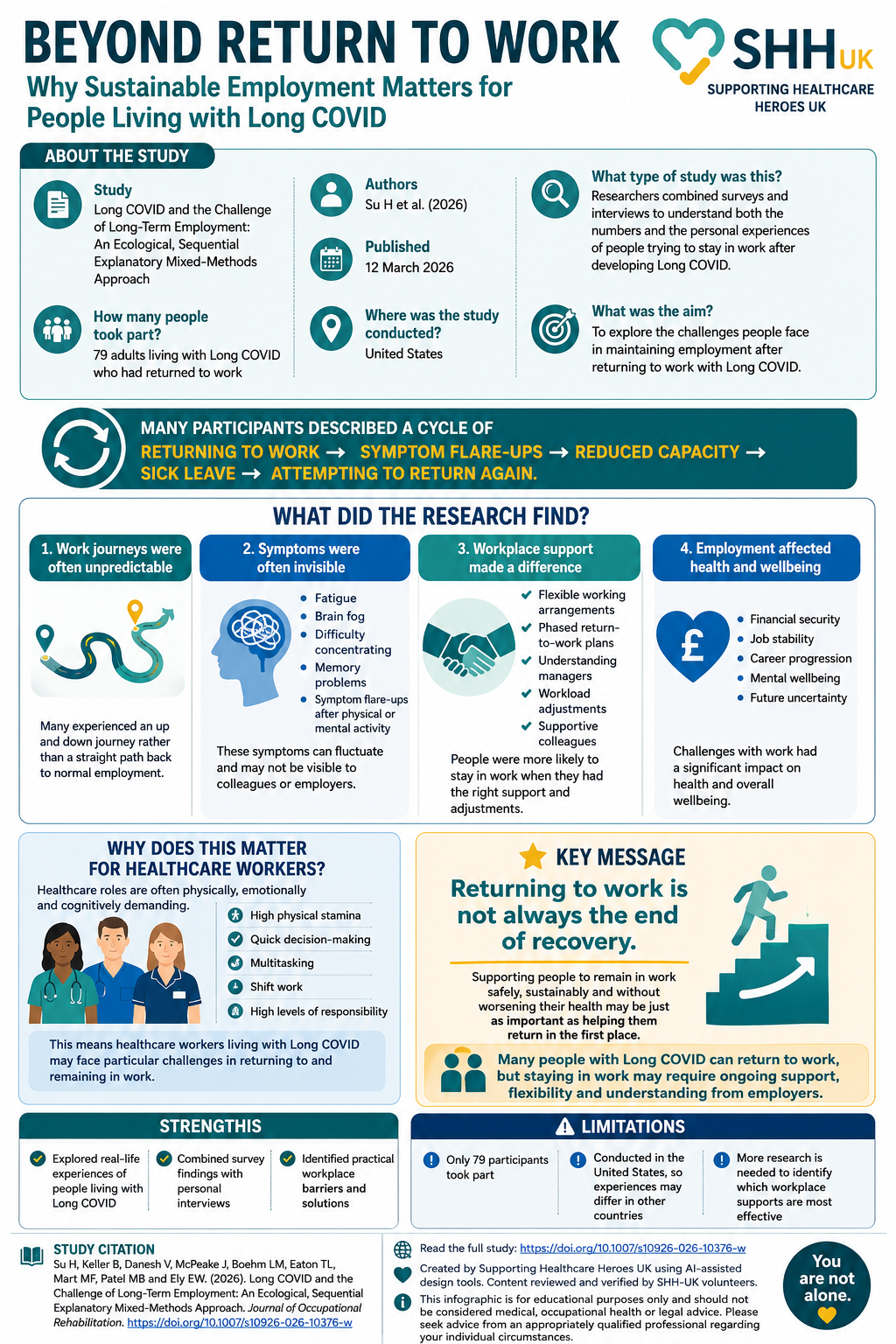
Returning to work is often viewed as a major milestone in recovery. However, for many people living with Long COVID, returning to work does not necessarily mean returning to their previous level of health. This study by Su and colleagues explored the experiences of 79 adults living with Long COVID who had returned to employment. […]

Learn why the precautionary principle is fundamental to infection prevention and how its application protects healthcare workers and patients.