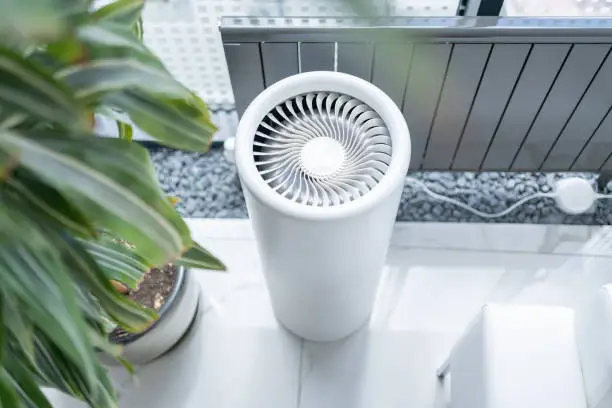
The Guidance Notes for the Management of Indoor Air Quality in Offices and Public Places (Hong Kong, 2019) provides a comprehensive framework for preventing and managing poor indoor air quality (IAQ). It highlights that good IAQ protects health, enhances comfort, and reduces workplace absenteeism and costs. Poor IAQ is linked to Sick Building Syndrome (e.g. headaches, eye irritation, lethargy) and Building-Related Illnesses (e.g. Legionnaires’ disease, hypersensitivity reactions), with key risk factors including inadequate ventilation, volatile organic compounds, formaldehyde, radon, mould, combustion gases, and particulates.
The document sets out voluntary IAQ objectives with two benchmark levels (“Excellent” and “Good”), drawing on WHO and ASHRAE standards. Parameters include CO₂, CO, particulates (PM10), nitrogen dioxide, ozone, formaldehyde, VOCs, radon, bacteria, and mould.
To achieve these standards, the guidance recommends:
-
Building design and materials – ensuring adequate ventilation, careful selection of low-emission materials and furnishings.
-
Operation & maintenance – proper design, monitoring, and servicing of mechanical ventilation and air conditioning (MVAC) systems.
-
Housekeeping & cleaning – controlling dust, moisture, and pests; preventing and removing mould.
-
Monitoring & investigation – routine assessments, complaint handling, and professional testing where needed.
-
Mitigation strategies – source control, ventilation improvements, and air cleaning technologies.
The guidance emphasises a 7-step IAQ Management Programme covering prevention, monitoring, communication with occupants, investigation of complaints, and corrective action. It also promotes Hong Kong’s voluntary IAQ Certification Scheme, which encourages building owners to meet the published objectives and display certification.
Key message: Ensuring healthy indoor air in offices and public places requires proactive design, regular monitoring, and coordinated management. Adopting recognised IAQ objectives reduces health risks, boosts productivity, and protects wellbeing.
NB this guidance was published in 2019 and as such does not mention Covid-19.