

Covid is Airborne: You’re breathing it in
A powerful short video explaining how COVID spreads through the air like smoke, highlighting why ventilation, clean air and respiratory protection matter.
Read more

Summary
Long Covid symptoms like fatigue, brain fog, or medication side effects can affect driving safety. Drivers must assess fitness and follow DVLA guidance.
This week’s blog is written by Ellen Chisman, Occupational Therapist, Leeds Long Covid Rehabilitation Service.
A summary of key points from this blog can be seen below. Remember it is important to Check if a health condition affects your driving: Find your condition on the A to Z list – GOV.UK (www.gov.uk)

For some, being a driver is a key part of operating and managing daily life. The prospect of not being able to drive can be difficult, even something we may avoid addressing.But there are responsibilities drivers have around their abilities and safety to drive. Long Covid has multiple symptoms and factors which means there can be implications around driving. This is something we recognised we needed to explore further in the Leeds Long Covid Rehabilitation Service.
A couple of colleagues and I spent some time increasing our own knowledge and understanding around driving guidelines, and also our responsibilities as healthcare professionals. We discussed Long Covid and how ability and safety to drive may be impacted. Key information for staff was cascaded, and the information sheet developed for service users shared. Our holistic assessments explore whether someone is a driver, but a discussion about driving may also be prompted e.g. from someone’s descriptions of their symptoms or related issues like sleep. I’ve shared the process we went through to highlight some of the considerations for those reading who may be drivers with Long Covid and/or people working with those with Long Covid.
Some symptoms of Long Covid could impact someone’s ability and safety to drive. This relates to both safety to themselves, and to others. Symptoms such as fatigue or “brain fog” can cause difficulty with alertness, processing information, decision-making and reaction times. It could also be issues that cause distractions, e.g., pain, breathlessness, or palpitations, depending on severity.
It’s also important to consider related factors, such as disturbed sleep as mentioned previously. Someone’s mental health could impact ability and safety to drive depending on the nature of the issues and severity. Both low mood and anxiety can cause deficits in executive functions (memory, planning, sequencing, logical thinking, adaptable thinking, decision-making, self-control). Feeling agitated or irritable is also something to consider, and some people we see report changes to their emotional regulation such as having less patience.
Medications taken to help symptoms could cause side-effects, impacting driving safety. Pain killers, for example, can have a sedating effect.
Key things to note regarding driver responsibilities are outlined below:
|
|
|
|
|
You can have an assessment on your safety to drive with your GP, and there are also places you can be referred to for a practical assessment.
If you are advised not to drive by a healthcare professional, or told you need to inform the DVLA of conditions but do not follow this advice, the professional can inform the DVLA if they are concerned
It’s worth mentioning driving in relation to the 3Ps of fatigue management; Pacing, Planning, and Prioritising, which can be helpful for managing other symptoms too. Variability in symptoms with Long COVID is common, with some days better than others. It can be a good idea to have a “plan B” for travel if you are not up to driving. Travel can itself be fatiguing and cause an increase in symptoms. You might want to consider which trips you need to do on difficult days, but also whether an alternative could be considered e.g., if a lift is available or funding a taxi is an option. Unfamiliar and busy routes or worries about getting parked can cause additional strain. However, driving can be very advantageous, and alternatives may be difficult to arrange. It may be helpful to do some planning around your journey- what time of day you go, what route, where else can you park, where you can take breaks. Where possible, avoiding situations where you are relied upon to drive someone else, or there is a plan B in place if needed. For journey needs related to work, people can self-refer to Access to Work for an assessment and possible grant for things like taxis.
Driving can be a sensitive subject to discuss. It can be seen as someone’s independence or “lifeline” to accessing things out of the home. However, drivers needs to take responsibility for ensuring they are safe to drive, and this is in relation to any condition not just Long COVID. Healthcare professionals also play a part in asking questions, sharing information, and acting on concerns.
Sources: DVLA website and General Medical Council website accessed March 2023
A powerful short video explaining how COVID spreads through the air like smoke, highlighting why ventilation, clean air and respiratory protection matter.
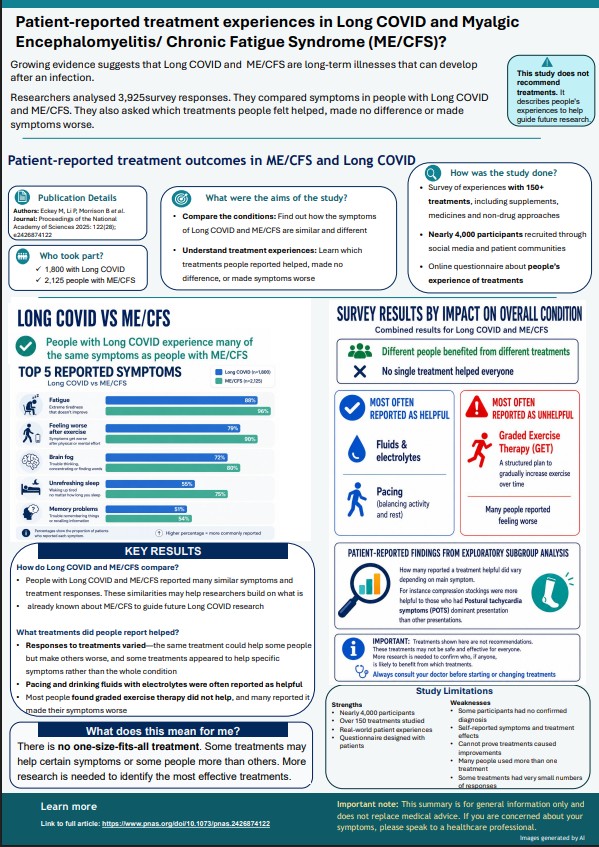
Explore this SHH-UK Research Summary of a study examining patient-reported symptoms and treatment experiences among nearly 4,000 people with Long COVID and ME/CFS.

N95 and KN95 respirators may look similar, but they are certified to different national standards. Both are designed to provide a high level of filtration, with each rated to filter at least 95% of specified test particles. (Smart Air)