
Respirators help reduce the spread of airborne infections
See how masks reduce respiratory particles released into shared air, helping limit airborne transmission and protect both the wearer and people nearby.
Read more

A large population-based study from England has found that people with unresolved Long Covid are significantly less likely to remain in paid employment and much more likely to have to change their working hours than those who recovered quickly from COVID-19. The findings also show that employment outcomes vary depending on the pattern and severity of Long Covid symptoms.
Researchers analysed data from 45,864 adults who were in paid work when they joined the REACT study and were followed up around 23 months later. Long Covid was defined as symptoms lasting 12 weeks or more.
A pictorial summary of this study is provided below, followed by a written summary.
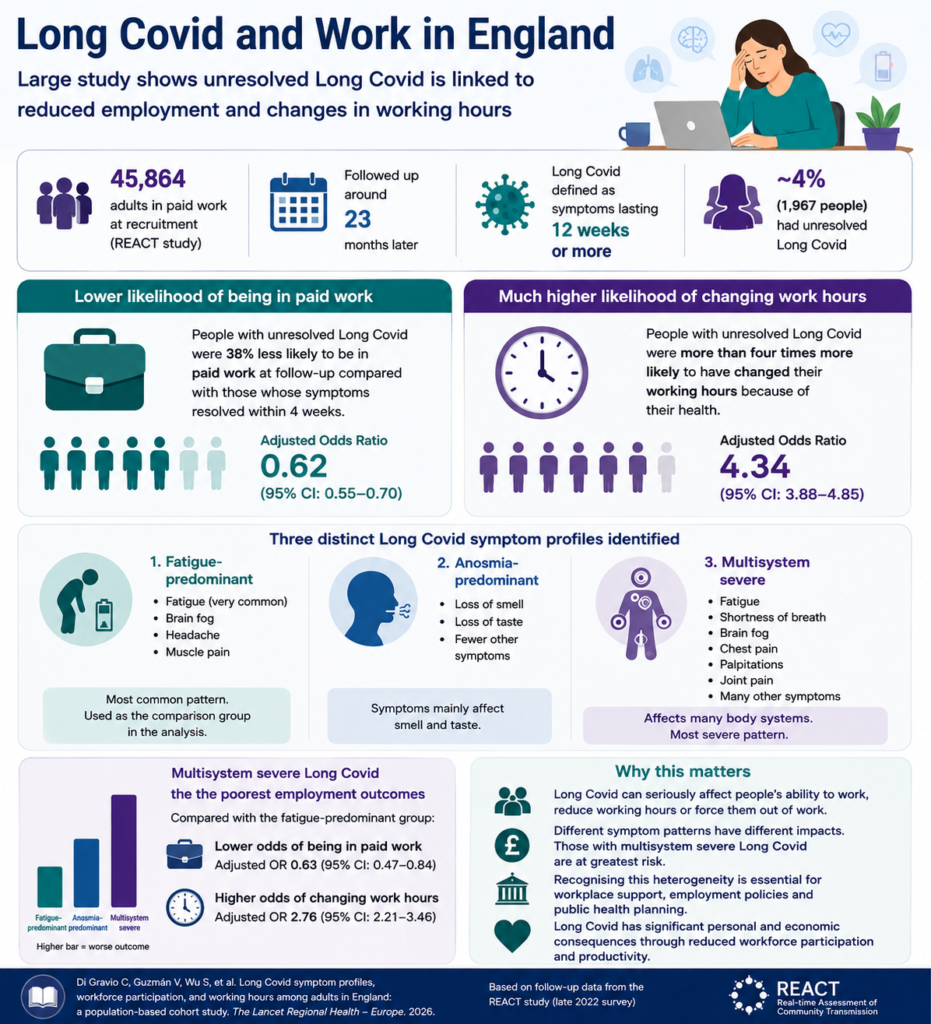
The study found that people with multisystem severe Long Covid had the poorest employment outcomes. Compared with those in the fatigue-predominant group, they were less likely to remain in paid work and were nearly three times more likely to have changed their working hours.
The most commonly reported long-term symptoms were fatigue (65%), brain fog (55%) and shortness of breath (49%).
The findings reinforce growing evidence that Long Covid can have a substantial impact on people’s ability to work. They also show that Long Covid is not a single condition – people experience different symptom patterns, and those with more severe, multisystem illness are at greatest risk of leaving work or needing to reduce or alter their hours.
The authors conclude that recognising these differences is important when designing workplace support, employment policies and public health strategies. They also highlight the wider economic consequences of Long Covid through reduced workforce participation and productivity.
Di Gravio C, Guzmán V, Wu S, et al. (2026) Long COVID symptom profiles, workforce participation, and working hours among adults in England: a population-based cohort study. The Lancet Regional Health – Europe.
You can access the paper by clicking here
See how masks reduce respiratory particles released into shared air, helping limit airborne transmission and protect both the wearer and people nearby.

Covid-19 spreads through the air. Learn how masks, ventilation, CO₂ monitoring, air filtration, distancing and outdoor spaces can help reduce your risk.

Find financial support with Turn2us, including benefits advice, grants, a benefits calculator and help for people affected by illness or disability.