Respirators help reduce the spread of airborne infections
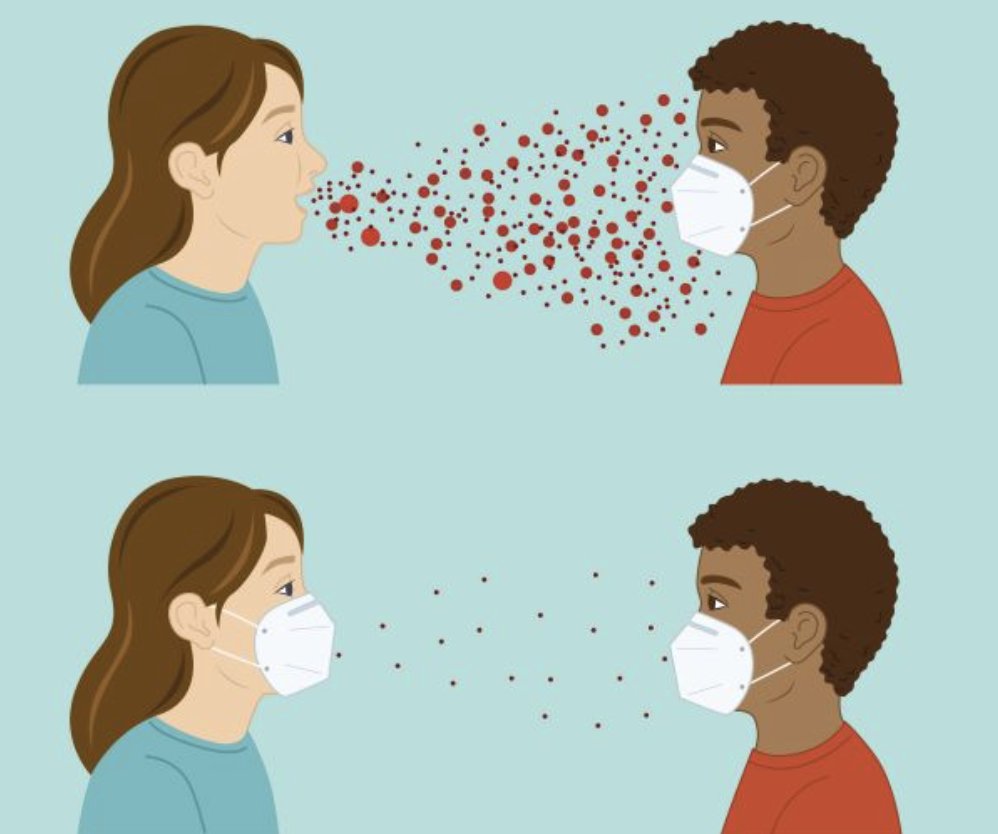
See how masks reduce respiratory particles released into shared air, helping limit airborne transmission and protect both the wearer and people nearby.
When we breathe, talk, cough or sneeze, we release respiratory particles into the air. These can carry viruses and be inhaled by other people.
This graphic illustrates how wearing a respirator can reduce the number of particles released into the air and help protect others. When everyone wears an effective, well-fitting mask, there are additional layers of protection between an infectious person and those around them.

To find out about the differences between masks and respirators have a look on other content on our Resources Page. Here’s three links to get you started:

Masks 101: Surgical masks versus respirators

See how masks reduce respiratory particles released into shared air, helping limit airborne transmission and protect both the wearer and people nearby.

Covid-19 spreads through the air. Learn how masks, ventilation, CO₂ monitoring, air filtration, distancing and outdoor spaces can help reduce your risk.

Find financial support with Turn2us, including benefits advice, grants, a benefits calculator and help for people affected by illness or disability.