
Covid is Airborne: You’re breathing it in
A powerful short video explaining how COVID spreads through the air like smoke, highlighting why ventilation, clean air and respiratory protection matter.
Read more

A study published by the The Journal of Infectious Diseases (25/01/24) sought to characterise lung function dynamics in individuals with mild COVID-19 from pre-infection to two years post-infection.
This 2-year longitudinal study examined lung function in 52 individuals after mild COVID-19 infection, compared to matched uninfected controls. Lung tests and questionnaires were done at pre-infection, 6 months post-infection, and 2 years post-infection.
From pre-infection to 6 months, COVID-19 patients had greater declines in FEV1 and FVC compared to controls, indicating impaired lung function. From 6 months to 2 years, the excess decline was smaller and no longer significant.
Over the full 2 years, COVID-19 patients had an excess annual decline in FEV1 of 13 mL/year from pre-infection to 6 months, and 7.5 mL/year from 6 months to 2 years, compared to controls. A similar pattern was seen for FVC.
DLco (diffusing capacity) improved slightly from 6 months to 2 years post-infection, indicating some recovery. But lung volumes remained lower than pre-infection levels at 2 years.
The study shows mild COVID-19 leads to measurable lung function impairment up to 2 years after infection. There is some recovery from 6 to 24 months, but not full restoration to pre-infection levels.
Limitations include small sample size and lack of imaging data. Overall, the findings indicate lung damage from even mild COVID-19 may persist or only partially recover over time. This highlights the need for long-term monitoring of lung health in COVID-19 patients.
The study can be downloaded here.
A powerful short video explaining how COVID spreads through the air like smoke, highlighting why ventilation, clean air and respiratory protection matter.
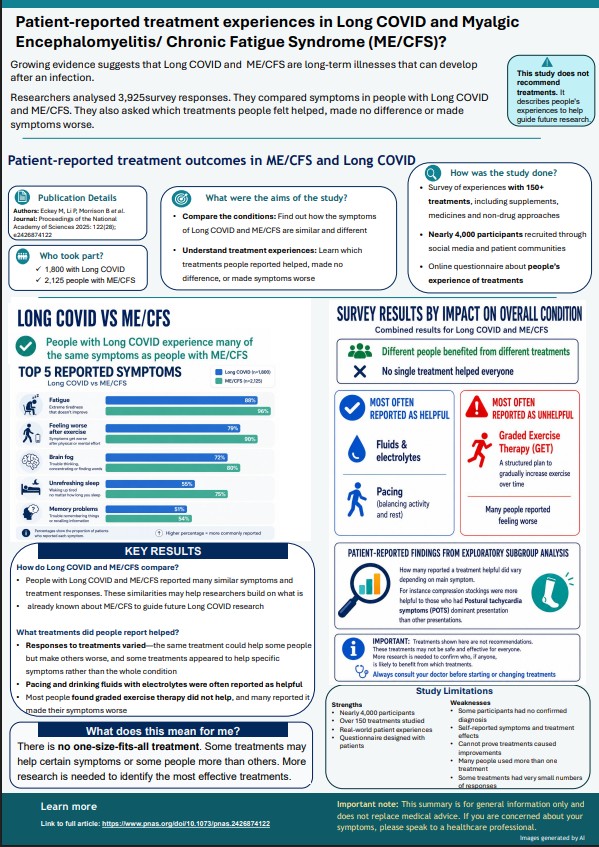
Explore this SHH-UK Research Summary of a study examining patient-reported symptoms and treatment experiences among nearly 4,000 people with Long COVID and ME/CFS.

N95 and KN95 respirators may look similar, but they are certified to different national standards. Both are designed to provide a high level of filtration, with each rated to filter at least 95% of specified test particles. (Smart Air)