
Covid is Airborne: You’re breathing it in
A powerful short video explaining how COVID spreads through the air like smoke, highlighting why ventilation, clean air and respiratory protection matter.
Read more

The Open Forum Infectious Diseases published a study in 2024 which assessed if COVID-19 vaccination protects against developing Long Covid symptoms. It involved an ongoing prospective cohort tracking infections and symptoms in working adults.
13% of infected cases overall reported Long Covid symptoms 90 days post-infection. However, 27% of unvaccinated cases developed long COVID, compared to only 8% of vaccinated cases. Vaccination significantly reduced Long Covid risk.
Vaccinated cases also had lower average symptom severity scores at all timepoints up to 90 days compared to unvaccinated cases.
In the pre-Omicron period, 28% of unvaccinated and 18% of vaccinated cases had Long Covid, suggesting vaccination reduces risk even for older variants. Vaccinated cases had less breathing difficulty.
The study provides real-world evidence that vaccination lowers risk of developing Long Covid by around 70%. It also reduces symptom severity in breakthrough infections.
Limitations include reliance on self-reported symptoms. Overall, the findings strongly demonstrate vaccination helps prevent Long Covid, underscoring the importance of staying up-to-date with recommended doses.
The full study can be accessed here.
A powerful short video explaining how COVID spreads through the air like smoke, highlighting why ventilation, clean air and respiratory protection matter.
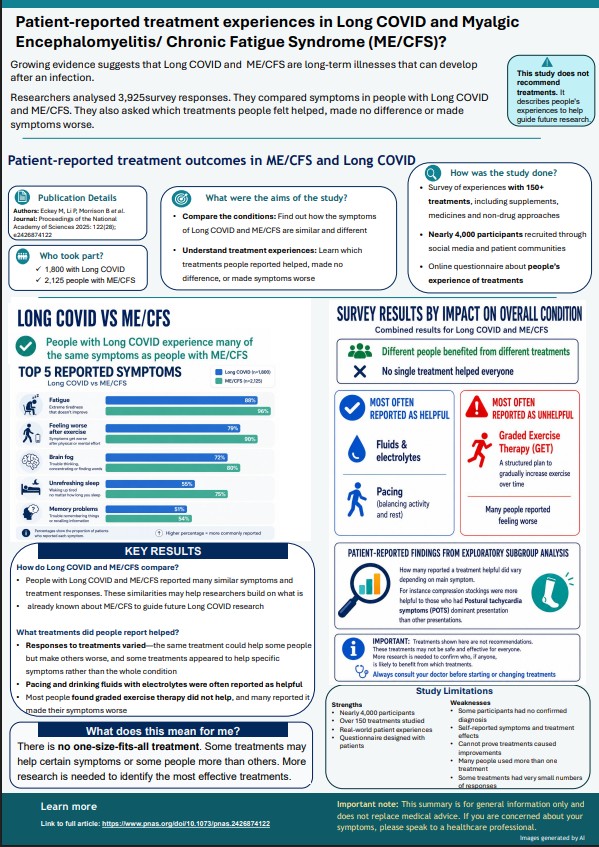
Explore this SHH-UK Research Summary of a study examining patient-reported symptoms and treatment experiences among nearly 4,000 people with Long COVID and ME/CFS.

N95 and KN95 respirators may look similar, but they are certified to different national standards. Both are designed to provide a high level of filtration, with each rated to filter at least 95% of specified test particles. (Smart Air)