

Covid is Airborne: You’re breathing it in
A powerful short video explaining how COVID spreads through the air like smoke, highlighting why ventilation, clean air and respiratory protection matter.
Read more

Follow-up of Long Covid based on the definition from the WHO
Yan, D. et al (2025) summarised by Yesenia J. M. Camacho
Introduction:
This research conducted a questionnaire study to explore Long Covid, which was based on the World Health Organization definition. The organisation defines Long Covid as occurring in individuals with a history of COVID-19, with symptoms lasting at least 2 months that cannot be explained by an alternative diagnosis. The questionnaire results of 3693 Chinese people, from three hospitals, were analysed in this study between March and June 2023. Long Covid is a multi-organ disease with a wide range of symptoms, including but not limited to fatigue, shortness of breath and impacting the ability to think clearly. Due to the range of symptoms and lack of evaluation criteria, the occurrence of Long Covid is unknown but is generally agreed to be over 10% of all COVID-19 infections.
Summary:
The questionnaire included: demography (age, sex, retirement status, smoking and drinking history); date of initial COVID-19 infection; disease severity (symptomless, mild, moderate, severe or critical infection); any other illnesses before infection; reinfections; Long Covid symptoms. Individuals responded to questions by rating each symptom as none, minor, obvious or severe. The average age of participants was 63 years and 55.8% were female. 45.8% had other illnesses before infection, high blood pressure being the most common one. Female patients had a higher percentage of Long Covid and a significantly higher percentage of digestive system symptoms. 10.7% said that Long Covid symptoms impacted their daily life.
The reporting rate of Long Covid including neurological (brain and nervous system) and digestive system symptoms decreased during their 180-day follow-up period, however the scores of general symptoms increased over this time. Data analysis found that people at higher risk of Long Covid were older females and people infected more than once. This research referred to the UK Office for National Statistics study, that sampled UK adults aged 18-69. Participants that received two COVID-19 vaccine doses before their first infection demonstrated a 41.1% decrease in the odds of Long Covid, compared to similar study participants who were unvaccinated when infected.
Conclusion:
Although the severity of reported Long Covid neurological and digestive symptoms decreased over the follow-up period, Long Covid general symptoms increased. Long Covid is a multi-organ disease with a wide range of symptoms, so early intervention is essential to minimise its impact, especially for those who are more likely to get Long Covid – older people, women and those who are reinfected. COVID-19 vaccinations decrease the odds of getting Long Covid. Standardised long-term research on Long Covid is needed to gain a better understanding of this condition and its future impact.
Read the study here
A powerful short video explaining how COVID spreads through the air like smoke, highlighting why ventilation, clean air and respiratory protection matter.
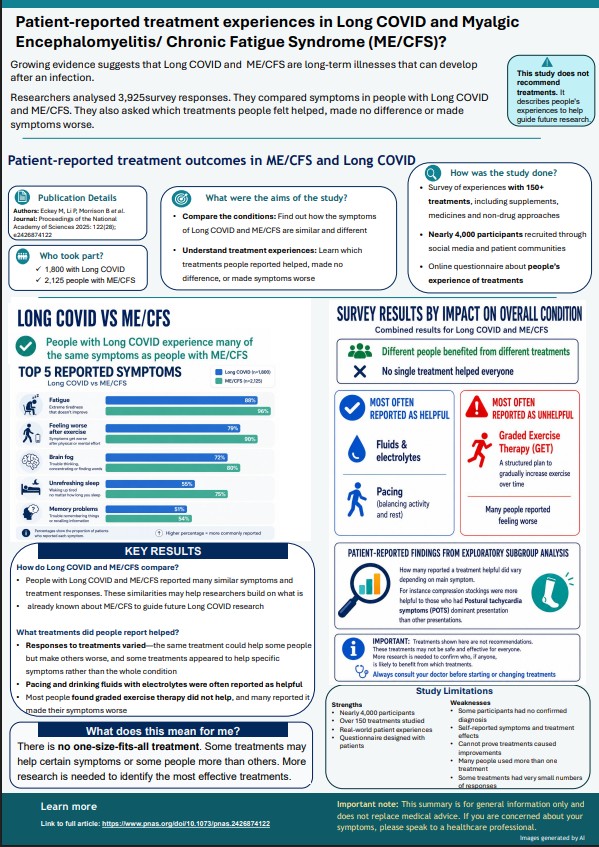
Explore this SHH-UK Research Summary of a study examining patient-reported symptoms and treatment experiences among nearly 4,000 people with Long COVID and ME/CFS.
N95 and KN95 respirators may look similar, but they are certified to different national standards. Both are designed to provide a high level of filtration, with each rated to filter at least 95% of specified test particles. (Smart Air)