

Covid is Airborne: You’re breathing it in
A powerful short video explaining how COVID spreads through the air like smoke, highlighting why ventilation, clean air and respiratory protection matter.
Read more

Tomorrow the report from Module 3 of the UK Covid Inquiry is released relating to the impact of the pandemic on the health service. It is timely, therefore, to reflect on what it was like for healthcare workers during this time. Stuart Jordan discusses this in his first blog for Supporting Healthcare Heroes UK.
While almost everyone made extraordinary sacrifices during the pandemic, while children went without education and care home residents died alone, it was obvious to us in the NHS that that we lacked two essential workplace safety measures. At time when almost all indoor household social mixing occurred in workplaces, millions of keyworkers were denied sick pay and could not afford to isolate. At the same time, employers took almost no action to prevent airborne transmission and ensure a good supply of clean air.
Those in authority turned a deaf ear to workers raising concerns. While record numbers of workers were dying or contracting a life altering illness, the Health and Safety Executive (HSE) was nowhere to be seen. In 2020, the level of HSE enforcement action dropped 94% on the previous year. In the absence of a functioning regulator, employers felt emboldened to break health and safety law with impunity.
This top-down, management-knows-best approach to workplace safety was particularly pronounced in the NHS. Lack of sick pay, inadequate ventilation and respiratory protective equipment in the NHS led to alarming levels of hospital-acquired infection, death and long term disability of staff and patients. A study from 2021 found 67.5% of Covid-positive mental health inpatients had hospital-acquired infections (Read et al. 2021).
None of this happened without resistance from frontline health workers. From early in the pandemic, myself and fellow safety reps in the East London Mental Health Unite branch used health and safety law to campaign for full sick pay and airborne precautions in the NHS. We won some limited gains. In September 2021, a large group of outsourced workers were offered Covid isolation pay and in 2022 the Trust agreed to trial air-cleaning units on one pilot ward.
In 2024, frustrated that the limited gains we had won during the pandemic were being rolled back, we complained to the HSE. After multiple appeals in which the HSE refused to investigate or uphold health and safety law, the Unite branch and local MP Apsana Begum began a complaints process about the HSE with the Parliamentary Ombudsman.
Alongside this legal struggle for accountability, the East London Mental Health Unite branch has also organised industrially to win these essential infection control measures. This autumn outsourced workers at Newham Centre for Mental Health have been on strike in a campaign to win NHS equivalent pay, terms and conditions, including full sick pay. The workers are employed by a firm called Grosvenor Facilities Management as part of a £213 million PFI contract. GFM and their PFI partners extract multi-million pound profits each year from the NHS while paying their workers poverty wages and denying them sick pay. In December, after six weeks on strike, the workers won all their demands including a 15% pay rise for the lowest pay and full sick pay from day one.
Our persistent advocacy of air-cleaning technology has also generated further successes. The pilot saw a 31% reduction in staff sickness absence and 87% reduction in hospital acquired Covid-19 infection (see Tucan newsletter). Off the back of this success, four more wards being equipped with ACUs this year and further installations planned.
The under-resourcing of NHS and the HSE are part of a generalised assault on working-class health and safety. But in East London Mental Health Unite branch we have shown that there is an alternative. By using our hard-won rights under health and safety law and organising strong trade unions we can win safety critical improvements in the NHS.
Many health workers are alarmed at the deterioration of safety standards within the NHS and many have been mobilised in strike action in recent years. However, the week-in week-out union organising that we need in the NHS remains very weak and frontline workers involvement in health and safety structures is near non-existent.
Health and safety law gives us legal right to paid time off from our work duties to organise around issues of workplace safety. Safety representatives have a legal right to inspect workplaces and we can use these rights to monitor air quality and talk to staff about their sick pay rights and the chronic problems of presenteeism. In East London Mental Health Unite branch we have conducted dozens of inspections, speaking to hundreds of frontline health workers and taken CO2 readings giving us a clear picture of the quality of ventilation throughout the Trust estate. By using this we can build a powerful network of safety representatives capable win real improvements for both staff and patients.
If you are interested, get in touch.
Stuart Jordan
Email: Stuart.Jordan@unitetheunion.org
A powerful short video explaining how COVID spreads through the air like smoke, highlighting why ventilation, clean air and respiratory protection matter.
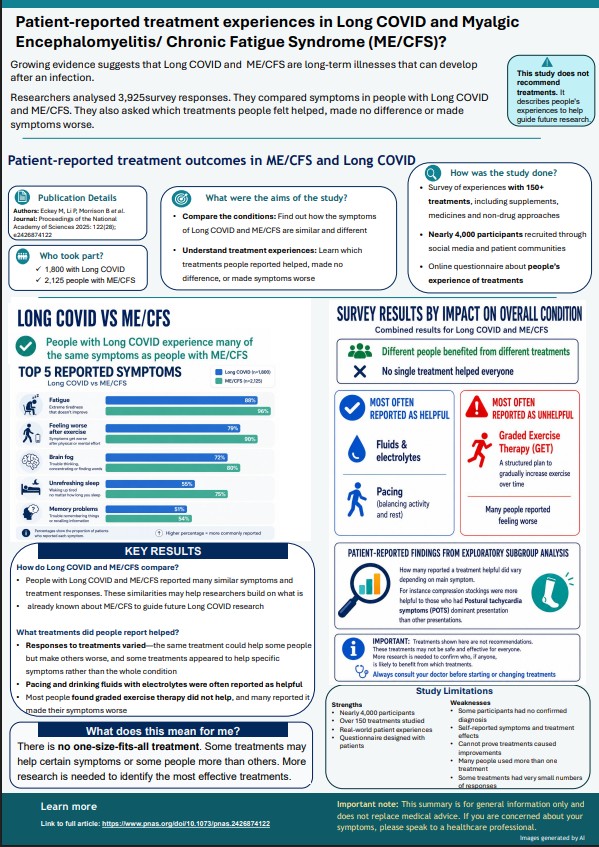
Explore this SHH-UK Research Summary of a study examining patient-reported symptoms and treatment experiences among nearly 4,000 people with Long COVID and ME/CFS.

N95 and KN95 respirators may look similar, but they are certified to different national standards. Both are designed to provide a high level of filtration, with each rated to filter at least 95% of specified test particles. (Smart Air)