
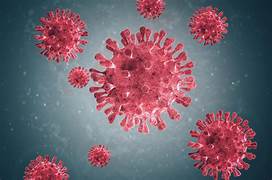
Covid is Airborne: You’re breathing it in
A powerful short video explaining how COVID spreads through the air like smoke, highlighting why ventilation, clean air and respiratory protection matter.
Read more

Summary: A rapid evidence review examines barriers, workplace adjustments, and support needs for people returning to work with Long Covid.
Study by Wong et al. (2025) (Summarised by S.Rajbally)
Study Aim
A rapid review examining work capacity and support strategies in Long Covid.
The researchers wanted to understand what helps and what makes it harder for people living with Long Covid to return to work.
They examined how long people were off work, which symptoms affected work ability, and what types of workplace support were linked to better outcomes.
Participants included
This was a review of previously published studies, not a single group of participants.
Across the included studies:
Because this was a review, participant characteristics differed between studies.
Method
The authors carried out a rapid review, meaning they systematically searched medical databases but used an accelerated process to provide timely evidence.
They included studies that examined:
The review combined findings from observational studies and qualitative research.
What symptoms or outcomes were most common?
The most frequently reported symptoms affecting work were:
Work outcomes included:
Key findings
How should this be interpreted?
This was a rapid review of mixed study types. Many included studies were observational and relied on self-reported symptoms.
Observational research can identify associations, but it does not prove cause and effect.
Key limitations include:
These factors mean the findings suggest patterns rather than definitive guidance.
Summary
Returning to work after Long Covid is often complex and varies from person to person. The available evidence suggests that gradual, flexible return-to-work planning may support more sustainable work participation, although stronger long-term research is still needed.
Important note:
This summary is for general information only and does not replace medical advice. If you are concerned about your health or work capacity, please speak to a healthcare professional or occupational health adviser.
Link to full paper: https://pubmed.ncbi.nlm.nih.gov/41062137/
A powerful short video explaining how COVID spreads through the air like smoke, highlighting why ventilation, clean air and respiratory protection matter.
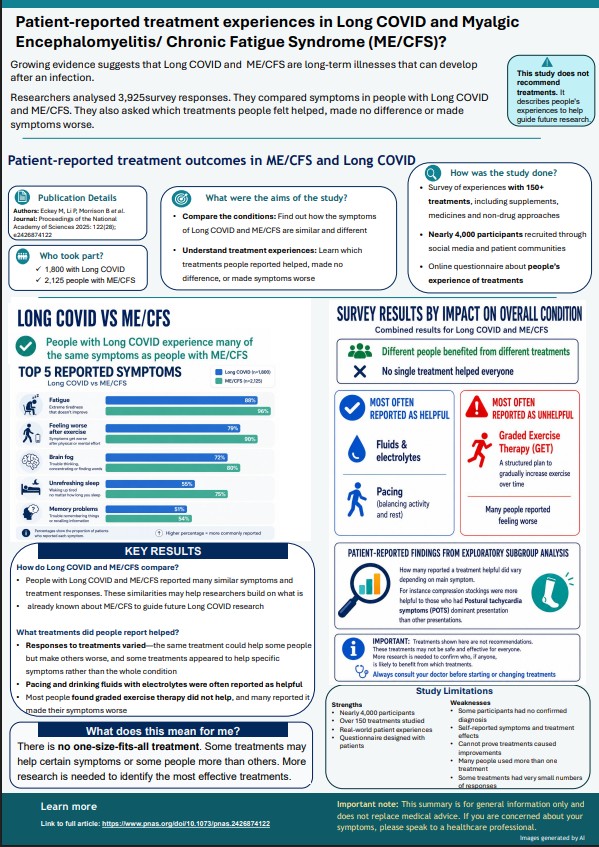
Explore this SHH-UK Research Summary of a study examining patient-reported symptoms and treatment experiences among nearly 4,000 people with Long COVID and ME/CFS.

N95 and KN95 respirators may look similar, but they are certified to different national standards. Both are designed to provide a high level of filtration, with each rated to filter at least 95% of specified test particles. (Smart Air)