

Covid is Airborne: You’re breathing it in
A powerful short video explaining how COVID spreads through the air like smoke, highlighting why ventilation, clean air and respiratory protection matter.
Read more

Long Covid Awareness Day on 15 March is an opportunity to reflect on the ongoing impact of Covid-19 and to recognise the millions of people whose lives have been permanently changed by the virus. For many, Long Covid is not a short-term complication but a complex, life-altering condition affecting health, work and daily life.
Six years into the pandemic, many people assume that Covid-19 is no longer a major threat. Yet thousands of people in the UK continue to develop Long Covid each year, including healthcare workers infected while caring for others. For many, the consequences have been profound – forcing reduced hours, early retirement or leaving the profession altogether.
Long Covid Awareness Day is therefore not only about recognition and support; it is also about prevention.
Long Covid refers to symptoms that persist for weeks, months or years after a Covid infection. These symptoms can affect multiple body systems and may include fatigue, cognitive dysfunction (“brain fog”), breathlessness, cardiovascular complications and neurological problems. (More information about Long Covid is available by clicking here.)
For healthcare workers, the consequences can be particularly devastating. Many were infected during the early waves of the pandemic, often without adequate protection. Others continue to face repeated exposure in healthcare environments where infection prevention measures have been scaled back. In the lead up to Long Covid Awareness Day 2026, we are publishing three new Long Covid Stories highlighting the ongoing impact on healthcare workers:
To find out more about the impact of Long Covid on healthcare workers visit the Long Covid Stories section on our Resources page.
Evidence also shows that reinfection increases the risk of long-term health problems. Research has linked repeated SARS-CoV-2 infections to increased risks of cardiovascular disease, stroke, pulmonary embolism and kidney injury (Al-Aly et al. 2022; Greenhalgh et al. 2024). Reinfections have also been associated with new chronic conditions including diabetes (Wang et al. 2023; Al-Aly & Cao 2024), postural orthostatic tachycardia syndrome (POTS) (Lee et al. 2023; Dulal et al. 2025), and mast cell activation syndrome (Affrin et al. 2020; Arun et al. 2022; Weinstock et al. 2021).
These impacts extend far beyond individual health and are also affecting the UK economy. The economic impact of Long Covid remains unrecognised by the UK Government which appears deaf to ongoing calls to introduce preventative measures in healthcare and other sectors.
Recent analysis suggests that 381,000 people in England and Scotland are severely limited in their daily activities due to Long Covid, and the condition accounts for a substantial proportion of the rise in economic inactivity caused by ill health since 2020 (ONS, 2024). Long Covid is also increasingly recognised as a significant driver of long-term illness and economic inactivity in the UK (Reuschke and Houston 2022). Despite this, politicians and policymakers never mention Long Covid when discussing the reasons for the increase in the number of people on benefits.
The economic costs are already substantial. Lost productivity, healthcare costs and informal caregiving are estimated to exceed £20 billion, even before considering benefits expenditure (Kwon et al. 2023; NIHR Evidence 2024). For the NHS, the impact is particularly concerning. Healthcare workers with Long Covid represent the loss of experienced staff at a time when the health system is already under immense pressure. Preventing infection is therefore not only a public health issue but also a workforce and patient safety issue particularly as NHS staff sickness is at an all-time high (see: https://transformationunit.nhs.uk/nhs-sickness-absence-rates-across-england/).
One of the most important messages of Long Covid Awareness Day is that Covid infections are not inevitable. Respiratory viruses, including SARS-CoV-2, spread predominantly through the air. Current infection prevention and control guidance in the UK still fails to reflect the scientific consensus that Covid-19 spreads through the air. Decision-makers have been informed of the evidence demonstrating that covid is airborne on numerous occasions BUT still refuse to act to ensure the safety of healthcare workers, patients and visitors. I hope and pray that the Module 3 Covid Inquiry report due to be published this month will force them to act and to acknowledge their mistakes to date.
The SHH-UK position statement on the urgent changes needed to the UK-wide infection prevention and control guidelines can be seen by clicking here (Figure 1).

Improving indoor air quality is one of the most effective ways to reduce transmission. Evidence shows that infection risk can be significantly reduced through measures such as:
These are practical, evidence-based interventions that protect both staff and patients (Figure 2). Click here to read the SHH-UK position statement on the need for indoor air quality in healthcare settings.
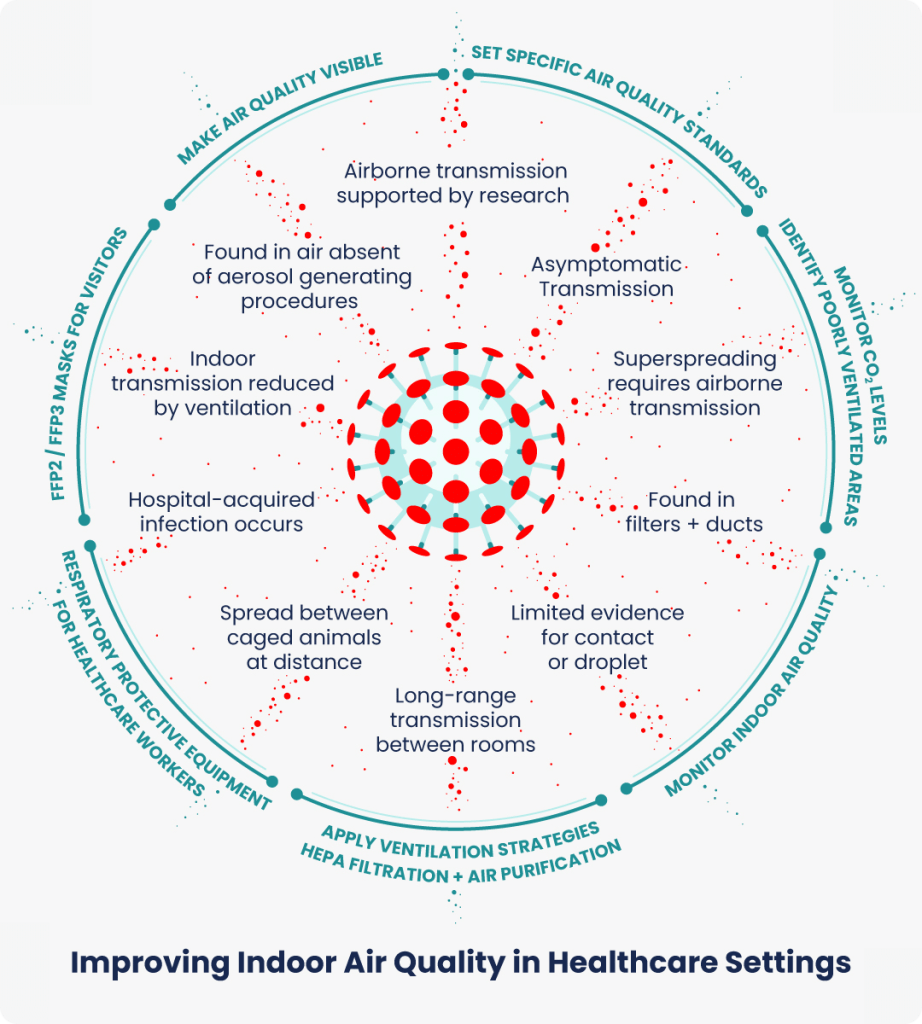
Many other sectors routinely manage airborne hazards using engineering controls and protective equipment. Healthcare settings should be no different.
The UK Government has repeatedly emphasised the importance of shifting the NHS towards prevention and early intervention. However, Covid-19 prevention remains largely absent from national policy. Requests for preventative measures to Government ministers or policymakers usually receive no answer at all or a statement setting out the care they claim to provide for people with Long Covid.
Meanwhile, the infrastructure to support people with Long Covid is weakening (Long Covid Support, 2025). Specialist services are increasingly being scaled back, and surveillance of Long Covid prevalence has been reduced. Over the past six years, successive UK Governments have refused to count the number of healthcare workers, and others, affected by Long Covid. The absence of these data seems to allow them to ignore the issue.
Without stronger prevention measures, the NHS risks facing a continuing influx of new Long Covid cases and people with other related long term conditions while services designed to support patients are shrinking.
Long Covid Awareness Day is an important opportunity to listen to those living with the condition and to recognise the challenges they face. However, awareness alone is not enough.
Recognising Covid as a preventable disease is essential to protect healthcare workers, patients and communities. Cleaner indoor air, stronger infection prevention guidance and access to appropriate protective equipment can all significantly reduce transmission. Preventing infections will not only protect individual health – but also help stabilise the NHS workforce, reduce long-term sickness and support economic participation.
The message of Long Covid Awareness Day is therefore clear: every infection prevented is a case of Long Covid that may never occur. Click here, to read more about our #SafeAir4All campaign.
A powerful short video explaining how COVID spreads through the air like smoke, highlighting why ventilation, clean air and respiratory protection matter.
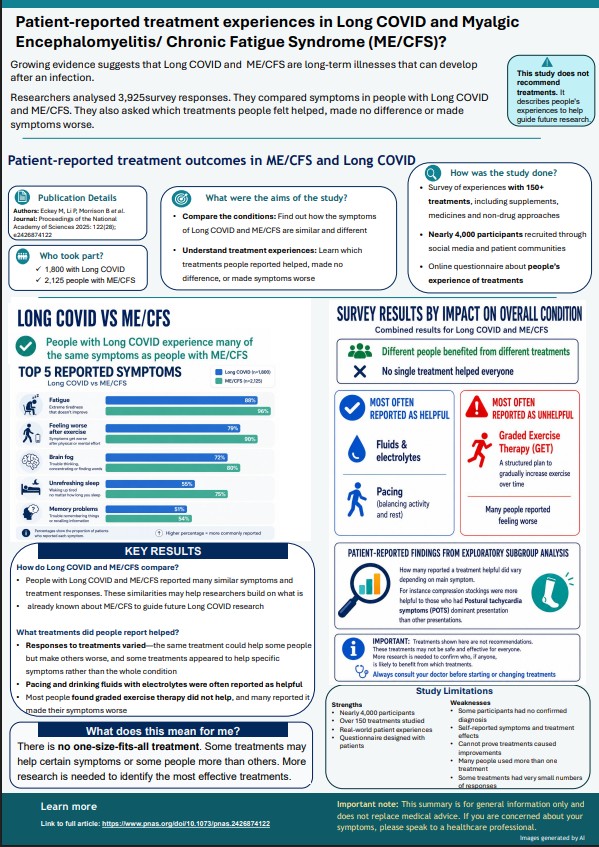
Explore this SHH-UK Research Summary of a study examining patient-reported symptoms and treatment experiences among nearly 4,000 people with Long COVID and ME/CFS.

N95 and KN95 respirators may look similar, but they are certified to different national standards. Both are designed to provide a high level of filtration, with each rated to filter at least 95% of specified test particles. (Smart Air)